Glennon Doyle - Untamed
Здесь есть возможность читать онлайн «Glennon Doyle - Untamed» весь текст электронной книги совершенно бесплатно (целиком полную версию без сокращений). В некоторых случаях можно слушать аудио, скачать через торрент в формате fb2 и присутствует краткое содержание. Год выпуска: 2020, Издательство: Random House Publishing Group, Жанр: Публицистика, на английском языке. Описание произведения, (предисловие) а так же отзывы посетителей доступны на портале библиотеки ЛибКат.
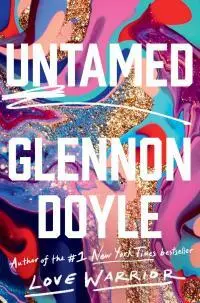
- Название:Untamed
- Автор:
- Издательство:Random House Publishing Group
- Жанр:
- Год:2020
- ISBN:нет данных
- Рейтинг книги:4 / 5. Голосов: 2
-
Избранное:Добавить в избранное
- Отзывы:
-
Ваша оценка:
Untamed: краткое содержание, описание и аннотация
Предлагаем к чтению аннотацию, описание, краткое содержание или предисловие (зависит от того, что написал сам автор книги «Untamed»). Если вы не нашли необходимую информацию о книге — напишите в комментариях, мы постараемся отыскать её.
" *Untamed* will liberate women --emotionally, spiritually, and physically. **It is phenomenal.** "--Elizabeth Gilbert, author of *City of Girls* and *Eat Pray Love***
*This is how you find yourself.
*
There is a voice of longing inside each woman. We strive so mightily to be good: good partners, daughters, mothers, employees, and friends. We hope all this striving will make us feel alive. Instead, it leaves us feeling weary, stuck, overwhelmed, and underwhelmed. We look at our lives and wonder: *Wasn't it all supposed to be more beautiful than this?* We quickly silence that question, telling ourselves to be grateful, hiding...
Untamed — читать онлайн бесплатно полную книгу (весь текст) целиком
Ниже представлен текст книги, разбитый по страницам. Система сохранения места последней прочитанной страницы, позволяет с удобством читать онлайн бесплатно книгу «Untamed», без необходимости каждый раз заново искать на чём Вы остановились. Поставьте закладку, и сможете в любой момент перейти на страницу, на которой закончили чтение.
Интервал:
Закладка:
Isn’t it irresponsible to suggest that we should do whatever we want to do? Most nights, by the time I get home I want to drink an entire bottle of Malibu. Pretty sure I shouldn’t trust all of my desires.
I have a friend who has struggled mightily with money for decades. She recently told me that she was this close to renting an expensive beach house even though she was deep in debt. She knew from her roots that she couldn’t trust this desire of hers, but she wanted this vacation for her family so badly that she was prepared to allow her desire to override her Knowing.
When I asked why she was so desperate for this house, she looked down at her hands and said, “I see all the pictures on social media of families at the shore. They’re relaxing together. They’re off their damn phones and just being together. My family is so disconnected right now. The kids are growing so fast. Tom and I never really talk anymore. I feel like we’re losing each other. I want to slow down. I want to talk to my kids and husband more. I want to know what’s going on in their lives. I want to have fun together again.”
Instead of renting the beach house, my friend bought a two-dollar basket and placed it on a table in her foyer. She asked her husband and teenagers to leave their phones in the basket for an hour each weeknight. Her family began preparing, eating, and cleaning up after dinner together. There was a lot of grumbling about this new system at first, but then came the laughter, talking, and connection she’d yearned for. Her basket turned out to be a two-dollar beach house.
So, that woman’s nightly desire for a bottle of Malibu? That was just a surface desire. I know this because her Knowing didn’t trust it. A surface desire is one that conflicts with our Knowing. We must ask of our surface desires: What is the desire beneath this desire? Is it rest? Is it peace?
Our deep desires are wise, true, beautiful, and things we can grant ourselves without abandoning our Knowing. Following our deep desire always returns us to integrity. If your desire feels wrong to you: Go deeper. You can trust yourself. You just have to get low enough.
I have spent the last decade of my life listening to women talk about what they most desire. This is what women tell me they want:
I want a minute to take a deep breath.
I want rest, peace, passion.
I want good food and true, wild, intimate sex.
I want relationships with no lies.
I want to be comfortable in my own skin.
I want to be seen, to be loved.
I want joy and safety for my children and for everyone else’s children.
I want justice for all.
I want help, community, and connection.
I want to be forgiven, and I want to finally forgive.
I want enough money and power to stop feeling afraid.
I want to find my purpose down here and live it out fully.
I want to look at the news and see less pain, more love.
I want to look at the people in my life and really see them and love them.
I want to look in the mirror and really see myself and love myself.
I want to feel alive.
The blueprints of heaven are etched in the deep desires of women. What women want is good. What women want is beautiful. And what women want is dangerous, but not to women. Not to the common good. What women want is a threat to the injustice of the status quo. If we unlocked and unleashed ourselves:
Imbalanced relationships would be equalized.
Children would be fed.
Corrupt governments would topple.
Wars would end.
Civilizations would be transformed.
If women trusted and claimed their desires, the world as we know it would crumble. Perhaps that is precisely what needs to happen so we can rebuild truer, more beautiful lives, relationships, families, and nations in their place.
Maybe Eve was never meant to be our warning. Maybe she was meant to be our model.
Own your wanting.
Eat the apple.
Let it burn.
One morning, I called my friend Martha and began telling her all the reasons I could not leave my marriage. Then I began sharing all the reasons I could not stay in my marriage. I kept talking, talking, talking, weighing every angle, arguing myself into corners and then around and around in circles.
Eventually she said, “Glennon, stop. You are in your head. The answers you need this time aren’t in there. They’re in your body. Try dropping into your body. Right now on the phone. Drop lower.”
This was becoming a theme in my life, all this sinking and dropping.
She asked, “You in there yet?”
“I think so,” I said.
“Okay, now consider both decisions. Inhabit yourself and feel. Does saying good-bye to Abby feel warm to you?”
“No. That feels cold, actually. It feels icy. It makes me feel like I’ll die of cold.”
“Now consider being with Abby. How does that feel?”
“It feels warm. Soft. Spacious.”
“Okay, Glennon. Your body is nature, and nature is pure. I know that’s hard for you to accept because you have been at war with your body for so long. You think your body is bad, but it is not. It’s wise. Your body will tell you things your mind will talk you out of. Your body is telling you what direction life is in. Try trusting it. Turn away from what feels cold. Go toward what feels warm.”
Now when I sense danger, I believe the cold and leave. When I sense joy, I believe the warm and stay.
These days, in business meetings, when I request an explanation for a decision someone has made, the women on my team know that I’m not looking for justifications, judgments, or opinions. I’m looking for Knowing. So the decision maker will say, “I did the research and sat with these options for a while. This option felt warm to me. The alternative felt cold.” That will be the end of the discussion. I trust women who trust themselves.
For a long while I pretended not to know that even though I had only one life, I was spending it inside a lonely marriage.
When the Knowing threatened to rise, I’d shove it back down. There was no point in admitting I knew what I knew, because I would never do what the Knowing would require me to do. I would never leave my children’s father. I’d just pretend not to know forever. I was a mother, and I had responsibilities.
In middle school we learned about parenting by caring for an egg. In order to pass the unit, we had to return the uncracked egg to the teacher at the end of the week. Those who left their egg home in the dark all week fared best; some of their eggs went rotten, but that didn’t matter as long as they remained uncracked.
I parented Tish like she was an egg. I’d say, “She is so sensitive, so fragile.” I worried about her and counted that as love. I protected her and counted that as mothering. I’d have kept her at home in the dark forever if I could have. She and I were living in a story I had written, and I was the hero. I would never let her crack, and I would pass parenting.
I am drinking coffee on Tish’s bed, watching her get ready for school. She is brushing her yards of Rapunzel hair.
I watch her look at herself in the mirror and then back at me. She says, “My hair is too babyish. Can I cut it like yours?”
I look at the two of us in that mirror. Right there in front of me, I can finally see that Tish is not an egg. She is a girl, becoming a woman.
Every time she looks at me, she is seeing herself, too. And she is asking:
Mom, how does a woman wear her hair?
Mom, how does a woman love and be loved?
Mom, how does a woman live?
Tish asks, “Will you put my hair up in a pony, Mom?”
Читать дальшеИнтервал:
Закладка:
Похожие книги на «Untamed»
Представляем Вашему вниманию похожие книги на «Untamed» списком для выбора. Мы отобрали схожую по названию и смыслу литературу в надежде предоставить читателям больше вариантов отыскать новые, интересные, ещё непрочитанные произведения.










Обсуждение, отзывы о книге «Untamed» и просто собственные мнения читателей. Оставьте ваши комментарии, напишите, что Вы думаете о произведении, его смысле или главных героях. Укажите что конкретно понравилось, а что нет, и почему Вы так считаете.