Ed Macy - Hellfire
Здесь есть возможность читать онлайн «Ed Macy - Hellfire» — ознакомительный отрывок электронной книги совершенно бесплатно, а после прочтения отрывка купить полную версию. В некоторых случаях можно слушать аудио, скачать через торрент в формате fb2 и присутствует краткое содержание. Город: London, Год выпуска: 2009, ISBN: 2009, Издательство: HarperPress, Жанр: Биографии и Мемуары, nonf_military, на английском языке. Описание произведения, (предисловие) а так же отзывы посетителей доступны на портале библиотеки ЛибКат.

- Название:Hellfire
- Автор:
- Издательство:HarperPress
- Жанр:
- Год:2009
- Город:London
- ISBN:978-0-007-34292-1
- Рейтинг книги:3 / 5. Голосов: 1
-
Избранное:Добавить в избранное
- Отзывы:
-
Ваша оценка:
Hellfire: краткое содержание, описание и аннотация
Предлагаем к чтению аннотацию, описание, краткое содержание или предисловие (зависит от того, что написал сам автор книги «Hellfire»). Если вы не нашли необходимую информацию о книге — напишите в комментариях, мы постараемся отыскать её.
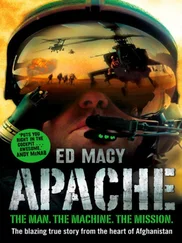
Ed Macy bent every rule in the book to get to where he wanted to be: on Ops in the stinking heat of the Afghan summer, with the world’s greatest weapons system at his fingertips. It’s 2006 and he is part of an elite group of pilots assigned to the controversial Apache AH Mk1 gunship programme. So far, though, the monstrously expensive Apache has done little to disprove its detractors. For the first month ‘in action’ Ed sees little more from his cockpit than the back end of a Chinook.
But everything changes in the skies over Now Zad. Under fire and out of options, Ed has one chance to save his own skin and those of the men on the ground. Though the Apache bristles with awesome weaponry, its fearsome Hellfire missile has never been fired in combat. Then, in the blistering heat of the firefight, the trigger is pulled.
It’s a split-second decision that forever changes the course of the Afghan war, as overnight the gunship is transformed from being an expensive liability to the British Army’s greatest asset. From that moment on, Ed and his squadron mates will face the steepest learning curve of their lives – fighting an endless series of high-octane missions against a cunning and constantly evolving enemy. Ed himself will have to risk everything to fly, fight and survive in the most hostile place on earth.
http://www.youtube.com/watch?v=LNP1lbLNKqA
Hellfire — читать онлайн ознакомительный отрывок
Ниже представлен текст книги, разбитый по страницам. Система сохранения места последней прочитанной страницы, позволяет с удобством читать онлайн бесплатно книгу «Hellfire», без необходимости каждый раз заново искать на чём Вы остановились. Поставьте закладку, и сможете в любой момент перейти на страницу, на которой закончили чтение.
Интервал:
Закладка:
If your helicopter was lucky enough to be equipped with a radar warning receiver, which some of ours were, it told you certain essential pieces of information about battlefield ‘emitters’: not only what kinds of radar threat were out there, but their distance, bearing and ‘mode’ (whether they were merely scanning for threats or, more seriously, tracking targets or, worst of all, launching missiles at you).
If your Radar Warning Receiver (RWR) told you you’d been ‘locked-up’ by a ZSU-23/4, there was only one possible means of survival: diving for the deck in an attempt to put something hard between you and the smoking barstool.
This was chilling enough, but with a radar-guided missile launch – be it from the ground or air – it was even worse. Few British Army helicopters at that time were equipped with ‘chaff’ launchers-devices that chucked bundles of metal filaments into the path of an oncoming radio frequency (RF) missile in the hope of seducing it away from the target – so, again, your only hope of survival was getting into cover while evasively manoeuvring, trying to break the lock.
The fun stuff was flying and fighting against other helicopters. Here, the baseline threat was the Hind. It was Soviet Cold War-era, but still a fearsome piece of kit-armed with a chin-mounted cannon and an array of unguided missiles that fired ‘on-axis’ – in line with the nose of the aircraft. You didn’t want a Hind anywhere near your six o’clock position; it didn’t matter what you were flying, it would simply shoot you out of the sky.
The trick was to keep out of its twelve o’clock position. The Hind was a monster and could stay in the air for a long time, but it was tough to manoeuvre. We had to close in at an angle and keep turning with him, remaining in a tighter circle than he was capable of – we called it a furball – so he couldn’t bring his weapons to bear. Then, even in an unarmed Gazelle, we could hold him to a stalemate. With a ‘crew-served weapon’ – a machine gun sticking out of a door or window – the Lynx was appropriately equipped to take on a Hind; together, we could kill it. In true World War One dogfight style, I might even be able to loose off a shot with my 9 mm pistol.
The point was to stay in the fight – as Churchill said: never give up.
Meanwhile, my Apache dossier was getting thicker.
I’d discovered something significant. Each Apache squadron was going to need four specialists: a Qualified Helicopter Instructor (QHI), a Weapons Instructor (WI), a Supervisory Forward Air Controller (SupFAC) and an Electronic Warfare Instructor (EWI).
The Apache was more than a gunship; it was one of the most sophisticated EW platforms in the business. Not only was it equipped with radar able to locate and track any threat – ground or air – with a single sweep of its antenna, it also had a highly sophisticated electronic defensive aids system for counteracting enemy missiles. With the Apache just a few years away from delivery, I needed to know about this stuff.
In 1999, I booked myself on an EW foundation course organised and run by the RAF at Cranwell in Lincolnshire. This side of the Atlantic, there was no one better than the crabs at detailing the threat and its countermeasures. The course was chock-solid with all the maths and physics that I’d never bothered about at school. Day One, Lesson One was a ‘101’ on the electromagnetic spectrum.
The threats that primarily concerned us were heat-seeking and radar-guided missiles. In most cases the hottest part of the aircraft was the engine exhaust. A combat jet, which moved at high speed through the air and generated considerable heat friction as it did so, had ‘hot-spots’ on the parts of its frame that were most exposed to the airflow – the nose and leading edges of the wings especially – and these could also be targeted by particularly sophisticated types of infrared missile.
Airframe heating was not an issue for a helicopter and the missile automatically homed in on the engine exhausts, which, to the seeker, glowed against the cold background of the sky. Once an infrared heat-seeker had locked onto you, there was precious little you could do in a helicopter to break the lock. Salvation was at hand, however, if you had some or all of the following kit: a Missile Approach Warning System (MAWS) that automatically alerted you to a surface-to-air missile (SAM) launch (its optics scanned the ground for the flash or plume of a missile motor’s ignition); an infrared jammer that literally blinded the missile seeker; ‘baffles’ that dissipated and rapidly cooled the engine exhaust to a level it couldn’t be seen; and flares, usually triggered by the MAWS, which fired into the sky around the helicopter in the hope the missile would lock onto them instead of us.
The heart of any system for defeating radar-guided SAMs was the RWR. It gave warning – visually and audibly – that you were being acquired, tracked or launched at by a radar system. It would also tell you the radar’s location and type, provided it was recognised by its threat-library.
Because the missile and its radar guidance system had to go through various engagement modes while in the air – all of which involved ‘painting’ the helicopter with radar-energy for ever more precise targeting data as it closed in on us – the RWR maintained a handle on the one piece of news we really needed: how close we were to being blown out of the sky.
With the foundation phase under my belt, I booked myself onto an EW course and then an advanced EW course. This introduced me to other aspects of the electronic battle – how, for example, jamming platforms like the US Navy’s EA-6B Prowler could be employed in a package of attacking aircraft to ‘burn’ a hole through the enemy’s radar coverage. Once this hole had been created – the SAM and air defence operators would see it as impenetrable interference on their radar screens – attacking aircraft, including helicopters, could sneak into enemy airspace and hit their targets without being fired upon.
This was known as a ‘soft kill’ – temporarily blinding the radar rather than destroying it. For a ‘hard kill’, I learned about the capabilities of the US HARM and UK ALARM weapon systems. Launched from their parent aircraft, these missiles would pick out enemy emitters and fly down the beam till they hit the antenna and destroyed it. Both missiles were so sophisticated that even if the radar operator switched off his system, they would have plotted its position by GPS and/or inertial navigation equipment and destroy it anyway.
It wasn’t until the last week of the course that I learned about the Apache’s own EW self-protection capabilities. By now, details of the Apache’s Helicopter Integrated Defensive Aids System had started to emerge. HIDAS was unlike anything that had ever been fitted to a helicopter before. Four RWR receivers – two either side of the nose and two more behind the engines – provided interlocking arcs of coverage; they covered and plotted any radar, ground or air, that emitted a pulse anywhere in the vicinity of the aircraft.
A highly developed MAWS detected the heat plume of any ground or airborne threats – especially important if the helicopter was to stand any chance of surviving in a threat environment where man-portable, shoulder-launched air defence systems (ManPADS) were present. These weapons had developed rapidly since the US Stinger and the Soviet SA-7 had made their first appearance thirty years before. Shoulder-launched SAMs like the Russian SA-14 were highly adept at ignoring all but the most sophisticated flares punched out by an aircraft and were capable of engagements up to 12,000 feet.
The Apache also had a Laser Warning Receiver System (LWRS) – two detectors above the engines and two on the fuselage sides – that would detect if the aircraft had been targeted by a laser-designator, the prelude to it being hit by a laser-guided missile.
Читать дальшеИнтервал:
Закладка:
Похожие книги на «Hellfire»
Представляем Вашему вниманию похожие книги на «Hellfire» списком для выбора. Мы отобрали схожую по названию и смыслу литературу в надежде предоставить читателям больше вариантов отыскать новые, интересные, ещё непрочитанные произведения.






Обсуждение, отзывы о книге «Hellfire» и просто собственные мнения читателей. Оставьте ваши комментарии, напишите, что Вы думаете о произведении, его смысле или главных героях. Укажите что конкретно понравилось, а что нет, и почему Вы так считаете.