Dan Hampton - Viper Pilot
Здесь есть возможность читать онлайн «Dan Hampton - Viper Pilot» весь текст электронной книги совершенно бесплатно (целиком полную версию без сокращений). В некоторых случаях можно слушать аудио, скачать через торрент в формате fb2 и присутствует краткое содержание. Город: New York, Год выпуска: 2012, ISBN: 2012, Издательство: William Morrow, Жанр: Биографии и Мемуары, nonf_military, на английском языке. Описание произведения, (предисловие) а так же отзывы посетителей доступны на портале библиотеки ЛибКат.
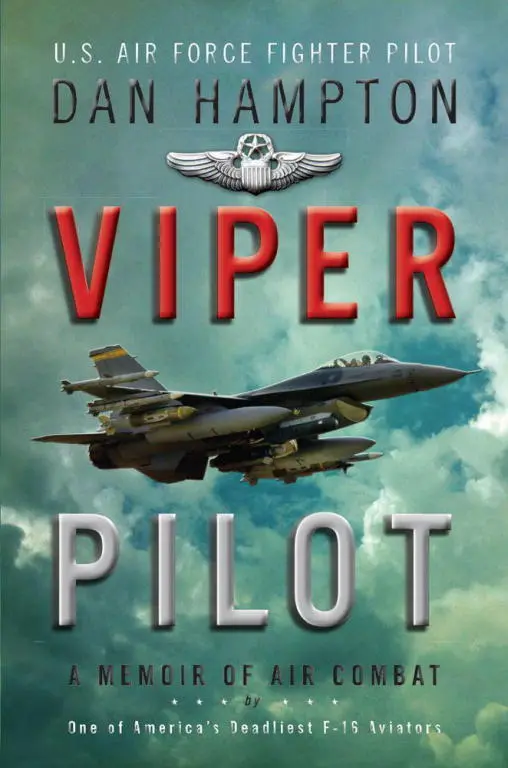
- Название:Viper Pilot
- Автор:
- Издательство:William Morrow
- Жанр:
- Год:2012
- Город:New York
- ISBN:978-0-06-213035-8
- Рейтинг книги:4 / 5. Голосов: 1
-
Избранное:Добавить в избранное
- Отзывы:
-
Ваша оценка:
Viper Pilot: краткое содержание, описание и аннотация
Предлагаем к чтению аннотацию, описание, краткое содержание или предисловие (зависит от того, что написал сам автор книги «Viper Pilot»). Если вы не нашли необходимую информацию о книге — напишите в комментариях, мы постараемся отыскать её.
is the electrifying memoir of one of the most decorated F-16 pilots in American history: U.S. Air Force Lieutenant Colonel Dan Hampton, who served for twenty years, flying missions in the Iraq War, the Kosovo conflict, and the first Gulf War.
Both a rare look into the elite world of fighter pilots and a thrilling first-person account of contemporary air combat,
soars—a true story of courage, skill, and commitment that will thrill U.S. Special Forces buffs, aviation and military history aficionados, and fans of the novels of Tom Clancy and Dale Brown.
Viper Pilot — читать онлайн бесплатно полную книгу (весь текст) целиком
Ниже представлен текст книги, разбитый по страницам. Система сохранения места последней прочитанной страницы, позволяет с удобством читать онлайн бесплатно книгу «Viper Pilot», без необходимости каждый раз заново искать на чём Вы остановились. Поставьте закладку, и сможете в любой момент перейти на страницу, на которой закончили чтение.
Интервал:
Закладка:
8.0 miles.
I glanced at my fuel displays and saw that they agreed with each other. Satisfied, I shoved up my visor again and peered at the solid green line running from top to bottom in my HUD. Called a “continuously computed release point,” or CCRP, it provided steering to a release point that was calculated based on the selected weapon and selected target.
7.0 miles.
My eyes flickered around the cockpit again. Master arm was on. The jamming pod was transmitting against every threat it could sense. My towed decoy was out and also, theoretically, transmitting. The altitude readout was rock-steady at 5,000 feet, and I walked the throttle back to hold 500 knots.
Leaning forward, I stared around the HUD at the target area. Khan Bani Sad airfield. Saddam Hussein’s back door.
There! The runway lay in a cleared patch of tan earth just west of the green banks of the Diyala River. Unlike on a planned mission, I had no photographs or diagrams of the target area. All that had been passed to us fifteen minutes ago were the coordinates and vague info about a helicopter pad on the northern end of the airfield. Earlier today, a B-1 bomber strike had leveled a city block in the al-Mansur neighborhood of Baghdad, trying to kill Saddam. He hadn’t been there, and, knowing the war was lost, was now trying to escape the city via the helicopters.
And that wasn’t happening, if I had anything to do with it.
Scanning up the runway, I could see the taxiway and a large concrete apron. If there was a control tower, I couldn’t find it. If there were helicopters, I couldn’t see them yet, either.
6.1 miles.
I leaned back and centered the steering again. I’d have to drop my cluster bombs on the coordinates if I couldn’t see the copters with my eyes. Thumping the console in frustration, I bent forward one more time. Dropping on coordinates might work for a bridge or building, but the chance of hitting several small helicopters was …
“I’ll be damned.”
Tendrils of vapor were spinning in circles like an old-fashioned water sprinkler. Rotor blades… stirring up the heavy, humid air. There they were. Four helos, about a hundred yards apart.
Instantly, I tapped the button on my stick that changed aiming solutions. Continuously Computed Impact Point (CCIP) relied on my eyeballs, not coordinates. The bombs would go through the visual-aiming pipper now dangling downward in my HUD, like a pendulum.
5.3 miles.
Bunting over a little, I lightly touched the stick to put the pipper below the first two helos and pulled the throttle back a notch.
My right thumb hovered above the pickle button on the stick. Out of habit, I held my breath as the little circle with the dot in it kissed the nose of the first helicopter. Mashing down smoothly and firmly, I held my thumb in place. The F-16 rocked as both canisters of CBU-103 cluster bombs kicked off.
Shoving the throttle full-forward, I banked up hard to the left then came back to the right. Twitching my tail, so to speak, to catch any Triple-A or SAMs that might be coming up at me.
But we’d caught them by surprise and, due to the pounding Baghdad had taken, coordination between Iraqi air defense sites was becoming increasingly rare. So the Iraqis that had shot at us earlier hadn’t passed any information to these bastards. Flicking my air-to-air radar into the DOGFIGHT mode that would automatically lock onto anything it saw, I came off left toward the west and looked back at the airfield.
Several things happened at once.
The helicopters on the western edge of the concrete pad simply vaporized as my cluster bombs, each containing two hundred softball-size pieces of encased high explosives, detonated.
The other helicopter was untouched. And then every piece of Triple-A on Khan Bani Sad woke up and began shooting.
“ELI One is off… west.”
Zing’s reply was immediate. “ELI Two’s in from the east.”
Looking back, I could see the smoke drifting south with the wind, which was good. My wingman would have a clear look at the remaining helos.
“Push it up, Two… the other copter may bolt outta here.”
I damn well would, if several of my buddies had just disappeared in front of me.
“ELI Two… thirty seconds.”
He must’ve been cheating on the ten-mile arc. Didn’t matter now.
“ELI Two… your target is west of the smoke… west of the smoke… next to the runway. A single Hoplite with its rotor turning.” A Hoplite was a Soviet-made Mi-2 helicopter.
“ELI Two is tally the smoke… looking.”
“And Two… I’m gonna arc west of the runway and keep the Triple-A busy. Don’t come off west.”
The mike zippered in reply. I pulled the F-16 up about sixty degrees and rolled sideways to keep the airfield in sight. So, with my nose jacked up, I was now skidding sideways at about 6,000 feet above the northern suburbs. The Triple-A was still firing, but I thought they were having a tough time seeing my gray jet against gray clouds. However, I wanted them to see me and not my wingman, so I’d have to help them with that.
I put out a flare. Then another.
Eyeing the HUD, I let the airspeed bleed off to 400 knots, overbanked, and pulled down toward the ground. Coming all the way over on my back, I glanced to the west, to a bend in the river that looked like a big ear, and saw my bright orange flares drifting slowly to earth. There was also an SA-6 site marked on my map, which supposedly lived there. It was a very nasty SAM nest, so my eyes were everywhere.
But nothing came up at me. Accelerating toward the ground now, I tugged the throttle back a bit and rolled left to see the airfield. My flares had definitely attracted attention, and all the gunfire was arcing west toward me. Most of it was being shot visually, but I saw several Triple-A radar symbols on my threat- warning system. I could live with that. Just no SA-6s. I could die from that.
It was a dangerous game. I was trying to get shot at by what I knew was there, while not sure what else was tracking—or waiting until I got real close before shooting. This was the essence of SAM killing—Wild Weaseling. “You’ve gotta be shitting me,” indeed.
The airspeed made the jet shudder. Raw power. Without taking my eyes off the ground, I blended the roll with a pull back up through the horizon. Straining against the Gs that pressed me into the seat, I stared at the airfield. If the last helo took off before Zing got it, then I’d kill it with a Sidewinder missile. I doubted my air-to-air radar would be able to pick up something so slow against the trucks and tanks moving around down there, so I needed to keep my eyes on them.
I was just about to data-link a position request from him, when the center of the northern taxiway blew up. It looked like someone had placed a giant shotgun a foot off the ground and pulled the trigger.
And the other Hoplite disappeared. I never saw ELI Two and neither did the Iraqis, so maybe my flare-dropping antics kept them busy. In any event, the helicopters were dead. Maybe Saddam, too, I thought.
But I doubted it. That would be too much luck for one day.
“ELI Two’s off north.”
“Nice job, Two. Arc northeast above six thousand… ELI One is in from the southwest.”
He zippered a reply. I slammed the throttle forward, yanked the fighter over, and dove down to 5,000 feet while he climbed up above 6,000 feet. This kept us clear of each other and gave the Iraqis headaches.
I swung around in a lazy circle toward the Tigris, the airfield now behind me and most of Baghdad before me. I did this to get some room for my next and last pass on the airfield—and so I wouldn’t be belly-up to an SA-6.
Focusing on the river bend, I could see lots of military buildings, straight lines, and revetments, but nothing that looked like a SAM site. I’d take the chance. Now, five miles directly west of the airfield, I rolled the fighter up again and attacked.
Читать дальшеИнтервал:
Закладка:
Похожие книги на «Viper Pilot»
Представляем Вашему вниманию похожие книги на «Viper Pilot» списком для выбора. Мы отобрали схожую по названию и смыслу литературу в надежде предоставить читателям больше вариантов отыскать новые, интересные, ещё непрочитанные произведения.







Обсуждение, отзывы о книге «Viper Pilot» и просто собственные мнения читателей. Оставьте ваши комментарии, напишите, что Вы думаете о произведении, его смысле или главных героях. Укажите что конкретно понравилось, а что нет, и почему Вы так считаете.