Dan Hampton - Viper Pilot
Здесь есть возможность читать онлайн «Dan Hampton - Viper Pilot» весь текст электронной книги совершенно бесплатно (целиком полную версию без сокращений). В некоторых случаях можно слушать аудио, скачать через торрент в формате fb2 и присутствует краткое содержание. Город: New York, Год выпуска: 2012, ISBN: 2012, Издательство: William Morrow, Жанр: Биографии и Мемуары, nonf_military, на английском языке. Описание произведения, (предисловие) а так же отзывы посетителей доступны на портале библиотеки ЛибКат.
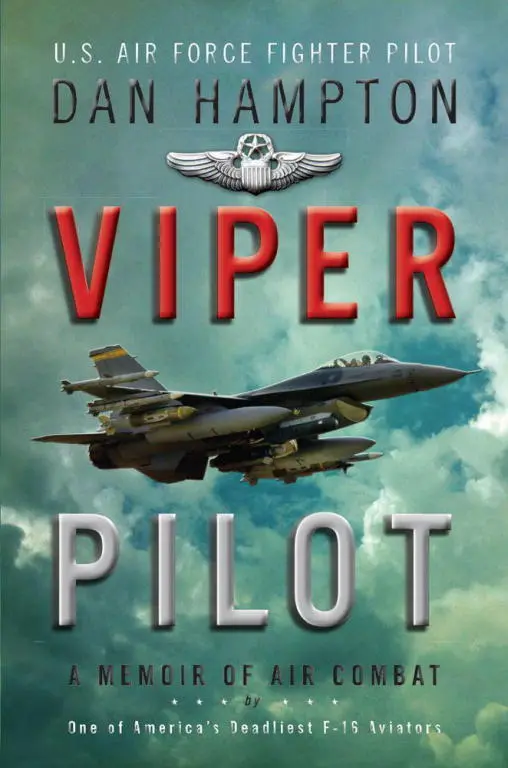
- Название:Viper Pilot
- Автор:
- Издательство:William Morrow
- Жанр:
- Год:2012
- Город:New York
- ISBN:978-0-06-213035-8
- Рейтинг книги:4 / 5. Голосов: 1
-
Избранное:Добавить в избранное
- Отзывы:
-
Ваша оценка:
Viper Pilot: краткое содержание, описание и аннотация
Предлагаем к чтению аннотацию, описание, краткое содержание или предисловие (зависит от того, что написал сам автор книги «Viper Pilot»). Если вы не нашли необходимую информацию о книге — напишите в комментариях, мы постараемся отыскать её.
is the electrifying memoir of one of the most decorated F-16 pilots in American history: U.S. Air Force Lieutenant Colonel Dan Hampton, who served for twenty years, flying missions in the Iraq War, the Kosovo conflict, and the first Gulf War.
Both a rare look into the elite world of fighter pilots and a thrilling first-person account of contemporary air combat,
soars—a true story of courage, skill, and commitment that will thrill U.S. Special Forces buffs, aviation and military history aficionados, and fans of the novels of Tom Clancy and Dale Brown.
Viper Pilot — читать онлайн бесплатно полную книгу (весь текст) целиком
Ниже представлен текст книги, разбитый по страницам. Система сохранения места последней прочитанной страницы, позволяет с удобством читать онлайн бесплатно книгу «Viper Pilot», без необходимости каждый раз заново искать на чём Вы остановились. Поставьте закладку, и сможете в любой момент перейти на страницу, на которой закончили чтение.
Интервал:
Закладка:
Eight…
Almost… almost …
Now!
Pulling back hard to the right, I began a huge, deep roll shaped like a barrel. A barrel roll was wide, fast, and powerful. The idea was to give the missile too many changing variables to overcome in the limited flight time it had left. If you could force a SAM to overshoot, you’d won, as it couldn’t maneuver and come back like a fighter jet.
Pulling up, I smoothly brought the F-16 over on its back, but instead of rolling out I let the nose continue to fall down past the horizon, toward the smoky earth. Soon I was lying completely upside down along the horizon. It wasn’t a high-G maneuver nor was it particularly violent. The idea was to get through the horizon inverted, pull the power to slow down, and then roll your way back to your starting point. Graceful and powerful, it played hell with older radar-tracking systems. Too many oblique angular corrections, and it would run the missile out of airspeed. It was effective against the SA-2 and SA-3. It didn’t work at all against the newer SA-6 and SA-8.
And usually you could only get away with it once. The second SAM, or other types of missiles and Triple-A, would catch you by then.
And that’s exactly what happened.
The city slowly spun upright as I came through the bottom of the roll. Blending in a smooth pull, the nose came up, and I was slowly and heavily pressed against the seat. Every four to five seconds, I smacked the chaff button; my head constantly swiveled, looking for other threats. The Triple-A had disappeared behind me for the moment, and I knew the first SAM must’ve overshot. Too much time had elapsed. Stealing a quick look at the HUD, I saw the target was behind me and about six miles away to the northeast.
At 550 knots, I zoomed up through the horizon and reversed to come back around toward the target. As I did, my eye caught a flicker of movement. Instinctively, I pulled straight up, rolled, and slapped the chaff button.
It saved my life.
The deadly shape of another missile passed behind me on its way into the clouds. It had come up … it couldn’t have been one of the SA-3s. The “X” in the bottom of my HUD told me the decoy was still alive and transmitting. So, it had been an infrared-heat-seeking SAM… not a radar-guided missile.
Son of a bitch … where there was one there were two. Still zooming upward, I turned sideways in the seat and tried to look down over my shoulder. But I stared a second too long and lost the picture of the world around me. Blue changed to gray and the horizon disappeared as I sliced into the cloud deck.
“ELI Two… defending, Triple-A!”
Perfect… there was nothing I could do for him at the moment—he was on his own.
Suddenly the jet bucked wildly under my hands and my stomach came up through my chest. I’d been hit!
But the F-16 kept flying and my eyes flickered to the warning-light panel. Nothing. What the fuck…
My eyes darted around the cockpit at the warning panels and engine gauges.
I must’ve flown through the disturbed air from the missile. I twisted my head back and forth, trying to find the horizon. Up was down and down was sideways. This sucked.
“WARNING… WARNING…” Bitching Betty rang through my helmet as the fighter shuddered and ran out of airspeed.
Eighty-six hundred feet over Baghdad, out of airspeed, and falling out of the sky. Not good.
Staring at the attitude indicator on my front console, I gave up on the outside world for a moment and flew the jet out of the cloud using the big round instrument. As my wings fell through the horizon, the jet picked up speed, and my breathing slowed a bit.
I’d come back down to 5,300 feet now, heading north and accelerating past 350 knots. I still had a target to hit.
“ELI One is ten miles south of the target, northbound at 5,300… 6.9.”
Ten miles. Barely a minute and a half. Sixty-nine hundred pounds of fuel and 5,300 feet above the gray, smoky earth. Still high enough to keep me clear of Iraqis with AK-47s but in range of every anti-aircraft gun and SAM in Baghdad. No choice, really. To climb up would take time and make me slow, and that was not a good combination over a heavily defended city.
“Two is 6.1… thirteen south… uh… eastbound.”
Thirteen miles southeast… he must’ve defended himself over there to stay clear of downtown. Sixty-one hundred pounds of fuel. That gave us a bit more than two thousand pounds to play with before he was BINGO (out of fuel) and we’d have to return to the tanker for gas.
I pictured it in my head as if I was looking down from above. God’s-eye view, we called it. If the target was the center of a clock face, I was at six o’clock and my wingman was at four o’clock. I’d turn north toward twelve o’clock and attack. Number Two would circle up toward three o’clock and then turn in for his own attack. The time it took him to do that would keep him clear of my frag. (“Frag” was short for fragments —the bits of my bombs and whatever I’d hit that were on their way back down after being blown up. It was critical not to fly through the crap, since engines didn’t agree with pieces of metal passing inside them.)
“ELI Two… arc east at ten miles and call in from the east.”
Hopefully, this would work. With any luck, the Iraqis would be looking in the direction I’d come from and my wingman would hit them from the side. You never both attacked from the same direction if you could help it.
He zippered the mike, and then said, “Check cameras on… Green it up.”
I checked my switches again and made sure the camera was filming and the master arm was on, or “green.” That was another advantage to flying with another highly experienced pilot. He was thinking ahead, too. Zing was a good man. It made things easier when you didn’t have to keep track of several young, inexperienced wingmen.
My headset gave me a cricket-like chirp, and I glanced down at the right-hand display above my knees. Multi Function Displays (MFD) were an amazing bit of situational awareness. As the name implied, they could be set up to show almost anything related to the jet, the weapons, or the area you were fighting. On the right MFD, I had a screen up that presented known SAM rings, several routes of strike aircraft, and my current target. The left display was used for my air-to-air radar.
A tiny symbol appeared, accompanied by another chirp, as my wingman data-linked me his position. He’d avoided the unmarked SAM and Triple-A belt that I’d found and was angling around to attack from the east.
I looked down and saw the northeast Baghdad suburbs disappearing beneath the left wing. It was time.
“One is in from the south.”
Rolling and pulling, I brought the fighter around to the north and shoved the throttle up to full non-afterburning power. The F-16 surged forward immediately, and I checked the HUD.
9.1 miles to the target.
Attacking a target in a modern fighter is a bit like playing several musical instruments at the same time. My left hand constantly adjusted the throttle. My left fingers worked the radar, fanned the speed brakes, and managed my electronic countermeasures. I also changed radio frequencies and accessed any of the hundred different functions of the up-front control head with my left hand.
I flew with my right hand. The F-16 has a side stick mounted on the right side of the cockpit, not coming up from the floor like older fighters. My right fingers danced along the Display Management and Target Management switches on the stick while I flew. I also dropped bombs, launched missiles, and shot the cannon with my right hand. I really never needed to take my hands off the controls to do anything. It was a very well-designed cockpit. It had to be, for one pilot to keep up with five or six types of weapons, fly, navigate, and fight.
Читать дальшеИнтервал:
Закладка:
Похожие книги на «Viper Pilot»
Представляем Вашему вниманию похожие книги на «Viper Pilot» списком для выбора. Мы отобрали схожую по названию и смыслу литературу в надежде предоставить читателям больше вариантов отыскать новые, интересные, ещё непрочитанные произведения.






Обсуждение, отзывы о книге «Viper Pilot» и просто собственные мнения читателей. Оставьте ваши комментарии, напишите, что Вы думаете о произведении, его смысле или главных героях. Укажите что конкретно понравилось, а что нет, и почему Вы так считаете.