Dan Hampton - Viper Pilot
Здесь есть возможность читать онлайн «Dan Hampton - Viper Pilot» весь текст электронной книги совершенно бесплатно (целиком полную версию без сокращений). В некоторых случаях можно слушать аудио, скачать через торрент в формате fb2 и присутствует краткое содержание. Город: New York, Год выпуска: 2012, ISBN: 2012, Издательство: William Morrow, Жанр: Биографии и Мемуары, nonf_military, на английском языке. Описание произведения, (предисловие) а так же отзывы посетителей доступны на портале библиотеки ЛибКат.
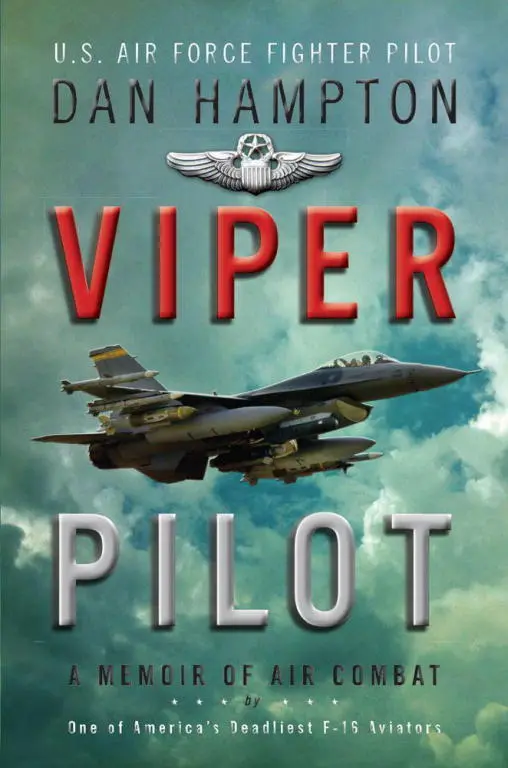
- Название:Viper Pilot
- Автор:
- Издательство:William Morrow
- Жанр:
- Год:2012
- Город:New York
- ISBN:978-0-06-213035-8
- Рейтинг книги:4 / 5. Голосов: 1
-
Избранное:Добавить в избранное
- Отзывы:
-
Ваша оценка:
Viper Pilot: краткое содержание, описание и аннотация
Предлагаем к чтению аннотацию, описание, краткое содержание или предисловие (зависит от того, что написал сам автор книги «Viper Pilot»). Если вы не нашли необходимую информацию о книге — напишите в комментариях, мы постараемся отыскать её.
is the electrifying memoir of one of the most decorated F-16 pilots in American history: U.S. Air Force Lieutenant Colonel Dan Hampton, who served for twenty years, flying missions in the Iraq War, the Kosovo conflict, and the first Gulf War.
Both a rare look into the elite world of fighter pilots and a thrilling first-person account of contemporary air combat,
soars—a true story of courage, skill, and commitment that will thrill U.S. Special Forces buffs, aviation and military history aficionados, and fans of the novels of Tom Clancy and Dale Brown.
Viper Pilot — читать онлайн бесплатно полную книгу (весь текст) целиком
Ниже представлен текст книги, разбитый по страницам. Система сохранения места последней прочитанной страницы, позволяет с удобством читать онлайн бесплатно книгу «Viper Pilot», без необходимости каждый раз заново искать на чём Вы остановились. Поставьте закладку, и сможете в любой момент перейти на страницу, на которой закончили чтение.
Интервал:
Закладка:
Instantly reversing the pull, I snapped the jet around to keep the missile in sight and pulled the throttle back. I dropped out of the sky on the tip of a wild corkscrew with the horizon crazily spinning before me.
Down!
Down toward the gray earth. Down toward the buildings and the muddy-green Tigris River.
Down through the hole in the clouds to the guns of Baghdad.
A gap in the clouds was called a “sucker hole” for a reason. Usually a rough tear in an overcast cloud deck, it was a way to get down below the weather and visually see your target. Sometimes it was a large gap and sometimes it wasn’t. But it was always dangerous and this one was no exception.
The problem with a hole in the clouds was that everything on the ground that could shoot was generally aimed up through the hole. Waiting. Waiting for some fighter pilot with more balls than brains to try and sneak down through it. A sucker.
But sometimes it was the only way. If a friendly got shot down, then you went through the hole and did whatever you could to save his skin. Sometimes you were forced through it after evading the SAMs. Or you were given a special mission, like emergency close air-support and had no choice.
That would be today.
There was no choice. ELI 33, two F-16s from the 77th Fighter Squadron, had just been given a critical mission in Baghdad. And to stay high and slow, silhouetted against the clouds, meant a messy explosion and bits of me floating into the Tigris River.
As I slammed the throttle back to IDLE, my eyes flickered to the HUD in front of my face. I was now at 450 knots and accelerating. Fanning open the speed brakes to slow down, I shoved my helmet visor up and stared at the missile. The SAM corrected its flight path and was beginning to turn north directly toward me. As the smoke thinned out, I could actually see the long, pointed body of the missile against the gray buildings and wispy clouds.
Then the second SAM lifted off.
“ELI One, tally the second SAM, right one o’clock… west of the river… One is defending!”
The radio clicked three times in my headset, meaning my wingman heard my call, understood I had seen another SAM launch, and was looking for the missile himself. ELI Two was Scott Manning and, like me, he was a veteran lieutenant colonel and instructor pilot. He just happened to be flying a wing position today, and it was good to have someone along who didn’t need babysitting.
The smoke plume from the second SAM was visible, streaking over the rooftops. Long, colored fingers of anti-aircraft artillery clawed upward. Some were obviously tracking and others just fired for effect. It made the Iraqis feel better to shoot their guns, and they had plenty of ammunition. Twisting and weaving, I flew south along the Tigris River, trying to work east and away from downtown.
The first SAM had disappeared. After an almost slow-motion start, it quickly accelerated past the sound barrier, gaining altitude and speed. My RWR gave an electronic depiction of all the radars and missiles tracking my aircraft, and it was completely saturated. There was so much jizz, or radar emissions, in the air that the display looked like a Scrabble board. At last count, there were still more than fifty SAM sites in Baghdad alone.
New flashes erupted from the right, and I winced as a stream of fireballs arced up in my direction. Then another. And another. Crazed streams of glowing beads that crisscrossed the sky on all sides of my jet. Anti-aircraft artillery. Triple-A. There were ten thousand guns down there.
“ELI One… Triple-A… defending east.”
Yanking the jet sideways, I booted the rudder pedal and glanced to my right. As the fighter skidded through the air, I took a breath and glanced at the suburbs. Lots of glowing, white-hot pellets shooting upward from the rooftops.
Too many.
“ELI Two… come in from the west… don’t follow me in.”
“Unable,” came the terse reply.
Shit . Again. He was already committed.
Everyone in Baghdad was awake now and looking up at the two American fighter jets who were insane enough to come down low over their capital city and basically flip the bird to every SAM and anti-aircraft gun on the ground. I think it really pissed them off.
Down… down… down. The fighter was shuddering from the speed and the weight of the cluster bombs under my wings. Five hundred and twenty knots now… 600 miles per hour. What a way to spend a birthday. Today I was thirty-nine, and I’d really rather be on a beach with a pitcher of margaritas.
Fanning the speed brakes again, I cranked the jet back to the left, twisting eastward to put some distance between myself and the anti-aircraft fire. Berserk garden hoses, spraying streams of glowing droplets and leading me like a duck on the wing. I pulled up and felt the F-16 jump. Holding it a long moment, I bunted forward again and forced the nose down. The gunners tried to keep up but they liked straight and level bombers—not jinking, gray targets like me.
Target?… screw that. I’m the predator. I whipped my head around toward the south and east.
Little fuckers, I swore to myself. If I’ve got any extra bombs, I’ll be back for you.
The SAM… where was the damn thing…
Of course, you rarely saw them anyway, and you almost never saw the second or third one. Situational awareness, that elusive sense of what’s happening around you, was easily overloaded. In combat, time really can slow down at critical moments. That, combined with training and experience, at least gave you a fighting chance.
I was still staring directly down at the city. Like someone had hung me in a chair facedown on the horizon. Pulling back hard on the stick and fanning the boards again, I dropped through 8,000 feet with vapor streaming from the wingtips. Snapping the jet left and right, I strained to see the threats.
The first SAM had disappeared. At this range, I had less than ten seconds before it hit me. I began to count.
Two…
The second missile had pitched up, too, following the first one with the same arcing flight path. My breathing quickened, and I rolled the Viper slightly right toward the SAMs and pulled hard. Six times the force of gravity, about 1,200 pounds, slammed me back into the seat.
Three…
Ignoring the sweat on my face, I snapped the fighter upright, shoved the throttle into afterburner, and pulled straight for the sky. Though I couldn’t see the missiles, I knew the effect this had. Each time my jet moved, the tracking radar on the ground had to detect it, measure it, and transmit that movement to the SAM. Microchips interpreted my position, moved the fins, and the missile changed course to keep up with me. All in fractions of seconds. But each movement cost the missile incremental time, distance, and energy. Each movement could also save my life.
Four…
Grunting against the tremendous force of gravity and 500 knots of pure jet power, I let the nose come up through the horizon, then rolled again. This time, away, so my butt was pointed at the missile’s general area. Holding the pull a moment longer, I then shoved forward—or bunted—the fighter again and tugged the throttle out of afterburner. This time, I floated weightless against the seat straps. Inverted now, ass to the missile, and hanging in space, I hoped my maneuvers confused the tracking radar as much as they hurt me.
Six…
The second missile had disappeared, too. The motor had burned out and the damn thing had shot up above somewhere and was now dropping down on me like a malignant spear. The Triple-A pits around the river had also opened up, since I was well below 10,000 feet and in range. The Iraqis were using a sound tactic. Fire the SAMs and get a fighter to defend itself until it was low enough to be engaged by the guns. It worked, too.
Читать дальшеИнтервал:
Закладка:
Похожие книги на «Viper Pilot»
Представляем Вашему вниманию похожие книги на «Viper Pilot» списком для выбора. Мы отобрали схожую по названию и смыслу литературу в надежде предоставить читателям больше вариантов отыскать новые, интересные, ещё непрочитанные произведения.







Обсуждение, отзывы о книге «Viper Pilot» и просто собственные мнения читателей. Оставьте ваши комментарии, напишите, что Вы думаете о произведении, его смысле или главных героях. Укажите что конкретно понравилось, а что нет, и почему Вы так считаете.