Bill Browder - Red notice
Здесь есть возможность читать онлайн «Bill Browder - Red notice» весь текст электронной книги совершенно бесплатно (целиком полную версию без сокращений). В некоторых случаях можно слушать аудио, скачать через торрент в формате fb2 и присутствует краткое содержание. Город: New York, Год выпуска: 2015, ISBN: 2015, Издательство: Simon & Schuster, Жанр: Биографии и Мемуары, stock, Политика, Публицистика, на английском языке. Описание произведения, (предисловие) а так же отзывы посетителей доступны на портале библиотеки ЛибКат.

- Название:Red notice
- Автор:
- Издательство:Simon & Schuster
- Жанр:
- Год:2015
- Город:New York
- ISBN:978-147-675-5717
- Рейтинг книги:4 / 5. Голосов: 1
-
Избранное:Добавить в избранное
- Отзывы:
-
Ваша оценка:
Red notice: краткое содержание, описание и аннотация
Предлагаем к чтению аннотацию, описание, краткое содержание или предисловие (зависит от того, что написал сам автор книги «Red notice»). Если вы не нашли необходимую информацию о книге — напишите в комментариях, мы постараемся отыскать её.
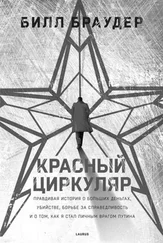
В своей книге «Красный бюллетень» Билл Браудер доказывает, что президент РФ Путин, по сути, действует как глава мафиозной организации. «Является фактом, что некоторые люди из его окружения и членов администрации, причастны к воровству $230 миллионов. И этот факт предал огласке Сергей Магнитский. И практически все сотрудники президентского аппарата, в том числе и сам В.В. Путин, по сути, принимают участие в заговоре с целью покрыть убийство человека, который погиб, разоблачая преступление против государства».
Книгу Браудера «Красный бюллетень» отказались публиковать все российские издательства и в конце 2014 года на русском языке её издадут в Украине.
Red notice — читать онлайн бесплатно полную книгу (весь текст) целиком
Ниже представлен текст книги, разбитый по страницам. Система сохранения места последней прочитанной страницы, позволяет с удобством читать онлайн бесплатно книгу «Red notice», без необходимости каждый раз заново искать на чём Вы остановились. Поставьте закладку, и сможете в любой момент перейти на страницу, на которой закончили чтение.
Интервал:
Закладка:
«Such as?» Vadim asked.
«Take Tarkosaleneftegaz», the man said, banging his spoon on the table. «They took it right out of Gazprom».
Vadim asked, «What’s Tarko—"
«Tarko Saley», the man said, cutting Vadim off. «It’s a gas field in the Yamalo-Nenets region. It has something like four hundred billion cubic meters of gas».
Vadim got out his calculator and converted this number into barrels of oil equivalent [11] Barrel of oil equivalent, or BOE, is a unit of energy used to compare cubic meters of gas to barrels of oil.
. The number he got — 2.7 billion barrels of oil — meant that Tarko Saley was bigger than the reserves of the US oil company Occidental Petroleum, a $9 billion company.
I have pretty thick skin, but taking a company worth $9 billion right out of Gazprom shocked me. As the man went through the details, he named names, gave dates, and told us about other major gas fields that were being stolen. We followed up with as many questions as we could think of and filled seven pages of a Black n’ Red notebook. We eventually had to end lunch after two hours, otherwise he would have gone on forever.
Without knowing it, I’d stumbled upon one of the most important cultural phenomena of post-Soviet Russia — the exploding wealth gap. In Soviet times, the richest person in Russia was about six times richer than the poorest. Members of the Politburo might have had a bigger apartment, a car, and a nice dacha, but not much more than that. However, by the year 2000 the richest person had become 250,000 times richer than the poorest person. This wealth disparity was created in such a short period of time that it poisoned the psychology of the nation. People were so angry that they were ready to spill their guts to anyone who wanted to talk about it.
Most of our other meetings went roughly the same way. We met a gas industry consultant who told us about another stolen gas field. We had a meeting with a gas pipeline executive who recounted how Gazprom had diverted all of its gas sales in the former Soviet Union to a murky intermediary. We met with an ex-employee who described how Gazprom had made large, below-market loans to friends of management. In all, we filled two notebooks with damning allegations of theft and fraud.
If you were to believe all the information we collected, this was probably the largest theft in the history of business. Only there was one big catch. We had no idea if any of these allegations were true. The things people were saying could easily have been sour grapes, exaggeration, or deliberate misinformation. We needed to find a way to verify what we had heard.
But how could we verify anything in Russia? Wasn’t that the essence of the problem we were facing with Gazprom in the first place? Wasn’t Russia a place that was so extremely opaque that you sometimes felt as though you couldn’t even see your hand in front of your face?
It appeared that way, but in reality, it wasn’t so opaque at all. All you needed to do was scratch the surface to find that Russia was strangely one of the most transparent places in the world. You just needed to know how to get the information, and we learned this almost by accident a few weeks after we’d finished the Gazprom interviews.
Vadim was driving his VW Golf to work when traffic ground to a halt where the Boulevard Ring meets Tverskaya at Pushkin Square. At that junction, every car has to turn either left or right, creating near-permanent gridlock at most times of the day. With motorists stuck in their cars for as long as an hour, a small army of enterprising street urchins had popped up to sell anything from pirated DVDs to newspapers to cigarette lighters.
While Vadim sat there that day, a boy approached the car brandishing his wares. Vadim wasn’t interested, but the boy persisted.
«All right, what are you selling?» Vadim asked warily.
The boy held open his dirty blue parka to reveal a collection of CD-ROMs in a plastic portfolio. «I’ve got databases».
Vadim’s ears perked up. «What kind of databases?»
«All kinds. Mobile phone directories, tax return records, traffic violations, pension fund info, you name it».
«Interesting. How much?»
«Depends. Anywhere from five to fifty dollars».
Vadim squinted at the small print on the collection of discs in this kid’s portfolio and spotted one entitled «Moscow Registration Chamber Database». Vadim did a double take. The Moscow Registration Chamber is the organization that tracks and collects information about who owns all Moscow-based companies.
Vadim pointed to the disc. «How much for that one?»
«That? Eh… five dollars».
Vadim gave the boy a $5 bill and took the disc.
As soon as Vadim got to the office, he went to his computer to see if he’d just spent $5 on a blank disc. But just as the boy had promised, a menu appeared allowing Vadim to search for the beneficial ownership of every single company in Moscow.
It was at that moment that we discovered the second most interesting cultural phenomenon in Russia — that it was one of the most bureaucratic places in the world. Because of Soviet central planning, Moscow needed data on every single facet of life so its bureaucrats could decide on everything from how many eggs were needed in Krasnoyarsk to how much electricity was needed in Vladivostok. The fact that the Soviet regime had fallen hadn’t changed anything — Moscow’s ministries continued to exist, and their bureaucracies took great pains to account for everything for which they were responsible.
After Vadim’s chance run-in on Pushkin Square, we quickly became adept at finding all sorts of other data to help us cross-check the allegations we’d collected in the Gazprom interviews. Using these databases, we calculated that the management of Gazprom had sold seven major gas fields between 1996 and 1999 for next to nothing.
These asset transfers weren’t merely huge, they were brazen, and they were done without the slightest sense of shame. The new owners of the stolen property did nothing to even try to hide their ownership.
One of the more blatant examples was the story of Sibneftegaz, a subsidiary of Gazprom. Sibneftegaz, a Siberian gas producer, obtained licenses for a gas field containing 1.6 billion barrels of oil equivalent in 1998. Based on an extremely conservative estimate, we determined this subsidiary was worth about $530 million, yet a group of buyers was allowed to buy 53 percent of Sibneftegaz for a total of $1.3 million — a 99.5 percent discount to our calculation of its fair value!
Who were these fortunate buyers? One was Gennady Vyakhirev, the brother of Gazprom’s CEO, Rem Vyakhirev. Gennady, along with his son Andrey, used a company to buy 5 percent of Sibneftegaz for $87,600.
Another 18 percent block was bought for $158,000 by a company partially owned by a Victor Bryanskih, who was a manager in Gazprom’s strategic-development department. A further 10 percent of Sibneftegaz was bought by a company owned by Vyacheslav Kuznetsov and his wife, Natalie. Vyacheslav was the head of Gazprom’s internal audit department, the very department that was supposed to detect and stop this type of thing from happening in the first place.
We uncovered six other major asset transfers using similar techniques. When Vadim added up all the oil and gas reserves that had left Gazprom’s balance sheet, he found that Gazprom had effectively given away reserves equivalent to the size of Kuwait’s. Full-scale wars had been fought over far less.
What was most astonishing, though, was that while these oil and gas reserves were huge, Vadim determined they represented only 9.65 percent of Gazprom’s total reserves. In other words, more than 90 percent of Gazprom’s reserves had not been stolen. No other investors understood this. The markets had assumed that literally every last cubic meter of gas and every drop of oil had been pilfered from the company, which was why it traded at a 99.7 percent discount to its Western peers. But we had just proved that more than 90 percent was still there — and no one else knew it.
Читать дальшеИнтервал:
Закладка:
Похожие книги на «Red notice»
Представляем Вашему вниманию похожие книги на «Red notice» списком для выбора. Мы отобрали схожую по названию и смыслу литературу в надежде предоставить читателям больше вариантов отыскать новые, интересные, ещё непрочитанные произведения.










Обсуждение, отзывы о книге «Red notice» и просто собственные мнения читателей. Оставьте ваши комментарии, напишите, что Вы думаете о произведении, его смысле или главных героях. Укажите что конкретно понравилось, а что нет, и почему Вы так считаете.