Кэтрин Эпплгейт - Crenshaw
Здесь есть возможность читать онлайн «Кэтрин Эпплгейт - Crenshaw» весь текст электронной книги совершенно бесплатно (целиком полную версию без сокращений). В некоторых случаях можно слушать аудио, скачать через торрент в формате fb2 и присутствует краткое содержание. Год выпуска: 2015, ISBN: 2015, Издательство: Macmillan, Жанр: Сказка, на английском языке. Описание произведения, (предисловие) а так же отзывы посетителей доступны на портале библиотеки ЛибКат.
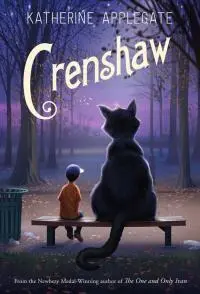
- Название:Crenshaw
- Автор:
- Издательство:Macmillan
- Жанр:
- Год:2015
- ISBN:9781250080226
- Рейтинг книги:4 / 5. Голосов: 1
-
Избранное:Добавить в избранное
- Отзывы:
-
Ваша оценка:
Crenshaw: краткое содержание, описание и аннотация
Предлагаем к чтению аннотацию, описание, краткое содержание или предисловие (зависит от того, что написал сам автор книги «Crenshaw»). Если вы не нашли необходимую информацию о книге — напишите в комментариях, мы постараемся отыскать её.
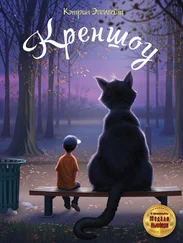
Jackson and his family have fallen on hard times. There's no more money for rent. And not much for food, either. His parents, his little sister, and their dog may have to live in their minivan. Again.
Crenshaw is a cat. He's large, he's outspoken, and he's imaginary. He has come back into Jackson's life to help him. But is an imaginary friend enough to save this family from losing everything?
Beloved author Katherine Applegate proves in unexpected ways that friends matter, whether real or imaginary.
Crenshaw — читать онлайн бесплатно полную книгу (весь текст) целиком
Ниже представлен текст книги, разбитый по страницам. Система сохранения места последней прочитанной страницы, позволяет с удобством читать онлайн бесплатно книгу «Crenshaw», без необходимости каждый раз заново искать на чём Вы остановились. Поставьте закладку, и сможете в любой момент перейти на страницу, на которой закончили чтение.
Интервал:
Закладка:
“By the way,” I said before leaving the room, “you’re hugging a dog.”
I didn’t see what happened next, but I heard a hiss and a yowl. Aretha dashed past me at high speed.
She hid under the kitchen table for an hour.
42
Selling your stuff at a yard sale is a weird experience. It’s like walking around with your clothes on inside out. Underwear on top of jeans, socks on top of sneakers.
The insides of your apartment are spread out for everybody to see and touch. Strangers finger the lamp that used to be on your bedside table. Sweaty guys sit in your dad’s favorite chair. Little stickers are on everything. Five dollars for your old tricycle that still has sparklers on the wheels. Fifty cents for the Candy Land game.
It was a sunny Sunday morning. Lots of neighbors were selling stuff, too. It almost felt like a party. My mom sat at a card table with a little box to hold money. My dad walked around while people bargained with him and said how about two dollars instead of three.
When he got too tired to walk, he sat in a folding chair and played songs on his guitar and sang. Sometimes my mom would sing harmony.
My main job was to carry stuff to people’s cars and to keep an eye on Robin. She was pulling someone’s old wagon that had a $4 sign taped to it. In the wagon was her trash can with the blue bunnies, which my parents had promised she could keep.
It wasn’t so bad, watching our things get sold. I told myself that every dollar we made was a good thing and that it was all just meaningless stuff. And it was nice to be with our neighbors and friends, drinking lemonade and talking and singing along with my parents.
Around noon, we’d sold almost everything. I watched my mom count up the money we’d made. She looked over at my dad and shook her head. “Not even close to what we need,” she said quietly.
Before he could respond, a skinny man with a ponytail approached my dad. He pulled out a fancy leather wallet and asked my dad if his guitar was for sale. My dad and mom exchanged a glance. “Could be, I suppose,” said my dad.
“I have one that’s for sale, too,” my mom added quickly. “It’s back in the apartment.”
My dad held up his guitar. Sunlight darted off its smooth black body. “It’s a beauty,” said my dad. “Lotta history.”
“Dad,” I exclaimed, “you can’t sell your guitar.”
“There’s always another guitar around the bend, Jacks,” said my dad, but he wouldn’t meet my eyes.
Robin ran over. She was still towing the wagon, which nobody had bought. “You can’t sell that!” she cried. “It’s named after Jackson!”
“Actually,” I said, “ I was named after the guitar.”
“It doesn’t matter!” Robin’s eyes welled with tears. “That’s a keepsake for keeping. Here. You can have my trash can for free, mister. Instead.”
She thrust her trash can into the skinny man’s hands. “I, uh—” the man began. “I … it’s a dynamite trash can, sweetie. I really like the … the bunnies. But I’m more in the market for a guitar.”
“No guitars, no way,” Robin said.
My dad gave the man a helpless shrug. “Sorry, man,” he said. “You heard the lady. Tell you what, though. Why don’t you give me your phone number? In case we have a change of heart. I’ll walk you out to your car.”
Together, my dad and the man headed toward a sleek black car. My dad’s left foot dragged a little. Sometimes that happens with MS.
They exchanged scraps of paper, talked, and nodded. The skinny man drove off, and I had a feeling that my dad’s change of heart had already happened.
43
About an hour later, our landlord came by our apartment. He had an envelope in his hand. He hugged my mom and shook my dad’s hand and said he wished things could be different. I knew what the paper was because I could see the words at the top.
It said FINAL EVICTION NOTICE. Which meant we had to leave the apartment.
My dad leaned against the wall. There wasn’t anywhere to sit anymore.
“Kids,” he said, “looks like we’re going to be taking a little drive.”
“To Grandma’s?” asked Robin.
“Not exactly,” said my mom. She slammed a cupboard door shut.
My dad knelt down next to Robin. He had to use his cane to keep steady. “We have to move, baby. But it will be fun. You’ll see.”
Robin’s eyes bored into me. “You told me it would be okay, Jacks,” she said. “You lied.”
“I didn’t lie,” I lied.
“This isn’t Jackson’s fault, Robin,” my mom said. “Don’t blame him. Blame us.”
I didn’t wait to hear any more. I ran to my room. Crenshaw was lying on my bed.
I sat next to him, and when I buried my head in his fur, he didn’t object. He purred loudly.
I cried a little, but not much. There wasn’t any point.
Once I read a book called Why Cats Purr and Other Feline Mysteries.
Turns out nobody knows for sure why cats purr.
It’s surprising how much stuff adults don’t know.
44
At four that afternoon, Marisol came to the door. She was wearing flip-flops and flowered pajamas. She had the Gouchers’ dachshunds, Frank and Beans, with her. “Did you forget?” she asked. “You were supposed to meet me.”
I apologized and took Frank’s leash. As we started down the sidewalk, I was surprised to see Crenshaw walking ahead of us. Not as surprised as I might have been a day or two ago. But still. There he was, gliding along on his hind legs, doing the occasional cartwheel or handstand.
I didn’t know how to tell Marisol why we were leaving. I’d never told her about our money problems, although she may have guessed by the way I didn’t offer her anything to eat when she came over, or by the way my clothes were always a little too small.
I wasn’t lying, exactly. It was more that I left out certain facts and focused on others.
I didn’t want to do it, of course. I liked facts. And so did Marisol. But sometimes facts were just too hard to share.
I decided to tell Marisol something about a sick relative, about how we had to go take care of him, and how it was an all-of-a-sudden kind of thing. But just as I started to speak, Crenshaw leaned close and whispered in my ear: “The truth, Jackson.”
I squeezed my eyes shut and counted to ten. Slowly.
Ten seconds seemed like the right amount of time for me to stop being crazy.
I opened my eyes. Marisol was smiling at me.
And then I told her everything. I told her about how worried I’d been and how we were hungry sometimes and how afraid I was about what might come next.
We walked toward the school playground. Crenshaw strode ahead and rocketed down the tube slide. When he got to the bottom, he looked at me and nodded approvingly.
And then, I don’t know why, I told Marisol one more fact.
I told her about Crenshaw.
45
I waited for her to tell me I was nuts.
“Look.” Marisol knelt down to scratch Beans behind the ear. “We don’t know everything. I don’t know why my brothers feel the need to burp the alphabet. I don’t know why I like to build things. I don’t know why there are no rainbow M&M’s. Why do you have to understand everything, Jackson? I like not knowing everything. It makes things more interesting.”
“Science is about facts. Life is about facts. Crenshaw is not a fact.” I shrugged. “If you understand how something happens, then you can make it happen again. Or not happen.”
“You want Crenshaw to go away?”
“Yes,” I said loudly. Then, more softly: “No. I don’t know.”
She smiled. “I wish I could see him.”
“Black. White. Hairy,” I said. “Extremely tall.”
“What’s he doing right now?”
Читать дальшеИнтервал:
Закладка:
Похожие книги на «Crenshaw»
Представляем Вашему вниманию похожие книги на «Crenshaw» списком для выбора. Мы отобрали схожую по названию и смыслу литературу в надежде предоставить читателям больше вариантов отыскать новые, интересные, ещё непрочитанные произведения.


![Кэтрин Эпплгейт - Айван, единственный и неповторимый [litres]](/books/398134/ketrin-epplgejt-ajvan-edinstvennyj-i-nepovtorimyj-thumb.webp)
![Кэтрин Эпплгейт - Последняя из рода [litres]](/books/407522/ketrin-epplgejt-poslednyaya-iz-roda-litres-thumb.webp)

Обсуждение, отзывы о книге «Crenshaw» и просто собственные мнения читателей. Оставьте ваши комментарии, напишите, что Вы думаете о произведении, его смысле или главных героях. Укажите что конкретно понравилось, а что нет, и почему Вы так считаете.