Robin Cook - Outbreak
Здесь есть возможность читать онлайн «Robin Cook - Outbreak» весь текст электронной книги совершенно бесплатно (целиком полную версию без сокращений). В некоторых случаях можно слушать аудио, скачать через торрент в формате fb2 и присутствует краткое содержание. Город: New York, Год выпуска: 2002, ISBN: 2002, Издательство: Berkley Books, Жанр: thriller_medical, на английском языке. Описание произведения, (предисловие) а так же отзывы посетителей доступны на портале библиотеки ЛибКат.
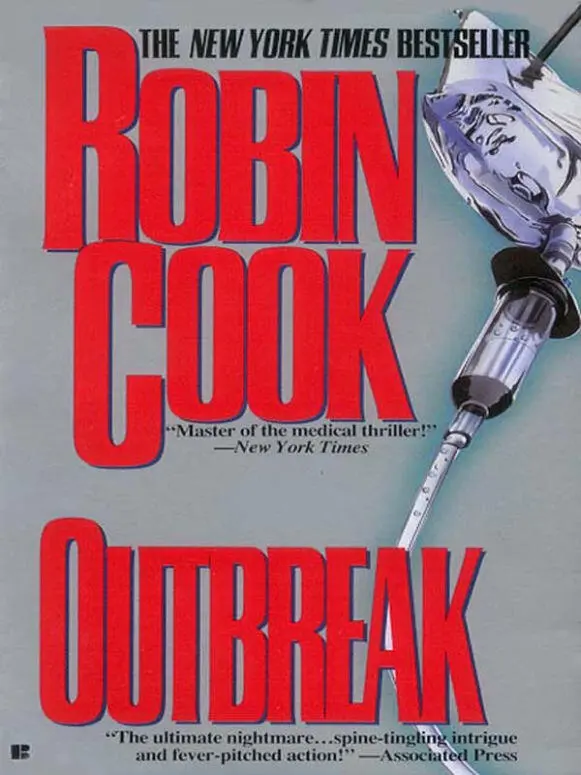
- Название:Outbreak
- Автор:
- Издательство:Berkley Books
- Жанр:
- Год:2002
- Город:New York
- ISBN:978-1-1012-0348-4
- Рейтинг книги:5 / 5. Голосов: 1
-
Избранное:Добавить в избранное
- Отзывы:
-
Ваша оценка:
Outbreak: краткое содержание, описание и аннотация
Предлагаем к чтению аннотацию, описание, краткое содержание или предисловие (зависит от того, что написал сам автор книги «Outbreak»). Если вы не нашли необходимую информацию о книге — напишите в комментариях, мы постараемся отыскать её.
Outbreak — читать онлайн бесплатно полную книгу (весь текст) целиком
Ниже представлен текст книги, разбитый по страницам. Система сохранения места последней прочитанной страницы, позволяет с удобством читать онлайн бесплатно книгу «Outbreak», без необходимости каждый раз заново искать на чём Вы остановились. Поставьте закладку, и сможете в любой момент перейти на страницу, на которой закончили чтение.
Интервал:
Закладка:
“I know that,” said Marissa. “But you cannot ignore the fact that this outbreak started with an avalanche of cases, then slowed to a trickle with isolation.”
Dubchek took a deep breath. “Listen,” he said condescendingly, “Dr. Layne has confirmed your finding that one of the initial patients had been to the San Diego conference with Richter and Zabriski. That fact forms the basis of the official position: Richter brought the virus back from its endemic habitat in Africa and spread it to other doctors in San Diego, including the unfortunate ophthalmologist here at the Medica Hospital.”
“But that position ignores the known incubation period for hemorrhagic fever.”
“I know there are problems,” admitted Dubchek tiredly, “but at the moment that’s our official position. I don’t mind you following up the food-borne possibility, but for God’s sake stop talking about it. Remember that you are here in an official capacity. I don’t want you conveying your personal opinions to anyone, particularly the press. Understood?”
Marissa nodded.
“And there are a few things I’d like you to do,” continued Dubchek. “I’d like you to contact the Health Commissioner’s Office and ask that they impound the remains of some of the victims. We’ll want some gross specimens to be frozen and sent back to Atlanta.”
Marissa nodded again. Dubchek started through the door, then hesitated. Looking back he said more kindly, “You might be interested to know that Tad has started to compare the Ebola from the L.A., St. Louis and Phoenix outbreaks. His preliminary work suggests that they are all the same strain. That does support the opinion that it is really one related outbreak.” He gave Marissa a brief, self-satisfied expression, then left.
Marissa closed her eyes and thought about what she could do. Unfortunately, no custard had been left over from the fatal lunch. That would have made things too easy. Instead, she decided to draw blood on all the food staff to check for Ebola antibodies. She also decided to send samples of the custard ingredients to Tad to check for viral contamination. Yet something told her that even if the custard were involved she wasn’t going to learn anything from the ingredients. The virus was known to be extremely sensitive to heat, so it could only have been introduced into the custard after it had cooled. But how could that be? Marissa stared at her stacks of papers. The missing clue had to be there. If she’d only had a bit more experience, perhaps she’d be able to see it.
8
IT WAS NEARLY A month later, and Marissa was finally back in Atlanta in her little office at the CDC. The epidemic in Phoenix had finally been contained, and she, Dubchek and the other CDC doctors in the hospital had been allowed to leave, still without any final answers as to what caused the outbreak or whether it could be prevented from reoccurring.
As the outbreak had wound down, Marissa had become eager to get home and back to work at the Center. Yet now that she was there, she was not happy. With tear-filled eyes, due to a mixture of discouragement and anger, she was staring down at the memo which began, “I regret to inform you…” Once again Dubchek had turned down her proposal to work with Ebola in the maximum containment lab, despite her continued efforts to develop laboratory skills in relation to handling viruses and tissue cultures. This time she felt truly discouraged. She still felt that the outbreak in Phoenix had been connected to the custard dessert, and she desperately wanted to vindicate her position by utilizing animal systems. She thought that if she could understand the transmission of the virus she might develop an insight into where it came from in the first place.
Marissa glanced at the large sheets of paper that traced the transmission of the Ebola virus from one generation to another in all three U.S. outbreaks. She had also constructed less complete but similar diagrams concerning the transmission of Ebola in the first two outbreaks in 1976. Both had occurred almost simultaneously, one in Yambuku, Zaire, and the other in Nzara, Sudan. She’d gotten the material from raw data stored in the CDC archives.
One thing that interested her particularly about the African experience was that a reservoir had never been found. Even the discovery that the virus causing Lassa Hemorrhagic Fever resided in a particular species of domestic mouse had not helped in locating Ebola’s reservoir. Mosquitoes, bedbugs, monkeys, mice, rats—all sorts of creatures were suspected and ultimately ruled out. It was a mystery in Africa just as it was in the United States.
Marissa tossed her pencil onto her desk with a sense of frustration. She had not been surprised by Dubchek’s letter, especially since he had progressively distanced her from his work in Phoenix and had sent her back to Atlanta the day the quarantine had been lifted. He seemed determined to maintain the position that the Ebola virus had been brought back from Africa by Dr. Richter, who had then passed it on to his fellow ophthalmologists at the eyelid surgery conference in San Diego. Dubchek was convinced that the long incubation period was an aberration.
Impulsively, Marissa got to her feet and went to find Tad. He’d helped her write up the proposal, and she was confident he’d allow her to cry on his shoulder now that it had been shot down.
After some protest, Marissa managed to drag him away from the virology lab to get an early lunch.
“You’ll just have to try again,” Tad said when she told him the bad news straight off.
Marissa smiled. She felt better already. Tad’s naiveté was so endearing.
They crossed the catwalk to the main building. One benefit of eating early was that the cafeteria line was nonexistent.
As if to further torment Marissa, one of the desserts that day was caramel custard. When they got to a table and began unloading their trays, Marissa asked if Tad had had a chance to check the custard ingredients that she’d sent back from Arizona.
“No Ebola,” he said laconically.
Marissa sat down, thinking how simple it would have been to find some hospital food supply company was the culprit. It would have explained why the virus repeatedly appeared in medical settings.
“What about the blood from the food service personnel?”
“No antibodies to Ebola,” Tad said. “But I should warn you: Dubchek came across the work and he was pissed. Marissa, what’s going on between you two? Did something happen in Phoenix?”
Marissa was tempted to tell Tad the whole story, but again she decided it would only make a bad situation worse. To answer his question, she explained that she’d been the inadvertent source of a news story that differed from the official CDC position.
Tad took a bite of his sandwich. “Was that the story that said there was a hidden reservoir of Ebola in the U.S. ?”
Marissa nodded. “I’m certain the Ebola was in the custard. And I’m convinced that we’re going to face further outbreaks.”
Tad shrugged. “My work seems to back up Dubchek’s position. I’ve been isolating the RNA and the capsid proteins of the virus from all three outbreaks, and astonishingly enough, they are all identical. It means that the exact same strain of virus is involved, which in turn means that what we are experiencing is one outbreak. Normally, Ebola mutates to some degree. Even the two original African outbreaks, in Yambuku and Nzara, which were eight hundred fifty kilometers apart, involved slightly different strains.”
“But what about the incubation period?” protested Marissa. “During each outbreak, the incubation period of new cases was always two to four days. There were three months between the conference in San Diego and the problem in Phoenix.”
Читать дальшеИнтервал:
Закладка:
Похожие книги на «Outbreak»
Представляем Вашему вниманию похожие книги на «Outbreak» списком для выбора. Мы отобрали схожую по названию и смыслу литературу в надежде предоставить читателям больше вариантов отыскать новые, интересные, ещё непрочитанные произведения.

Обсуждение, отзывы о книге «Outbreak» и просто собственные мнения читателей. Оставьте ваши комментарии, напишите, что Вы думаете о произведении, его смысле или главных героях. Укажите что конкретно понравилось, а что нет, и почему Вы так считаете.