Lee Child - Night School
Здесь есть возможность читать онлайн «Lee Child - Night School» весь текст электронной книги совершенно бесплатно (целиком полную версию без сокращений). В некоторых случаях можно слушать аудио, скачать через торрент в формате fb2 и присутствует краткое содержание. Жанр: Триллер, на английском языке. Описание произведения, (предисловие) а так же отзывы посетителей доступны на портале библиотеки ЛибКат.
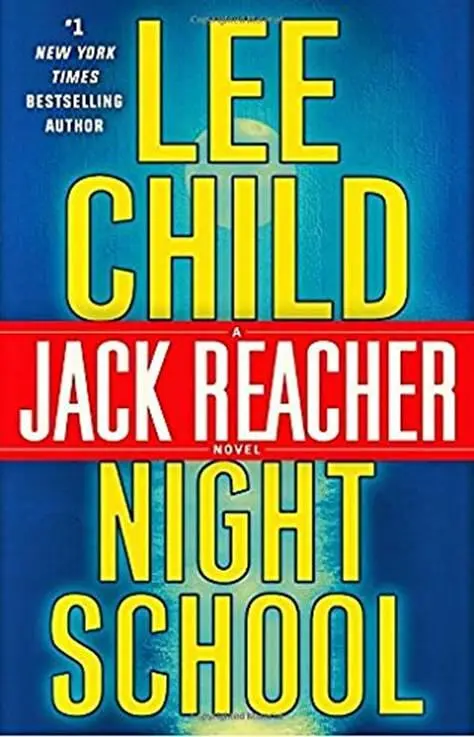
- Название:Night School
- Автор:
- Жанр:
- Год:неизвестен
- ISBN:нет данных
- Рейтинг книги:4 / 5. Голосов: 1
-
Избранное:Добавить в избранное
- Отзывы:
-
Ваша оценка:
Night School: краткое содержание, описание и аннотация
Предлагаем к чтению аннотацию, описание, краткое содержание или предисловие (зависит от того, что написал сам автор книги «Night School»). Если вы не нашли необходимую информацию о книге — напишите в комментариях, мы постараемся отыскать её.
It's 1996, and Reacher is still in the army. In the morning they give him a medal, and in the afternoon they send him back to school. That night he's off the grid. Out of sight, out of mind.
Two other men are in the classroom – an FBI agent and a CIA analyst. Each is a first-rate operator, each is fresh off a big win, and each is wondering what the hell they are doing there.
Then they find out: A jihadist sleeper cell in Hamburg, Germany, has received an unexpected visitor – a Saudi courier seeking safe haven while waiting to rendezvous with persons unknown. A CIA asset undercover inside the cell has overheard the courier whisper a chilling message: "The American wants a hundred million dollars."
For what? And who from? Reacher and his two new friends are told to find the American. Reacher recruits the best soldier he has ever worked with: Sergeant Frances Neagley. Their mission heats up in more ways than one, while always keeping their eyes on the prize: If they don't get their man, the world will suffer an epic act of terrorism.
From Langley to Hamburg, Jalalabad to Kiev, Night School moves like a bullet through a treacherous landscape of double crosses, faked identities, and new and terrible enemies as Reacher maneuvers inside the game and outside the law.
Night School — читать онлайн бесплатно полную книгу (весь текст) целиком
Ниже представлен текст книги, разбитый по страницам. Система сохранения места последней прочитанной страницы, позволяет с удобством читать онлайн бесплатно книгу «Night School», без необходимости каждый раз заново искать на чём Вы остановились. Поставьте закладку, и сможете в любой момент перейти на страницу, на которой закончили чтение.
Интервал:
Закладка:
“Can’t do it,” Sinclair said. “Can’t risk the safe house.”
“We’re blind if we don’t. We’re passing up a solid-gold chance of getting the guy.”
Reacher looked at Bishop. An unexpected ally.
Sinclair said, “There are future considerations.”
“That’s then and this is now.”
“Can’t do it,” Sinclair said again.
“We’re already doing it,” Reacher said.
“What?”
“Chief of Detectives Griezman agreed to watch the apartment building. Plain-clothes officers in cars. They’re pretty good. We saw them at work. Or rather, we didn’t.”
Sinclair went pale. Anger mostly, Reacher figured.
She said, “Starting when?”
“Maybe this afternoon,” he said. “Depends on his scheduling issues.”
“Why is he doing it?”
“I asked him to.”
“In exchange for what?”
“I’m running the fingerprint.”
Sinclair said, “Major, I need to talk to you.”
Reacher said, “You are talking to me.”
“In private.”
Neagley said, “Use my room. We won’t hear you from there.”
She tossed her room key, a soft underhand arc, and Sinclair caught it, one-handed, no trouble at all.
She said, “Follow me.”
Which Reacher did, down the corridor, to Neagley’s room. Sinclair went all the way in, to the window, and she turned around with the light behind her.
Taller than the average, but no wider.
The black dress, the pearls, the nylons, the shoes.
The face and the hair, combed with her fingers.
Looking good.
She said, “You disobeyed an order.”
Reacher said, “I don’t remember an order. I don’t remember much of anything after the National Security Adviser told us we get anything we need. And we need this. It could save us a year. Without it all we got is a regular manhunt. For a guy already four months AWOL, with a brand-new foreign passport. Instead of that we could have a Saudi kid in a pink shirt and pointed shoes lead us directly to him. Right here and now. Who wouldn’t take that deal? The future means nothing if we don’t live to see it.”
“So you broke the law, but only because you thought you had a good reason. You and everyone else. There are lots of good reasons. Too many good reasons. Which is why we have a special structure, to decide between them, when they compete one against the other. That structure is called the National Security Council. We weigh things up and we judge priorities. You just blew a year’s hard work, major. You should resign. Before the after-action report comes out. You’ll get a better deal that way.”
“OK,” Reacher said. “I will, if it turns out bad.”
“You also just blew up forty years of legal precedent about which databases are secret and which are not. That’s a court martial offense all by itself. It’s a federal crime.”
“OK,” Reacher said. “If it turns out bad, I’ll plead guilty.”
“You’re guilty however it turns out.”
“Doesn’t work that way. If it turns out good I get the Legion of Merit.”
“What is this, a joke?”
Reacher said, “No, it’s a gamble. And so far I’m beating the house. The messenger is back in Hamburg. That was ten-to-one at best. But it just paid out. We should ride the wave and keep on winning. Griezman’s OK. He won’t blow the safe house. The boys inside are very complacent. They pay no attention. They have a roommate who’s making secret phone calls, and composing secret messages for dead drops, and heading out to the park for no reason at all, and they haven’t noticed any of that. Why would they notice a car parked a hundred yards away?”
Sinclair waved it off, like he was missing the point. Then she said, “The fingerprint issue is serious. Legal and political. No one can make that go away.”
“I could say I worded the promise very carefully. I said I would run the print. That was all. I didn’t say I would share the result. A deception for sure, but hey, welcome to the major leagues. I could say for people like me it’s always the same gamble. Eggs get broken, the omelet gets made, and if it turns out tasty, then all is forgiven.”
“And if it doesn’t?”
“I’m always open to new experiences.”
No reply from Sinclair.
Reacher said, “If this turns out bad, you’re going to turn me in. You’re going to give evidence at the court martial. I understand that. And you’ll give it willingly. I understand that, too. You command us, but you don’t approve of us. I’ve played this game before. No hard feelings.”
“What if it turns out good?”
“Then you won’t turn me in and there won’t be a trial. You’ll get a glowing letter in your file, and I’ll get another medal.”
“Which will it be?”
“Honest answer?”
“Always.”
“It’s in the bag. It’s a done deal. This is an AWOL soldier. He and I are in the same city. It’s money in the bank.”
“Are you always this confident?”
“I used to be.”
“What are you now?”
“Even more.”
“Are you sleeping with your sergeant?”
“No, I am not. That would be inappropriate. And generally frowned upon, too. Not least by her.”
“She’s crazy about you.”
“We get along, as friends and colleagues.”
Sinclair said nothing in reply.
There was a knock at the door. Neagley herself, Reacher figured, right on cue, checking if Sinclair had killed him yet. Or Bishop, checking if he had killed Sinclair. He opened up, standing to one side, out of the line of fire.
Long training.
Neither Neagley nor Bishop.
It was a young American man in a department-store suit and a Brooks Brothers tie. He was carrying a rubber pouch with a zip. It looked to have half an inch of paper in it. That kind of size. That kind of stiffness.
The guy said, “For Dr. Sinclair. From the consulate. The document she requested.”
Seriously fast.
You bet your ass.
Reacher took the pouch and handed it to Sinclair. The guy in the suit went back down the stairs. Reacher and Sinclair went back to her room, where the others were waiting.
–
Sinclair unzipped the pouch and Reacher smelled copier paper still hot from the printer. There had been a flurry of phone calls, he guessed, and then a high-speed digital transmission incoming from somewhere, either Personnel Command back home, or Stuttgart maybe, directly into the Hamburg consulate, where a high-speed machine had done fast work, and where the young attaché in the Brooks Brothers tie had caught the tumbling pages and butted them together and zipped them up and grabbed a cab. The National Security Council. Even faster than the army press room.
The pages were crisp clear monochrome copies of a standard-issue army personnel file, for Private First Class Horace-none-Wiley, who was thirty-five years old, and from Sugar Land, Texas. He was coming to the end of his first three-year hitch. He had been a thirty-two-year-old recruit. He was five feet eight inches tall, and lightly built. Like a long-distance runner.
The second page had his photograph. It was clipped to the top right corner. Not a passport thumbnail like the old days, but a bigger print. Maybe three inches by two. The Xerox process had bleached out the highlights, like liquid neon, and made the shadows sooty. The image of the paperclip itself looked photographic, but also radioactive.
It was the same guy.
The Xerox imperfections gave the picture a hand-made quality, like a sketch done in charcoal. Like the sketch done in pencil. The same sketch. The same guy. No question. Zero doubt. The brow, the cheek bones, the deep-set eyes. The nose, like a blade. The crease in the cheek, exactly parallel. The set jaw, like he was clamping his teeth. The mouth, like a thin wound, completely expressionless.
Читать дальшеИнтервал:
Закладка:
Похожие книги на «Night School»
Представляем Вашему вниманию похожие книги на «Night School» списком для выбора. Мы отобрали схожую по названию и смыслу литературу в надежде предоставить читателям больше вариантов отыскать новые, интересные, ещё непрочитанные произведения.





Обсуждение, отзывы о книге «Night School» и просто собственные мнения читателей. Оставьте ваши комментарии, напишите, что Вы думаете о произведении, его смысле или главных героях. Укажите что конкретно понравилось, а что нет, и почему Вы так считаете.