Dale Brown - Puppet Master
Здесь есть возможность читать онлайн «Dale Brown - Puppet Master» весь текст электронной книги совершенно бесплатно (целиком полную версию без сокращений). В некоторых случаях можно слушать аудио, скачать через торрент в формате fb2 и присутствует краткое содержание. Город: New York, Год выпуска: 2016, ISBN: 2016, Издательство: William Morrow, Жанр: Триллер, на английском языке. Описание произведения, (предисловие) а так же отзывы посетителей доступны на портале библиотеки ЛибКат.
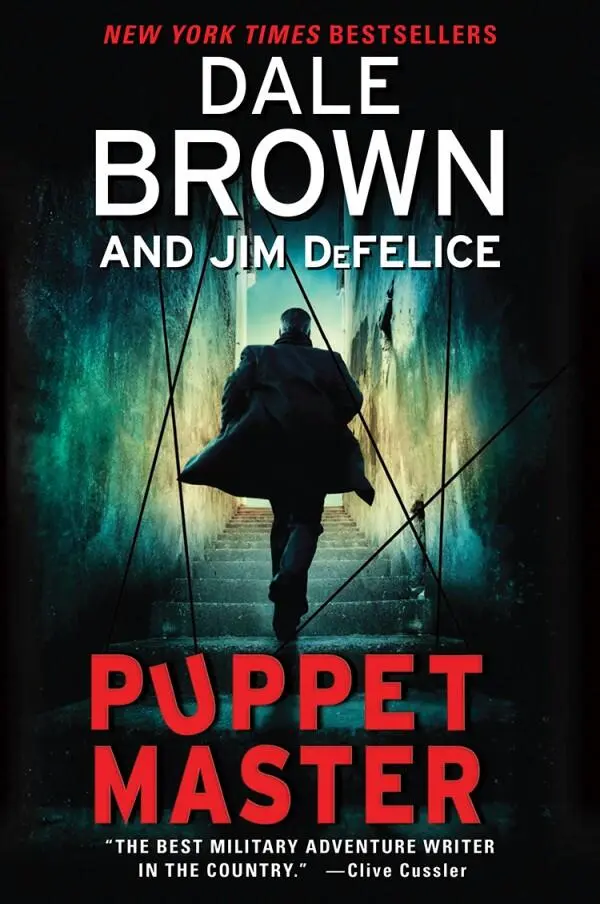
- Название:Puppet Master
- Автор:
- Издательство:William Morrow
- Жанр:
- Год:2016
- Город:New York
- ISBN:9780062411310
- Рейтинг книги:5 / 5. Голосов: 1
-
Избранное:Добавить в избранное
- Отзывы:
-
Ваша оценка:
Puppet Master: краткое содержание, описание и аннотация
Предлагаем к чтению аннотацию, описание, краткое содержание или предисловие (зависит от того, что написал сам автор книги «Puppet Master»). Если вы не нашли необходимую информацию о книге — напишите в комментариях, мы постараемся отыскать её.
, intelligent machines take center stage as America battles the Russian mafia in Eastern Europe
Louis Massina is revolutionizing the field of robotics. His technological wonders are capable of locating disaster survivors, preventing nuclear meltdowns, and replacing missing limbs. After one of Massina’s creations makes a miraculous rescue, an FBI agent recruits him to pursue criminals running a massive financial scam — and not coincidentally, suspected of killing the agent’s brother. Massina agrees to deploy a surveillance “bot” that uses artificial intelligence to follow its target. But when he’s thrust into a dangerous conspiracy, the billionaire inventor decides to take matters into his own hands, unleashing the greatest cyber-weapons in the world and becoming the Puppet Master.
Puppet Master — читать онлайн бесплатно полную книгу (весь текст) целиком
Ниже представлен текст книги, разбитый по страницам. Система сохранения места последней прочитанной страницы, позволяет с удобством читать онлайн бесплатно книгу «Puppet Master», без необходимости каждый раз заново искать на чём Вы остановились. Поставьте закладку, и сможете в любой момент перейти на страницу, на которой закончили чтение.
Интервал:
Закладка:
None of this was exactly verification, but he was sure it was Borya. And he was also sure it was past 8:00 p.m., which was her absolute curfew when he was out of town.
What the hell was she up to?
“Indulge me,” Tolevi told the driver. “See if you can follow that girl on the bike. The one who just turned. I want to see where she’s going.”
“But—”
“It’s my daughter,” said Tolevi sharply. “I want to see where she’s going. She’s breaking curfew.”
“I don’t know, sir.”
Tolevi leaned forward and dropped a hundred-dollar bill on the front seat of the limo.
“I have boys myself,” said the driver, putting the car in gear. “Much safer.”
25
“The problem with the Sox is that they can’t get consistent pitching,” said Flores. “And they traded away Trey Ball. He was a phenom. Believe me.”
“Would have been a phenom. Maybe,” said Jenkins.
Chelsea tuned the men out as they continued to argue, gently, about baseball. She checked the gear; they were tapped into twelve teller machines tonight, and would be able to cover another two dozen by the end of the week.
If they hacked into the ATM clearinghouses — something like bus depots for bank transactions — they could cover them all. But even Massina thought that was a bit too far.
For now, anyway.
Jenkins would definitely veto it. Chelsea could tell that he was having second thoughts about what they were doing, even though it had been his idea. He had a line in his head that he wasn’t going to cross, though he wasn’t very good at explaining exactly where it was.
They had eight UAVs in the air tonight, each doing what the flight engineers called an orbit around their designated air space. The orbits — slightly elliptical patterns — were designed by the computer for maximum coverage.
Chelsea toggled from Hum to Hum, looking at the infrared feeds. The people walking each starred in a movie she’d come in halfway through, and would leave before it ended. She was a strange kind of voyeur, watching them as if she were sailing above them, an angel from heaven looking for the soul she’d been sent to find.
Or the devil, maybe.
The system blurted an alert.
ATM 4 — unusual activity detected. ATM 4
The UAV in that area tucked its wing and sped in the direction of the machine, a mere three blocks away.
“I have something,” said Chelsea.
26
By the time his daughter turned onto Warren Street in Watertown, Tolevi had decided that he had seen quite enough. He couldn’t imagine why she was riding so far from home.
Or to be more precise, he didn’t want to imagine. He shut out all possibilities — boyfriends, drugs, worse — and did his best to clamp down on his simmering anger. As they neared Boston Children’s Hospital, Tolevi wondered if perhaps Borya was visiting a young friend. While that wouldn’t be completely acceptable — she was still out of the house past her assigned curfew — it would still be far better than any of the other possibilities. But she rode past, stopping at a bank machine down the street.
To buy drugs?
“Let me out,” Tolevi told the driver. “And wait. Come on, come on!”
The driver pulled across a driveway. Tolevi leapt from the car and ran to the ATM. His daughter was just grabbing her bike.
“Borya! Borya!” he yelled.
“Daddy?” Startled, the girl dropped her bike on the ground.
“What are you doing here?” Tolevi demanded. He felt his hands trembling; the idea of his daughter as a drug addict or worse was unnerving.
“Daddy — what are you doing here?”
“I just came home. Why are you out? What are you doing?”
“Nothing. I was…”
Her voice trailed off.
“What’s in your hand?”
“Nothing.”
Tolevi leaned forward and snatched his daughter’s hand. She tried to jerk it away. Though he was surprised at her strength, in the end the young teenager was no match for him. A bank card fluttered from her hand to the pavement.
“What money did you take?” he demanded.
“You hurt me, Daddy.”
“No tears, girl. That won’t work with me.” He was lying — already his daughter’s distress was having its effect. His anger weakened. Borya was too precious for Tolevi to be completely unaffected. But this was for her own good. “Where’s the money?”
“I didn’t take money.”
“Empty your pockets!”
He expected defiance, but instead Borya put her hands into her front pockets and turned them inside out. Her cell phone was in her back pocket; she showed it to him, slipping her hand in the other to show it was empty.
“Whose card is this?” he shouted. He glanced at it. “It’s not mine.” No answer, just averted eyes. “What’s the PIN number?” he demanded, holding up the card.
“I’m going home.”
“Get in the car,” he demanded.
“I’m going home.” She picked up her bike and hopped on.
Tolevi started to grab her, then decided to let her go. He turned back to the machine and put the card in.
He hesitated for a moment, his mind blanking as he tried to recall her birthdate. It was the most logical pin.
September 10. 9–10. 09–10
He hit the keys. That didn’t work.
Maybe 9–0–1–0? Or was it just the year she was born?
As he started to punch the numbers, a car sped down the street. Hit the brakes hard; the screech filled Tolevi with a dread he hadn’t felt since the doctor walked toward him in the hospital the night his wife died.
Borya! Oh no!
Two men jumped from the car. All he could think of was that they had hit her.
It took a few seconds for him to realize that wasn’t the case at all. By then, each man was on a knee, aiming a Glock 40 pistol at his chest.
“What is this?”
“Hands up,” shouted one of the men.
Tolevi slowly spread his hands. The men were between five and seven meters away, too far for him to try knocking away the weapons.
Had his daughter set him up? Impossible.
Who was behind this? Medved? Sergi?
One of the men was black, and the Russian mob never used blacks.
“Keep your hands up,” said the closer man.
“Are you robbing me? I have no money,” said Tolevi. “I’ll give you this bank card. That’s all I have.”
“Toss it down.”
Tolevi’s mind jumped to a calmer place. He would talk himself out of this, get close enough to grab one of the guns and then kill them both.
Or just give them his wallet. A cost of doing business. And of seeing his daughter again.
Borya! I didn’t meant to yell at you, baby. It’s just, you frustrate me sometimes. What were you doing out past curfew?
“Step back to the machine,” said the man closest to him.
“It’s just business,” said Tolevi. “No need for excitement.”
“Turn around and face the wall,” said the man. His partner rose and scooped up the ATM card.
“I don’t think that’s a good idea. You get the money, I get away and forget who you are. I’m sure that’s a great deal for all of us.”
“We’re not robbing you, asshole,” growled the man who had retrieved the bank card. “We’re with the FBI, and you’re under arrest.”
27
Borya fought back tears as she raced the last block to the house. She was angry with her father, and angry with herself. Why had he come back early? Didn’t he trust her?
Why had she insisted on going out one more time? Where was the sense in that?
Читать дальшеИнтервал:
Закладка:
Похожие книги на «Puppet Master»
Представляем Вашему вниманию похожие книги на «Puppet Master» списком для выбора. Мы отобрали схожую по названию и смыслу литературу в надежде предоставить читателям больше вариантов отыскать новые, интересные, ещё непрочитанные произведения.









Обсуждение, отзывы о книге «Puppet Master» и просто собственные мнения читателей. Оставьте ваши комментарии, напишите, что Вы думаете о произведении, его смысле или главных героях. Укажите что конкретно понравилось, а что нет, и почему Вы так считаете.