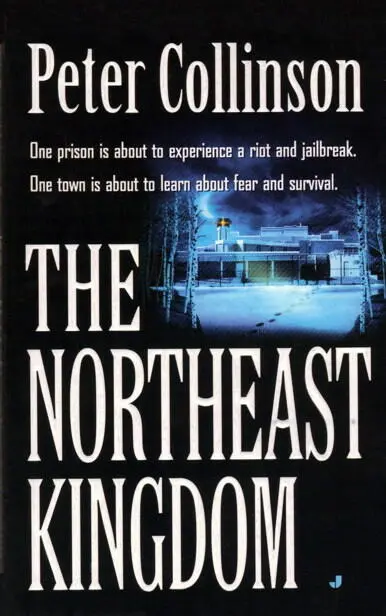
The Kingdom - Peter Collinson
Здесь есть возможность читать онлайн «The Kingdom - Peter Collinson» весь текст электронной книги совершенно бесплатно (целиком полную версию без сокращений). В некоторых случаях можно слушать аудио, скачать через торрент в формате fb2 и присутствует краткое содержание. Город: New York, Год выпуска: 2002, ISBN: 2002, Издательство: Jove, Жанр: Триллер, на английском языке. Описание произведения, (предисловие) а так же отзывы посетителей доступны на портале библиотеки ЛибКат.
- Название:Peter Collinson
- Автор:
- Издательство:Jove
- Жанр:
- Год:2002
- Город:New York
- ISBN:978-0-515-13361-5
- Рейтинг книги:4 / 5. Голосов: 1
-
Избранное:Добавить в избранное
- Отзывы:
-
Ваша оценка:
Peter Collinson: краткое содержание, описание и аннотация
Предлагаем к чтению аннотацию, описание, краткое содержание или предисловие (зависит от того, что написал сам автор книги «Peter Collinson»). Если вы не нашли необходимую информацию о книге — напишите в комментариях, мы постараемся отыскать её.
In the upland hills of Vermont sits the small town of Gilchrist, the scenic heart of the Northeast Kingdom region. It’s also home to a high-tech twenty-first century Alcatraz — America’s most advanced maximum-security penitentiary. When the riot erupts, no one is surprised. When the break comes, no one is prepared.
NO EXIT
Gilchrist is under siege and outnumbered. All communication with the outside world has been terminated by a violent winter storm. All escape routes are guarded by the most vicious prisoners in the country. And trapped in a local inn, the town’s few survivors are left with only one recourse: to run for their lives.
NO MERCY
But fleeing into the rugged timberland is little refuge for these desperate few. They are cold, defenseless, and worse: They are being tracked by a relentless killer who has nothing left to lose.
Peter Collinson — читать онлайн бесплатно полную книгу (весь текст) целиком
Ниже представлен текст книги, разбитый по страницам. Система сохранения места последней прочитанной страницы, позволяет с удобством читать онлайн бесплатно книгу «Peter Collinson», без необходимости каждый раз заново искать на чём Вы остановились. Поставьте закладку, и сможете в любой момент перейти на страницу, на которой закончили чтение.
Интервал:
Закладка:
“Easy,” said Tom Duggan. “Easy.”
“Last night before we left the country club — I thought I saw someone outside. He saw me there. He had picked up one of the fliers around town, checked the date, and stayed for me. The sound of the snowmobiles must have drawn him, same as the Cubans. Bert and Rita came across him and he killed them and carried them all that way. He brought them one by one into the barn. He set them up in there and put that flier in Bert’s mouth so that I would know he’s here for me. What Kells did for Inkman at the country club: My God, it’s the same thing. Grue is coming after me.”
“After you?” said Dr. Rosen. “ Only you?”
“Weather doesn’t matter to him, snow, cold, nothing. He’ll wait me out. He’ll be as patient as the snow.”
Turning, she saw Mia standing behind her, looking like a child who happened upon something she was not meant to see. Her gaze quieted Rebecca.
In the ensuing silence, Rebecca heard a far-off sled engine.
“Kells,” said Tom Duggan.
Great relief from the others, and Rebecca jumped to her feet.
Then Dr. Rosen said, “But what if Grue is waiting for him?”
They rushed upstairs to try to signal Kells. Rebecca followed Tom Duggan to the master bedroom — strewn with clothes and chewed-up pet toys — with the others behind.
She could just make out the sled riding toward them over the white landscape — just the one sled, carrying two men. Moments later she was certain those were Coe’s jacket sleeves at the handlebars.
Polk joined them, out of breath from climbing the stairs. By then Rebecca was positive: It was Kells behind Coe, same body type, same jacket. “How do we signal them?”
Tom Duggan looked for a way to open the window as Dr. Rosen began to recoil. “Oh, no,” Dr. Rosen said, pointing. “Oh, no.”
Rebecca saw nothing at first. Kells and Coe were five hundred yards from the house, moving straight.
Then she noticed the dark shapes appearing off to the left. Two more sleds, running side-by-side.
“Found us,” said Polk.
A low rise separated the sleds from Kells and Coe, shielding them from view. But both parties were running like arrows converging on a point.
The prisoners’ sleds moved steadily through the snow, without great speed, each carrying a pair of cons. “They haven’t seen each other yet,” said Tom Duggan. “Kells doesn’t see them.”
The glass was fogging. Rebecca pressed her fists against the cold pane.
The prisoners’ sleds disappeared behind the last rise, then reemerged, first one and then the other, cresting the top and slowing at the head of the downslope.
They had spotted Kells and Coe moving below them.
“No,” said Dr. Rosen, behind them.
Coe saw them now. He was slowing. His sled came to a stop halfway across the rolling fields, still a few hundred yards away.
The two animals spied one another across the frozen plain. For a moment everything was still except the falling snow.
She knew that Kells was judging their chances of making it to the house. She watched with blazing attention. He never looked at the house. He was deciding whether or not he needed to involve the rest of them.
Black spots appeared on the snow at his sides, his shed gloves. He raised his rifle as Coe dug into the snow, wheeling the sled around and shooting off in the opposite direction.
Kells fired to his left. Four or five muffled reports. Coe cut sharply at an angle, running back toward the trees.
The cons’ sleds plowed down the bluff, gaining speed at the bottom, leaving two sets of grooves in the clean white frosting.
“He’s leaving us,” said Dr. Rosen.
Tom Duggan said tensely, “He’s leading them away.”
One sled took the lead, its passenger rising and leaning on the driver, firing.
Kells returned fire behind him, then tossed away the empty rifle and pulled a smaller gun as Coe made for the woods. They were fading from view now, disappearing into the trees.
Rebecca pushed away from the window. “What do we do?” she said. “Do we wait? Do we help?”
“Look!” cried Mia.
One of the prisoners’ sleds turned back. It had left the chase, following Coe’s tracks back toward the house.
“They figured it out,” said Tom Duggan.
The sled stopped at Coe’s turnaround. One of the helmeted prisoners pointed up at the house like he was pointing right at their window. Then they left Coe’s tracks and headed for the front yard.
Polk was already limping toward the stairs.
“Everybody take a window,” said Tom Duggan nervously, rushing after Polk. “We can’t let them in.”
Mia was still staring out the window. Rebecca took her arm and brought her across the hall to the other front-facing bedroom, the pink-painted nursery. “You need a gun,” said Rebecca.
Instead, Mia found a narrow recess between the changing table and a closet that fit her perfectly.
Rebecca stripped the gauzy cloud curtains from their rods. She peered around the edge of the window, watching the sled ease into the yard below. The land was broad and uneven, spaced by bare, snow-crusted oaks and clusters of gnarly birches. The prisoners drove slowly, cautiously.
Rebecca backed up. Across the hall, she could see Dr. Rosen on his knees before the picture window in the bedroom. He was talking to himself, gun in hand.
Mia gripped the changing table near a short stack of onesies. “Rebecca?” she said.
Rebecca returned to the side of the window. “What?”
“I’m pregnant.”
It was a long moment before Rebecca turned to look at her. Mia stood sad-eyed, trembling. The rumble of the snowmobile turned Rebecca back to the window.
“Just stay by the wall,” Rebecca said.
Below, the sled stopped and the prisoners climbed off holding their helmets. One carrying a compact, Uzi-like weapon, the other a handgun. The one with the Uzi spoke into a police radio. It was only a matter of time now. The snow in the front yard was unblemished, but once they went around back it was all over.
Then a gunshot below, a crack of breaking glass. It must have been Polk below her. The cons dropped their helmets, scattering, each to a separate cluster of trees. The trunks shielded them well and only a shoulder or a tuft of hair showed against the snow.
Rebecca was trying to raise her storm window when the rat-a-tat sound started, matched by a thumping noise. The prisoner to the right sprayed the house with automatic fire. The stream lashed at her window, lingering there, ten or twelve holes smacking through the double glass as Rebecca ducked away and the rounds lodged in the ceiling, chipping plaster and spinning a Winnie-the-Pooh mobile.
The bedtime tune jingled along with Mia’s screaming.
Rebecca blindly fired back twice through the cracked window. It felt scary, random, and futile. Not daring like it looked on TV.
The bullets had not pierced the walls of the house. Mia sank to the floor.
More answering gunfire from below — a slight response to the cons’ barrage — then just the plinking lullaby.
Convict reinforcements would be on their way by now. Rebecca scanned the horizon for Kells, but it was hopeless. His sled tracks were already fading in the swirling snow.
Mia was sitting on the floor with her hands blocking her ears. “Get out of here,” said Rebecca. “Find someplace to hide.”
Mia heard her through her hands. “I want to stay with you.”
Rebecca was shaking. “You hide. They’re going to kill the rest of us.”
Another spray of gunfire and glass cracked and fell to the braided rug. Mia got on all fours and crawled out of the room.
Rebecca aimed through a wide break in the double glass, firing one quick shot at each cluster of trees. She was turning away in anticipation of another barrage when something caught her eye.
Читать дальшеИнтервал:
Закладка:
Похожие книги на «Peter Collinson»
Представляем Вашему вниманию похожие книги на «Peter Collinson» списком для выбора. Мы отобрали схожую по названию и смыслу литературу в надежде предоставить читателям больше вариантов отыскать новые, интересные, ещё непрочитанные произведения.




Обсуждение, отзывы о книге «Peter Collinson» и просто собственные мнения читателей. Оставьте ваши комментарии, напишите, что Вы думаете о произведении, его смысле или главных героях. Укажите что конкретно понравилось, а что нет, и почему Вы так считаете.