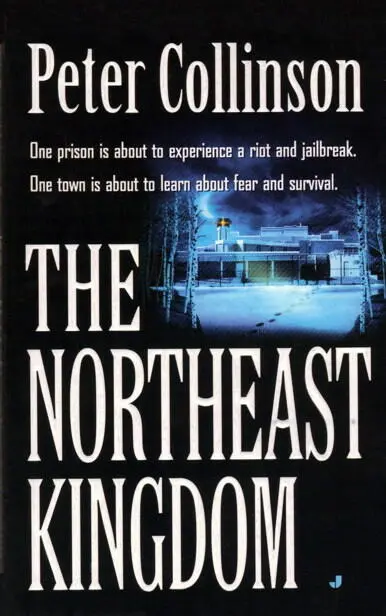
The Kingdom - Peter Collinson
Здесь есть возможность читать онлайн «The Kingdom - Peter Collinson» весь текст электронной книги совершенно бесплатно (целиком полную версию без сокращений). В некоторых случаях можно слушать аудио, скачать через торрент в формате fb2 и присутствует краткое содержание. Город: New York, Год выпуска: 2002, ISBN: 2002, Издательство: Jove, Жанр: Триллер, на английском языке. Описание произведения, (предисловие) а так же отзывы посетителей доступны на портале библиотеки ЛибКат.
- Название:Peter Collinson
- Автор:
- Издательство:Jove
- Жанр:
- Год:2002
- Город:New York
- ISBN:978-0-515-13361-5
- Рейтинг книги:4 / 5. Голосов: 1
-
Избранное:Добавить в избранное
- Отзывы:
-
Ваша оценка:
Peter Collinson: краткое содержание, описание и аннотация
Предлагаем к чтению аннотацию, описание, краткое содержание или предисловие (зависит от того, что написал сам автор книги «Peter Collinson»). Если вы не нашли необходимую информацию о книге — напишите в комментариях, мы постараемся отыскать её.
In the upland hills of Vermont sits the small town of Gilchrist, the scenic heart of the Northeast Kingdom region. It’s also home to a high-tech twenty-first century Alcatraz — America’s most advanced maximum-security penitentiary. When the riot erupts, no one is surprised. When the break comes, no one is prepared.
NO EXIT
Gilchrist is under siege and outnumbered. All communication with the outside world has been terminated by a violent winter storm. All escape routes are guarded by the most vicious prisoners in the country. And trapped in a local inn, the town’s few survivors are left with only one recourse: to run for their lives.
NO MERCY
But fleeing into the rugged timberland is little refuge for these desperate few. They are cold, defenseless, and worse: They are being tracked by a relentless killer who has nothing left to lose.
Peter Collinson — читать онлайн бесплатно полную книгу (весь текст) целиком
Ниже представлен текст книги, разбитый по страницам. Система сохранения места последней прочитанной страницы, позволяет с удобством читать онлайн бесплатно книгу «Peter Collinson», без необходимости каждый раз заново искать на чём Вы остановились. Поставьте закладку, и сможете в любой момент перейти на страницу, на которой закончили чтение.
Интервал:
Закладка:
“Loden. Rebecca.”
Polk leaned on the table, fists down, smelling of old man. Each word came slowly, as though he had forgotten the next.
“A town is not a business, Becky, like Tommy here thinks. It’s people and people sometimes die. And Tommy’s an undertaker who won’t let go. Hope someone shows me better consideration when I’m at the end. Don’t plug me in to a machine and pretend I’m dandy.” He looked around the kitchen, rubbing his belly. “Where’s the black?”
Rebecca said, “ ‘The black’?”
“Don’t look so offended. He’s a good shepherd. This town needs a fighter.”
“Now you want to fight?” said Tom Duggan. “What happened to blowing up the town?”
“I want to go out with every tree ablaze. At least I’ll do more than just clean up the bodies.”
Tom Duggan’s slender hand squeezed the torn foam back of a chair. “You think I won’t? This is my fight more than it is yours, Marshall.” He glanced at Rebecca, his manner growing milder. He looked down at his long-fingered hands. “I just hope I can distinguish myself.”
Polk said, “I don’t suffer any self-doubts.”
Tom Duggan said, “The insane rarely do,” Then he turned to Rebecca. “How do you feel about it?”
“If given the choice — fight or escape — I would choose escape.”
“Do you have a choice?”
Rebecca admitted she didn’t.
“None of us do,” said Polk. There was a shimmer of glee in his eye.
Hurried footsteps above, then a hushed voice calling down the stairs. “Hey. Hey.”
Tom Duggan went to the bottom step, Rebecca after him.
Dr. Rosen gripped the banister at the top. “I think I see something.”
Tom Duggan rushed up the stairs, Rebecca followed less enthusiastically. If Dr. Rosen had actually seen anything, he would have come running.
His beige cardigan flapped under his arms and his soft corduroy pant legs shushed as Dr. Rosen led them into a child’s room of bunk beds, board games, and broken toys. Through a window spotted with Pokémon stickers, there was a side view of the barn, old and bowed and lurching, one bent nail away from collapse. Snow was piled thick and heavy on its soft roof.
“Behind the barn. Leading to the trees.”
Rebecca could see the little holes in the knee-high snow. The footprints were recent, winding from the side of the barn to the woods in back.
Tom Duggan straightened. “You haven’t seen anybody?”
Dr. Rosen shook his head nervously. Their growing anxiety confirmed his own distress. “I don’t know how they got there.”
Tom Duggan went to each second-floor window, leaving Dr. Rosen and Rebecca studying the barn together. It was a single pair of footprints. The rest of the snow was clean and unbroken. No footprints approached the house.
“I hoped you were going to tell me I was seeing things,” said Dr. Rosen.
Polk hauled himself over the top step as Tom Duggan returned, shaking his head. Polk came to the window, squinting into the brightness of the morning snow.
“Could be someone hunkered down inside,” he said, “waiting for reinforcements. Or there’s more than one already. They all could have walked in the first man’s footprints.”
“We would have seen them,” said Rebecca. “They couldn’t have followed us through that snow last night.”
Dr. Rosen nodded anxiously. “Kells said that.”
Polk was shaking his head. “Never count out luck.”
The thought of a prisoner stumbling upon them so soon after dawn was unlikely at best. “No one here heard a sled,” said Rebecca, optimistically.
They all agreed on that. It was good to agree. They would have heard something.
Tom Duggan backed away from the window, and in doing so stepped on a squeaky toy. “Sorry,” he said, having startled them with his clumsiness. Then, seizing on their attention, he said, “We have to go out there to take a look.”
“I’ll do it,” said Polk.
Tom Duggan ignored him. “It should probably be two of us.”
“I don’t know,” said Rebecca, nervous now. “Why would a prisoner hide in the barn? Could be Bert or Rita out there, I suppose — but why wouldn’t they have come right up to the house? Unless they’re hurt.” She shook her head quickly, as though she could clear it that way, like the cracked Etch A Sketch lying on the floor. “I don’t like us splitting up.”
Dr. Rosen agreed. “We should wait for Kells.”
Tom Duggan said, “Those are footprints out there. You’re suggesting we do nothing?”
Rebecca said, “Splitting up is a bad idea. If we go, we should all go together.”
“And walk into an ambush?” said Polk.
Rebecca said, “They were hours behind us last night. Kells made certain of that. The snow covered our tracks — there’s no way.” She was trying to convince herself as she tried to convince them.
Then Dr. Rosen’s eyes grew wide. “What if they got to Kells on his way to the barricade?”
She followed that train of thought. “He wouldn’t have told them where we are.”
“How do you know?” said Dr. Rosen. “They could have made him talk.”
“He wouldn’t have to say a word,” said Polk. “His tracks lead right back here.”
“This isn’t helping,” said Tom Duggan. “We heard no engines. And why would they stage this, hiding in a barn? If they knew where we were right now, they would come in here and get us.”
“Then who is it out there?” said Dr. Rosen, exasperated.
Polk started toward the hall. “You three keep talking,” he said. “I’ll be right back.”
“Marshall.” Tom Duggan’s voice was sharp. It turned the old man around. “You’re not going anywhere.” He looked at the others. “In theory, I think Rebecca is right about not splitting up. But he can’t go anywhere with those legs.”
Polk said, “Poor circulation or no circulation, I can hold my own.”
“And the young lady downstairs. We all can’t go together, it’s that simple.” He turned to Dr. Rosen. “Doctor? I’ll go alone if I have to. But we can’t ignore this.”
Dr. Rosen looked stricken.
“I’ll go,” said Rebecca. The others turned in surprise, increasing her anxiety. But she was desperate not to be trapped inside the house in case something went wrong. Outside, at least she could run.
Tom Duggan said, “We’ll get you a chair, Marshall. I’ll bring you a rifle to cover us. You can see the barn all right?”
Polk waved his hand at the window. “I see fine.”
Tom looked to Dr. Rosen one last time.
Dr. Rosen said, “I think they came across Kells’s tracks. I think they followed them back here.”
Tom Duggan said, “Then there’s no sense waiting for him, is there?”
Dr. Rosen’s eyes fell, but when they went downstairs he pulled on his coat. He dressed himself with great care, winding a brown-patterned scarf around his neck and slowly fastening his coat toggles as though preparing his own body for a funeral.
Rebecca found a brown knit cap in the closet, and Tom Duggan put on an ear-flapped hunting cap that looked warm. Mia watched them pull weapons from her dead husband’s hockey duffel. Tom Duggan chose a revolver and took the biathlon rifle up to Polk. Rebecca picked the 9mm Beretta. It looked the newest. She shoved the weapon deep into her coat pocket.
Outside the kitchen door, the air was arctic cold. They waded through snowdrifts past the sleds hidden against the rear of the house. They paused at the corner of the house, like swimmers treading water at the last safety buoy, then started across the open yard toward the barn.
The snow was thick and sandlike. The wind whipped up sheets of curling white, and Rebecca was torn between the impulse to rush ahead to the barn and the dread of actually approaching it. Drooping, snow-burdened trees stood behind the barn like ancients with their heads bowed. She glanced over her shoulder to Polk’s window but could not make him out through the swarm of white.
Читать дальшеИнтервал:
Закладка:
Похожие книги на «Peter Collinson»
Представляем Вашему вниманию похожие книги на «Peter Collinson» списком для выбора. Мы отобрали схожую по названию и смыслу литературу в надежде предоставить читателям больше вариантов отыскать новые, интересные, ещё непрочитанные произведения.





Обсуждение, отзывы о книге «Peter Collinson» и просто собственные мнения читателей. Оставьте ваши комментарии, напишите, что Вы думаете о произведении, его смысле или главных героях. Укажите что конкретно понравилось, а что нет, и почему Вы так считаете.