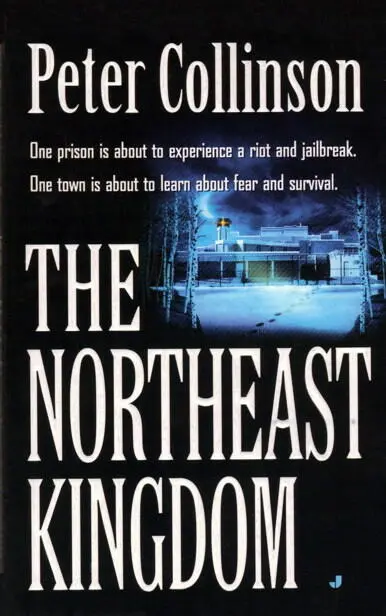
The Kingdom - Peter Collinson
Здесь есть возможность читать онлайн «The Kingdom - Peter Collinson» весь текст электронной книги совершенно бесплатно (целиком полную версию без сокращений). В некоторых случаях можно слушать аудио, скачать через торрент в формате fb2 и присутствует краткое содержание. Город: New York, Год выпуска: 2002, ISBN: 2002, Издательство: Jove, Жанр: Триллер, на английском языке. Описание произведения, (предисловие) а так же отзывы посетителей доступны на портале библиотеки ЛибКат.
- Название:Peter Collinson
- Автор:
- Издательство:Jove
- Жанр:
- Год:2002
- Город:New York
- ISBN:978-0-515-13361-5
- Рейтинг книги:4 / 5. Голосов: 1
-
Избранное:Добавить в избранное
- Отзывы:
-
Ваша оценка:
Peter Collinson: краткое содержание, описание и аннотация
Предлагаем к чтению аннотацию, описание, краткое содержание или предисловие (зависит от того, что написал сам автор книги «Peter Collinson»). Если вы не нашли необходимую информацию о книге — напишите в комментариях, мы постараемся отыскать её.
In the upland hills of Vermont sits the small town of Gilchrist, the scenic heart of the Northeast Kingdom region. It’s also home to a high-tech twenty-first century Alcatraz — America’s most advanced maximum-security penitentiary. When the riot erupts, no one is surprised. When the break comes, no one is prepared.
NO EXIT
Gilchrist is under siege and outnumbered. All communication with the outside world has been terminated by a violent winter storm. All escape routes are guarded by the most vicious prisoners in the country. And trapped in a local inn, the town’s few survivors are left with only one recourse: to run for their lives.
NO MERCY
But fleeing into the rugged timberland is little refuge for these desperate few. They are cold, defenseless, and worse: They are being tracked by a relentless killer who has nothing left to lose.
Peter Collinson — читать онлайн бесплатно полную книгу (весь текст) целиком
Ниже представлен текст книги, разбитый по страницам. Система сохранения места последней прочитанной страницы, позволяет с удобством читать онлайн бесплатно книгу «Peter Collinson», без необходимости каждый раз заново искать на чём Вы остановились. Поставьте закладку, и сможете в любой момент перейти на страницу, на которой закончили чтение.
Интервал:
Закладка:
“Again, Dog Two?”
Kells nodded and the man repeated himself. “Clock is running.”
Kells shot the man twice, two rounds into the meat of his opposite thigh.
Kells stood and turned off the radio, tossing it into the snow, leaving the con screaming.
At the sled, Coe pulled off his helmet with some difficulty and held it in his trembling hands as though it were his head. There was a chip in the black enamel. A bullet had glanced his right ear. Kells’s gunshots shook him and he dropped the helmet to the snow. He saw Kells standing over one of the prisoner’s bodies with his gun in his hand, and all at once the chase, the killers, the bullets, the takeover — everything caught up with him and Coe vomited, forcefully voiding the bile from his stomach, sinking weakly to his knees on the side of the road.
Chapter 18
“ ‘Clock is running,’ ” said Inkman, pacing the dining room. His hands squirmed behind his back. He wore a guard’s flak jacket now, obvious beneath his soft wool sweater, barreling his thin torso.
Trait found Inkman’s veneration of Clock offensive.
“I told you not to go after him,” said Inkman.
Gunfire popped again, muffled and distant. The four surviving Marielitos were performing a Santeria ritual over their countrymen’s remains in the funeral home. Menckley had seen them smearing ashes on the foreheads of the dead and placing empty bottles of rum into their stiff hands, waving guns and occasionally firing into the walls.
Trait let them grieve. The ammunition they wasted was a modest investment in vengeance. He was glad he had not sent any of them to be lost with the morning patrol.
“What if he starts to get to the others, shaking them up?” continued Inkman. “You can’t have them questioning your judgment.”
Trait said contemptuously, “So far you are the only one doing that.”
At the northern barricade before dawn, a riderless snowmobile had crashed into the tractors and combines blocking the road, bursting into flames. It did no significant damage, but sniper fire dropped three of the four watchmen who tried to put out the blaze.
An hour later, the two-sled search patrol reported engine noise in the northeast. They sighted the sled, one taking pursuit, the other continuing ahead taking fire from a nearby farmhouse. Trait sent Menckley to alert the Marielitos, but then received the “Clock” transmission from Dog Two and called him back. There had been no more radio reports.
Trait pulled his concerns inward while Inkman paced and talked.
“We use the ricin leverage here,” Inkman suggested. “Demand the insurgents’ surrender. Tell Clock and the rest to back off or else we take out a town.”
Incoherence. “You keep going on about how coldblooded he is. Wouldn’t holding a town over his head only increase his resolve?”
“We threaten the government, then. Have them call him off.”
“And show weakness? This is an internal problem.”
“No — it would show strength. The threat would reinforce our superiority.”
“This is cowardice,” insisted Trait. “Are we a nation of warriors, or a gang of cheap extortionists?” Inkman’s increasing desperation had eroded Trait’s patience. “Clock is a distraction, nothing more. The only thing we can threaten him with is failure.”
“Don’t turn this into a contest,” said Inkman. “If you get into a tug-of-war with him—”
“What? I’ll lose?”
Inkman closed his mouth and looked away.
Trait simmered under Inkman’s impudence. He had to remind himself that Inkman had delivered him from Gilchrist and that the future of the town depended in part on his expertise. That was the only thing stopping Trait from beating Inkman to death right there in the dining room.
The black cat peeked out again from beneath the saloon doors of the kitchen. It eyed Trait and shrank back, fur rising as it turned and trotted archly away.
Menckley came when Trait called him, massaging ointment into his scarred hands. It had been Menckley’s job to dispose of the cat.
“She’s too quick,” said Menckley. “I don’t know what to do.”
“You trap her the same way we’re going to trap these rebels — by setting out a nice big bowl of milk.”
A thirteen inch television atop a file cabinet in front of the holding cell showed the dying, blood-vomiting cons. Trait sat on the cushioned swivel chair from the police chief’s office, watching Warden Barton James through the door. The warden’s back sagged and his hands gripped the edge of the plastic bed, his arms lax. Trait had issued him a clean T-shirt and the warden had used his button-up Arrow to clean the dried blood off his face. His right eye was misshapen and dark but his jaw was less twisted.
The warden’s unlaced shoes were twinned on the floor beneath the hard bed. They had also confiscated his belt. Around his waist instead was the thick black nylon stun belt that Trait once wore. Trait sat with the remote electronic trigger in his hand.
Trait had given the warden a copy of his own obituary, downloaded from a Denver newspaper that morning. Barton James, thirty-seven-year employee of the Federal Bureau of Prisons, left a wife in Colorado and two married daughters.
“Four inches of newsprint,” said Trait. “And only because you were murdered by someone famous like me.”
The warden shifted uncomfortably on the bench, rolling his head away from the television. If he was thinking about his wife and children now, he was too smart to let it show.
“There are other riots now,” Trait went on. “Terre Haute, Fort Dix. Otisville, Millington, Terminal Island. The BOP came down hard with a nationwide lockdown, but a little too late. It’s spreading. We’ve shown them it can be done, and done with style. The news opinion polls are asking, ‘What do you think the government should do about the prisoners occupying Gilchrist?’ And guess what the American public is saying?”
“They are saying, ‘Leave them alone.’ ”
“Same as always. ‘Bury them. Forget. Do whatever you have to, we don’t want to know.’ And you were their man . And now they are abandoning you.”
“They believe I am dead.”
“And you are dead. As I was. Welcome to your afterlife. Here you will answer for your prison. I spent five years talking to walls that would not talk back. Now I will have some satisfaction.” He pointed to the television. “Why didn’t you just kill us? Why didn’t you end it as I have? You call it humane, you say, We are not evil because we do not kill evil men . So you torture us instead. We were your whipping boys.”
“You were being punished for your crimes—”
“We were being punished for the country’s crimes. We were someone they could point to. We were there for them. My name strikes fear and awe into peoples’ hearts, like that of a god. All you did was imprison that god for a while. My crimes gave you whatever power you had. Gilchrist was my prison, not yours.”
“And that is why I am being punished?”
“For failing to recognize that. But unlike you, I have no interest in torture. All I want to do is talk.”
“That’s what most cons want. To be heard.” Trait nodded. “To cry on the shoulder of a society that never loved them. But not me. I don’t need your society. Man is the most resourceful creature on this earth — the greatest hunter, the greatest survivor — and I am the very best of that breed. Too great even for my own time, for this thin veil of civilization the world has drawn over its face. Man’s primal impulses — to take for himself, to fight, to own — I have answered here. Your society hasn’t cast me out. I have cast out your society.”
Читать дальшеИнтервал:
Закладка:
Похожие книги на «Peter Collinson»
Представляем Вашему вниманию похожие книги на «Peter Collinson» списком для выбора. Мы отобрали схожую по названию и смыслу литературу в надежде предоставить читателям больше вариантов отыскать новые, интересные, ещё непрочитанные произведения.





Обсуждение, отзывы о книге «Peter Collinson» и просто собственные мнения читателей. Оставьте ваши комментарии, напишите, что Вы думаете о произведении, его смысле или главных героях. Укажите что конкретно понравилось, а что нет, и почему Вы так считаете.