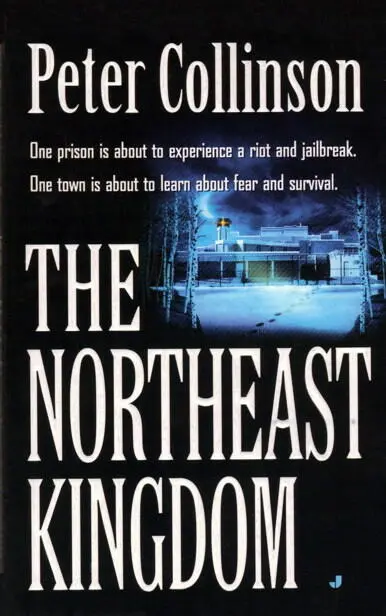
The Kingdom - Peter Collinson
Здесь есть возможность читать онлайн «The Kingdom - Peter Collinson» весь текст электронной книги совершенно бесплатно (целиком полную версию без сокращений). В некоторых случаях можно слушать аудио, скачать через торрент в формате fb2 и присутствует краткое содержание. Город: New York, Год выпуска: 2002, ISBN: 2002, Издательство: Jove, Жанр: Триллер, на английском языке. Описание произведения, (предисловие) а так же отзывы посетителей доступны на портале библиотеки ЛибКат.
- Название:Peter Collinson
- Автор:
- Издательство:Jove
- Жанр:
- Год:2002
- Город:New York
- ISBN:978-0-515-13361-5
- Рейтинг книги:4 / 5. Голосов: 1
-
Избранное:Добавить в избранное
- Отзывы:
-
Ваша оценка:
Peter Collinson: краткое содержание, описание и аннотация
Предлагаем к чтению аннотацию, описание, краткое содержание или предисловие (зависит от того, что написал сам автор книги «Peter Collinson»). Если вы не нашли необходимую информацию о книге — напишите в комментариях, мы постараемся отыскать её.
In the upland hills of Vermont sits the small town of Gilchrist, the scenic heart of the Northeast Kingdom region. It’s also home to a high-tech twenty-first century Alcatraz — America’s most advanced maximum-security penitentiary. When the riot erupts, no one is surprised. When the break comes, no one is prepared.
NO EXIT
Gilchrist is under siege and outnumbered. All communication with the outside world has been terminated by a violent winter storm. All escape routes are guarded by the most vicious prisoners in the country. And trapped in a local inn, the town’s few survivors are left with only one recourse: to run for their lives.
NO MERCY
But fleeing into the rugged timberland is little refuge for these desperate few. They are cold, defenseless, and worse: They are being tracked by a relentless killer who has nothing left to lose.
Peter Collinson — читать онлайн бесплатно полную книгу (весь текст) целиком
Ниже представлен текст книги, разбитый по страницам. Система сохранения места последней прочитанной страницы, позволяет с удобством читать онлайн бесплатно книгу «Peter Collinson», без необходимости каждый раз заново искать на чём Вы остановились. Поставьте закладку, и сможете в любой момент перейти на страницу, на которой закончили чтение.
Интервал:
Закладка:
“The warden is an indulgence,” conceded Trait. “But he is my indulgence. And he will remain.”
“It’s bad form. To hold a man without ransom, without any potential benefit — it is dangerous.”
Trait started past Inkman, leaving the room for the stairs. “If you had been with us inside Gilchrist, you would understand.”
“My point is,” said Inkman, following, continuing, “if you are going to bend any other rules of our agreement, I’d like to know first.”
Trait reached the bottom of the stairs where Spotty was eating a bowl of cereal as he stood guard at the inn doors. His hand and opposing wrist were wrapped with gauze, blood-dotted bite marks apparent on his forearm.
Trait said to him, “I warned you about those guard dogs.”
Spotty had insisted on saving the German shepherds from ADX Gilchrist before the ricin dropped.
“I can break them,” Spotty said.
“They were bred to attack cons.”
Spotty nodded awhile, swallowing. “I’m going to change my clothes.”
“It’s not the scrubs. It’s the smell or something. Something the hacks put in our food. I don’t know how they know, but they know. They know cons from guards and civilians. You get torn up bad, Spotty, there’s no doctor here. No one here to treat you. You realize that?” Now Trait could hear their barking, deep-throated in the distance. “Where are you keeping them?”
“The church. Good fence around the cemetery, room to run.”
“If they get out and hurt somebody, you’ll have to put them all down. All of them, understood?”
Spotty answered with quiet confidence. “I can break them.”
Menckley came in from outside then, hunched over and shivering, tears from his watery eyes were frozen high on his cheeks like bits of broken glass.
“What’s going on?” asked Trait.
“They’ve given up trying the pen doors,” Menckley reported. “Also the Command Center. Too stupid to know they can’t beat the lockdown that way. Panic seems to take them in waves. A few symptoms are starting. That stuff will start to wear them out.”
“How’s it playing on TV?”
“The government tried to censor our feed but the networks keep cutting to it now and then.”
“Good. Keep the live feed running.”
“How many cons do you have riding around town?”
“None. Everyone is either here in town or walking the barricades.”
Menckley’s facial expressions were limited to his thin, ointment-slick lips. Now they curled in suspicion. “I heard engines when I was out there.”
“What kind of engines?”
“Snowmobiles, had to be. On the wind from the east.”
Trait looked to Inkman. “A few stragglers, perhaps,” said Inkman. He appeared unconcerned. “Inmates who failed to return for the count, still riding around. They probably don’t even know what happened at the prison yet.”
Trait said, “Send somebody out there to sweep the area. Give it to the Marielitos. They seem anxious for something to do.”
Chapter 12
At a hard-packed road lined with bare, black trees, Coe opened up his sled and Kells throttled to keep pace, doing thirty miles per hour over the snow. Flickering through the trunks to his left was the asbestos mine, a skeleton of a tower with connecting feeder bridges atop a bald hill. Beyond it rose an outlying ring of mountains.
They turned off the road and kept to the safety of the trees, cutting wide around the outermost mine buildings before reaching the hills and starting to climb. They topped out on the first hill and Coe led the way onto a curling footpath up the next rise that only a kid would know about, just wide enough to admit their sleds.
The shack they came to was windowless and leaning, built tree-to-tree on a guarded plateau under the grizzled chin of a sloping stone cliff. The roof was off-kilter, like a bad hat worn roguishly, and the buckled front porch gave the shack a goofy grin. A thick clump of trees sheltered the plateau from the mine and the rest of the town.
They cut their engines and stood off the sleds, shedding their helmets in the sudden, ringing silence. Kells stayed near his sled, as did Coe.
“Chimney,” Kells said.
Smoke dawdled out of the roof pipe. Footpaths were shoveled from the warped porch, and recent footprints led from the door to the trees.
Kells was unzipping his parka when a tubby old man in a lumberjack coat stepped out of the trees with a gun in his hand. He wore boots with dirty fur halfway up the calves and moved as slowly as he spoke, seemingly made up of equal parts granite, grit, and wood.
“I thought someone’d come,” he said, pushing his plaid hunting cap off his forehead and pointing the gun in their direction.
Kells’s hands were empty and open. “Easy with that,” he said.
“Easy yourself.” The old man paid careful attention to where he planted each boot as he sized up Kells. “Got the ground wired for booby traps but the whole shebang’s buried under this snow. Funny way of sneaking up on a man. I heard your engines running a mile off.”
Kells glanced at Coe and the kid gave him a nervous nod.
“Marshall Polk?” asked Kells.
“Seventy-three years now.”
“We came from the inn. Do you know what’s happened in town?”
“I know a gunshot when I hear one. Know a gunfight when I hear more. I warned them. I did my part. But all they saw was tax breaks and more streetlights. Now I got a black man standing in my front yard.”
Kells had dealt with the Polks of the world before. “If you thought I was a prisoner you’d have fired that thing by now.”
“Don’t try and out-think me,” he said, cocking his head.
“My name is Kells. Do you recognize the boy?”
Polk came a few steps closer, scrutinized Coe. “Looks like the Provost fella, Matthew Provost.”
Coe seemed surprised. “That’s my dad.”
“Except for the hair. Your dad’s was longer, girly. Always got hippie magazines in the mail. How you mixed up in this?”
“We came here to... I brought Mr. Kells to see you.”
“The rest of the residents are gone,” said Kells. “Do you know what has happened?”
“I got two radios but no batteries. Same could be said for my ears. But I know enough.”
Kells noticed a second set of footprints, leading out of the trees. “Someone come to you an hour or two before we did?”
The old man called, “Come on out, Tom.”
A man in a long black overcoat opened the front door of the shack. His face was long and the shins and the tails of his coat were soaked through. He held a revolver in his hand as though he hadn’t held many.
“Mr. Duggan?” said Coe.
“Look here, Tom,” said Polk. “The Provost kid brought a friend around.”
It was anger, not nerves, making his weapon shake. Kells faced him. “There’s a group of us holed up at the golf course. Fern Iredale, the innkeeper, and some of her guests.”
“Fern?” said Tom Duggan.
Polk said, “Tom stumbled in like that two hours ago — frozen solid. No boots or gloves or hat. Could barely see the black of his coat under the snow. He told me what he could.”
Tom Duggan’s gun hand had fallen, and he was leaning against the skewed door frame, looking away.
Kells briefed them on the takeover and the ricin threat. At the end, Polk was squinting up into the falling snow.
“It’s funny,” Polk said, with satisfaction. “You can wait for a thing to happen, anticipate it, plan and prepare, but when it comes it still packs a punch.”
“We came up here looking for help,” Kells said.
“Seven years and no visitors. Now three in one day. They remember you when they need you. Let’s take this inside. My manners are rusty.”
Читать дальшеИнтервал:
Закладка:
Похожие книги на «Peter Collinson»
Представляем Вашему вниманию похожие книги на «Peter Collinson» списком для выбора. Мы отобрали схожую по названию и смыслу литературу в надежде предоставить читателям больше вариантов отыскать новые, интересные, ещё непрочитанные произведения.






Обсуждение, отзывы о книге «Peter Collinson» и просто собственные мнения читателей. Оставьте ваши комментарии, напишите, что Вы думаете о произведении, его смысле или главных героях. Укажите что конкретно понравилось, а что нет, и почему Вы так считаете.