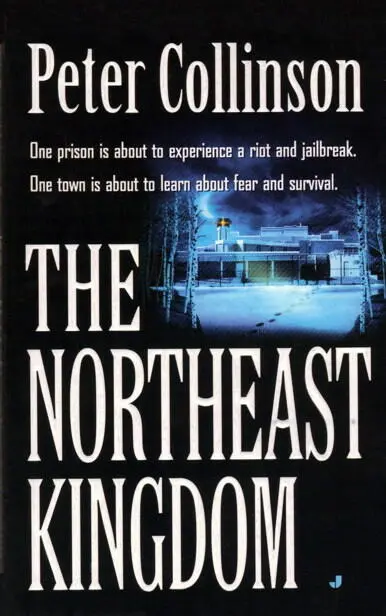
The Kingdom - Peter Collinson
Здесь есть возможность читать онлайн «The Kingdom - Peter Collinson» весь текст электронной книги совершенно бесплатно (целиком полную версию без сокращений). В некоторых случаях можно слушать аудио, скачать через торрент в формате fb2 и присутствует краткое содержание. Город: New York, Год выпуска: 2002, ISBN: 2002, Издательство: Jove, Жанр: Триллер, на английском языке. Описание произведения, (предисловие) а так же отзывы посетителей доступны на портале библиотеки ЛибКат.
- Название:Peter Collinson
- Автор:
- Издательство:Jove
- Жанр:
- Год:2002
- Город:New York
- ISBN:978-0-515-13361-5
- Рейтинг книги:4 / 5. Голосов: 1
-
Избранное:Добавить в избранное
- Отзывы:
-
Ваша оценка:
Peter Collinson: краткое содержание, описание и аннотация
Предлагаем к чтению аннотацию, описание, краткое содержание или предисловие (зависит от того, что написал сам автор книги «Peter Collinson»). Если вы не нашли необходимую информацию о книге — напишите в комментариях, мы постараемся отыскать её.
In the upland hills of Vermont sits the small town of Gilchrist, the scenic heart of the Northeast Kingdom region. It’s also home to a high-tech twenty-first century Alcatraz — America’s most advanced maximum-security penitentiary. When the riot erupts, no one is surprised. When the break comes, no one is prepared.
NO EXIT
Gilchrist is under siege and outnumbered. All communication with the outside world has been terminated by a violent winter storm. All escape routes are guarded by the most vicious prisoners in the country. And trapped in a local inn, the town’s few survivors are left with only one recourse: to run for their lives.
NO MERCY
But fleeing into the rugged timberland is little refuge for these desperate few. They are cold, defenseless, and worse: They are being tracked by a relentless killer who has nothing left to lose.
Peter Collinson — читать онлайн бесплатно полную книгу (весь текст) целиком
Ниже представлен текст книги, разбитый по страницам. Система сохранения места последней прочитанной страницы, позволяет с удобством читать онлайн бесплатно книгу «Peter Collinson», без необходимости каждый раз заново искать на чём Вы остановились. Поставьте закладку, и сможете в любой момент перейти на страницу, на которой закончили чтение.
Интервал:
Закладка:
The porch was a row of wooden pallets nailed together. Inside, the shack was warm, dim, airless. Like the old man, it was arranged around a potbelly, a sizzling black stove. The sagging army cot must have been hell on Polk’s back, and there were a desk table and two chairs lifted from the abandoned mine. Half of the table was a workshop, cluttered with rags and twine and radio parts. The other half was cleared for eating. Jars of preserved fruit and boxes of Quaker Oats and other dry foods were stacked on slanting shelves, no toilet or bathtub in sight.
Tom Duggan had taken a seat in a wooden folding chair near the stove, a puddle of melted water beneath him. The revolver rested in his hands in his lap.
Kells ducked to keep from butting one of the rafters and bringing down the roof. Coe’s face was screwed up at the smell.
Polk pulled the door shut and came around near the cot. “Never thought I’d see the ditchdigger visit me in my own house, at least not with me on two feet to greet him. Tom’s the town’s favorite son. That’d make me its poorest relation. He brought in the prison and the money. Now his mother’s dead.”
“Mrs. Duggan?” said Coe.
Tom Duggan’s head turned a bit at the mention of her name.
“It’s the riot that killed her,” Polk said. He had given up on his .38, no longer aiming it at Kells. “Terrible thing. It’s the government behind it all. They’ve wanted this town from the start.”
“I work for the government,” said Kells.
Polk’s gun came back up. “That’s two strikes against you.”
“The other being that I am black?”
“The other being that you’re a flatlander. Not from the Kingdom. Don’t be so race-sensitive. I hate everybody.”
Kells said, “We were hoping you might have some guns.”
“Guns. What do you want them for?”
“To fight.”
“Fight the prisoners?” Polk was constantly reevaluating Kells. “Say I did have some guns. If I gave them to you, how would I get by?”
“You could join us.”
“I’ve been fighting this fight for seven years. Way I see it, you’d be joining me. You got a plan?”
“Our plan is to find some weapons and fight.”
Polk nodded. “I must say I like your plan.”
The old man went to his cot and got down on one knee and pulled out an old army blanket. He carried the bundle to the cleared end of the table and unrolled it ceremoniously, like an ancient scroll.
Inside was one long rifle, a shotgun, a revolver, a pistol, and a greasy paper bag.
“All cleaned and oiled,” Polk pronounced.
Kells studied the bounty. “Where’s the rest?”
“Well, there’s my thirty-eight. But I keep that on my person. And Tom has the other revolver.”
Kells nodded. “And?”
“That’s about it.”
Kells looked again at the mouse-chewed blanket and the four measly weapons. “And you call yourself a militia?”
“Guns cost money. I gave that up when they started putting them metal stripes in the bills. Microchips. Your government trying to control our purchases.”
“We’re big on that. What about hunting for food? A crossbow?”
“Broke a few months ago. That’s a jug of gasoline over there.”
Kells found it under a scrap of tarpaulin. It was a milk gallon carton and its contents sloshed around inside. It was not even half-full.
“Like little eyeballs in your pocket,” continued Polk. “Tracking our movements.”
Kells looked sternly at Coe. The kid looked embarrassed. He was blocking his nose by pretending to wipe it.
Kells picked up the long rifle. A sling was attached. He was incredulous. “This is a biathlon rifle.”
“I got most of them from friends. Some die, will ’em to me.”
Kells tried the bolt action. “A biathlon rifle?”
“Straight pull. Damn accurate. Pretty good stopping power, and light.”
Kells picked up the pistol, a Beretta 9mm. “You have friends who deal drugs?”
“That’s a police-only model, loads fifteen plus one. Good old Eddie Bakerfield, God rest. But it’s foreign-made — I never trusted it.”
“What’s in the paper bag?”
“Some extra rounds. Most of them fit.”
Kells nodded, reconciling himself to the situation. “Fine. How soon can you pack?”
Polk plucked an old Pan Am flight bag from behind his bed. He said, “I’ve been packed for seven years.”
“You ride with Coe.” Kells wrapped up the blanket of oily weapons and looked to Tom Duggan. “The undertaker and I will take the guns.”
Tom Duggan looked up, then rose to face Kells. He looked slightly crazed, but mainly just lost. Demons were running roughshod over his thoughts much like the marauders raiding the town. Despair over his mother’s death and fantasies of vengeance crowded his mind.
“I thought you were one of them,” he said.
Kells shook his head dismissively. “Don’t worry about it.”
Tom Duggan wore the look of the dispossessed. It was a look Kells knew well.
Chapter 13
Rebecca stood alone in the shadowy function room at the end of the wide hallway, chairs up on the round tables, the bar empty of glass. For two high-school summers, she had waitressed every weekend at a country club outside Hartford, called Pleasant Valley. All she could remember of it now was the downtime after cleanup when the lights were dim, and the kids were all flirting with each other as they waited for their rides: The valets raced golf carts out on the fairways, the busboys stole swigs from behind the bar, and she and the other waitresses chatted with their legs swinging off the bar stools. There had been something very grown-up and reassuringly innocent about it at the same time, a free zone between adolescence and maturity — a safe place of limbo, as opposed to where she was now.
You have something for me , Luther Trait had said.
She pulled the gold cord on the glowing red curtain and opened the wall of windows on the last green. A flag had been left planted in the snow, a red number eighteen fluttering before a vista of sculpted white fairways and high, tamed trees. She could feel the cold pushing through the glass as she scanned the grounds for sociopaths. Hearing gunshots in the distance had been one thing. Running for her life was quite another.
She returned to the service kitchen as the coil beneath the glass kettle began to glow orange. Rebecca was boiling water for tea, though all she really wanted was something to keep her hands warm. You can’t fight criminals with cold hands. She was trying hard to stave off despair.
One of the swinging doors pushed open and Darla stepped inside, looking childlike in her matching lilac ski parka and pants. “Hi,” she said, hesitantly. Her bright blond hair stood out in stark relief to her dark eyebrows, forced and desperate like the rest of her.
Rebecca had heard Dr. Rosen on the telephone in the manager’s office earlier. I’m all right, dear. No, just some others who are also stranded .
“Plenty of water,” offered Rebecca.
Darla moved to the long prep table in the middle of the kitchen. “I just wanted to move around,” she said. “It’s like... it’s not really real, you know?”
Rebecca nodded. She did know.
“Ever been to one of those murder mystery dinners, where they kill someone between courses, and it’s kind of shocking but you just play along? I feel like I’m just playing along.”
“Yes, I know.”
“I never had a brother. I’ve never been in a fight before in my life. I don’t know why I’m not crying right now.”
Darla’s expression tightened and Rebecca had to look away. She was angry that Darla needed consoling. They all needed consoling.
“I don’t think I can fight,” Darla said. “I know you can, from reading your book. But I’d be afraid to hold a gun.”
Читать дальшеИнтервал:
Закладка:
Похожие книги на «Peter Collinson»
Представляем Вашему вниманию похожие книги на «Peter Collinson» списком для выбора. Мы отобрали схожую по названию и смыслу литературу в надежде предоставить читателям больше вариантов отыскать новые, интересные, ещё непрочитанные произведения.





Обсуждение, отзывы о книге «Peter Collinson» и просто собственные мнения читателей. Оставьте ваши комментарии, напишите, что Вы думаете о произведении, его смысле или главных героях. Укажите что конкретно понравилось, а что нет, и почему Вы так считаете.