The Kingdom - Peter Collinson
Здесь есть возможность читать онлайн «The Kingdom - Peter Collinson» весь текст электронной книги совершенно бесплатно (целиком полную версию без сокращений). В некоторых случаях можно слушать аудио, скачать через торрент в формате fb2 и присутствует краткое содержание. Город: New York, Год выпуска: 2002, ISBN: 2002, Издательство: Jove, Жанр: Триллер, на английском языке. Описание произведения, (предисловие) а так же отзывы посетителей доступны на портале библиотеки ЛибКат.
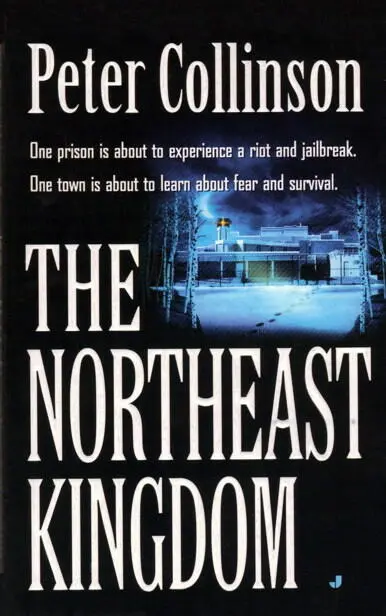
- Название:Peter Collinson
- Автор:
- Издательство:Jove
- Жанр:
- Год:2002
- Город:New York
- ISBN:978-0-515-13361-5
- Рейтинг книги:4 / 5. Голосов: 1
-
Избранное:Добавить в избранное
- Отзывы:
-
Ваша оценка:
Peter Collinson: краткое содержание, описание и аннотация
Предлагаем к чтению аннотацию, описание, краткое содержание или предисловие (зависит от того, что написал сам автор книги «Peter Collinson»). Если вы не нашли необходимую информацию о книге — напишите в комментариях, мы постараемся отыскать её.
In the upland hills of Vermont sits the small town of Gilchrist, the scenic heart of the Northeast Kingdom region. It’s also home to a high-tech twenty-first century Alcatraz — America’s most advanced maximum-security penitentiary. When the riot erupts, no one is surprised. When the break comes, no one is prepared.
NO EXIT
Gilchrist is under siege and outnumbered. All communication with the outside world has been terminated by a violent winter storm. All escape routes are guarded by the most vicious prisoners in the country. And trapped in a local inn, the town’s few survivors are left with only one recourse: to run for their lives.
NO MERCY
But fleeing into the rugged timberland is little refuge for these desperate few. They are cold, defenseless, and worse: They are being tracked by a relentless killer who has nothing left to lose.
Peter Collinson — читать онлайн бесплатно полную книгу (весь текст) целиком
Ниже представлен текст книги, разбитый по страницам. Система сохранения места последней прочитанной страницы, позволяет с удобством читать онлайн бесплатно книгу «Peter Collinson», без необходимости каждый раз заново искать на чём Вы остановились. Поставьте закладку, и сможете в любой момент перейти на страницу, на которой закончили чтение.
Интервал:
Закладка:
“You look like people with a simple choice: Fight or die.”
Bert said, “How many killers are left out there? What do we think? Twenty-five? Thirty?”
“Assume more. But even forty, even forty-five, that’s still a four-to-one ratio. Favorable odds when surprise is on your side.”
“But these aren’t just men,” Rebecca reminded him. “These aren’t just convicts. These are the worst of the worst.”
“They are just men. But they are also the establishment now. They are the law in this town, and we are the criminals. It’s a lot easier to create chaos than it is to prevent it.”
“That sounds good in theory,” said Bert, looking interestedly at Kells. “But they have all the weapons. We have yours and Fern’s turn-of-the-century rifle. We’re outgunned. How do you propose to get more?”
Kells looked to Fern. “They couldn’t have collected all the guns. Not here in Vermont. You’ve got hunters, farmers, sportsmen. Let’s use their unfamiliarity with the town to our advantage. Give me someplace the cons wouldn’t have looked, or couldn’t have found.”
Fern tried to think but could not concentrate.
Coe looked up then, his face bright. “What about Marshall Polk?”
Fern looked to him, more shocked than chagrined. “Marshall Polk?” she said.
Kells said, “Who is Marshall Polk?”
“A crazy man,” said Coe. “Lives in the mountains.”
“A recluse,” said Fern, “an old kook. A former selectman and town postmaster until he started fighting the prison plans. He was always kind of wacky with his theories, but something went wrong in his mind. Maybe just age. It ended up with him seceding from town. He lives in a shack somewhere in the northeast mountains.”
“He declared war on Gilchrist,” Coe said. “He’s a one-man militia.”
“Barbershop talk,” scoffed Fern. “Marshall never actually did anything.”
Kells directed his question at Coe. “You know where he lives?”
“Cold Hollow, on the ridge somewhere over the old asbestos mine. I know it pretty good.”
“Think he’s still there?”
“Don’t know. But maybe he left behind some guns.”
Fern said, “That’s a day’s walk.”
Kells was still looking at the kid. Coe was thinking. “We could take the sleds,” he said.
“What sleds?”
“The snowmobiles. The greens crew here has some. A couple of them came out to chase us off the fairways a few weeks ago.”
“You know how to ride?”
Coe’s confidence was growing under Kells’s examination. “Me and my buds, we carve up the old asbestos mine all the time.”
“This is what we need,” said Kells, pointing Coe out to the others. “Someone resourceful, someone who knows the town, who notices things. How long?”
“To get there? Two hours, maybe? Depends on the sleds. And two hours back.”
Fern said to Kells, “Wait. He’s only seventeen.”
Kells asked if anyone else could operate a snowmobile. No one else volunteered.
“It’s settled,” said Kells, looking at Fern. “I wouldn’t take him if it didn’t mean our survival.” He turned to Coe. “You and I will go together?”
“Sure,” agreed Coe.
Terry said, “But what about the rest of us?”
“Keep a lookout, and be ready to leave after sundown. We’ll scout for a new hideout along the way.”
“Wait.” Darla got to her feet, still distressed. “What if something happens? What if you don’t come back?”
Kells had his bag open and his revolver in his hand for everyone to see. He said, “We’re coming back.”
Chapter 11
Trait stood listening to the inn. An astronaut returning to Earth after years in an orbiting capsule would also move about clumsily, grabbing walls. Trait was doing this mentally. He was a man coping with his freedom. The sensations overwhelmed: the cold air, bright rooms, doorknobs that opened under his hand. For five years he had done so much wandering with only his mind that now he doubted his physical presence in each new space.
The joy of freedom would come. Little gifts of will. Music. Sunlight. Women.
The pain in his head was like the flames that buffet a spacecraft’s return to Earth. It was a neurological reaction to an abrupt change in atmosphere, and it was to be expected. These were the birth pangs of a mind expanding to its new environment.
He continued past the hanging quilts in the upstairs hallway, turning into the next bedroom and feeling a pulse of familiar energy. A burgundy sweater was folded next on the dresser. He picked it up by its shoulders, letting it fall open before him. The fabric was smooth against his fingers, cooled of body heat but still redolent of her scent. Clean and fragrant, like soap right out of the package. He looked into the mirror.
For a moment he was standing inside his foster sister’s room, waiting for her, hearing her blue jeans swishing down the hall. He had gotten into trouble with that girl, and had been killing her ever since.
A man appeared in the doorway, and Trait was back inside the inn. Errol Inkman wore the same collared shirt and loose corduroy pants he had worn at their very first meeting, that morning. His belt buckle was small and bright gold. Trait found Inkman a strange little man, nothing at all as he had imagined him. “A quarter mile outside the center of town,” Inkman said, “just a few minutes down the road from the police station. We can store weapons in each place and work out of both. Plenty of space here, and a good-sized kitchen — the perfect location.”
Trait folded the sweater and laid it back on the counter. “Perfect.”
“I checked all the rooms. Most of the luggage is gone. Looks like everyone left in a hurry.”
Trait wondered if she had been among those he released that morning. “One thing I learned in Gilchrist was that there is no such thing as coincidence.”
“The writer?” surmised Inkman. “That she requested a meeting with you the day before the breakout?” He ventured a step over the threshold. “I wonder about things like that sometimes. Connections. Like my sitting next to Deacon on that bus trip to Baltimore. Him hearing my ramblings and, once I sobered up, drawing me out about bio-terror and revenge. Was it fate? Or just a random occurrence that, in light of our success here, in retrospect seems like destiny?”
For a moment Trait was inside his Marion cell with Deacon, a wizened man of seventy years, shuffling out on parole, promising to keep the faith. Trait owed his freedom to that old hard-timer, as well as his sanity: Deacon was a legitimate criminal psychiatrist in 1960s Baltimore before coercing patients into pulling jobs for him. In their cell at Marion, he had taught Trait how to survive in the life of the mind.
Trait said, “There are omens, good and bad.”
“She was no more notable than the rest,” said Inkman. “An unremarkable bunch. But gone now.”
Trait nodded, coming out of it. “Gone.”
“Except the warden.” Inkman had stopped near the brass bed and its lilac comforter. “I just came from the police station. Jailing him is a foolish indulgence. I was very specific about there being no hostages. Putting a human face on this siege will force an assault. If the Cold War had involved a handful of Americans in a gulag in the Ural Mountains, it would not have lasted six months. Better to hold an entire nation hostage than one of its pale citizens.”
Inkman’s knowledge of the world impressed Trait, but not enough to change his mind. “No one knows,” Trait said. “To the outside world, he is dead.”
“This is a battle for public opinion. Killing or imprisoning innocent people makes us madmen. But releasing civilians and downsizing the country’s unwanted prison population — that makes us revolutionaries.”
Читать дальшеИнтервал:
Закладка:
Похожие книги на «Peter Collinson»
Представляем Вашему вниманию похожие книги на «Peter Collinson» списком для выбора. Мы отобрали схожую по названию и смыслу литературу в надежде предоставить читателям больше вариантов отыскать новые, интересные, ещё непрочитанные произведения.





Обсуждение, отзывы о книге «Peter Collinson» и просто собственные мнения читателей. Оставьте ваши комментарии, напишите, что Вы думаете о произведении, его смысле или главных героях. Укажите что конкретно понравилось, а что нет, и почему Вы так считаете.