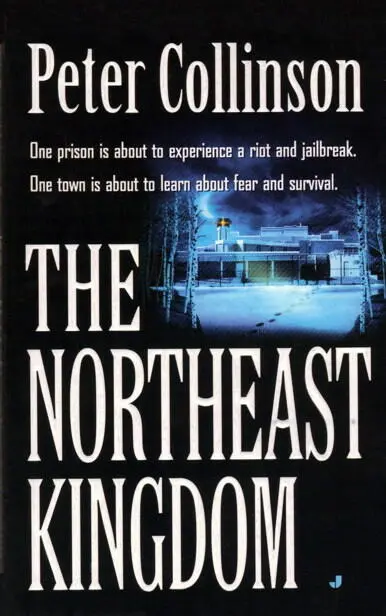
The Kingdom - Peter Collinson
Здесь есть возможность читать онлайн «The Kingdom - Peter Collinson» весь текст электронной книги совершенно бесплатно (целиком полную версию без сокращений). В некоторых случаях можно слушать аудио, скачать через торрент в формате fb2 и присутствует краткое содержание. Город: New York, Год выпуска: 2002, ISBN: 2002, Издательство: Jove, Жанр: Триллер, на английском языке. Описание произведения, (предисловие) а так же отзывы посетителей доступны на портале библиотеки ЛибКат.
- Название:Peter Collinson
- Автор:
- Издательство:Jove
- Жанр:
- Год:2002
- Город:New York
- ISBN:978-0-515-13361-5
- Рейтинг книги:4 / 5. Голосов: 1
-
Избранное:Добавить в избранное
- Отзывы:
-
Ваша оценка:
Peter Collinson: краткое содержание, описание и аннотация
Предлагаем к чтению аннотацию, описание, краткое содержание или предисловие (зависит от того, что написал сам автор книги «Peter Collinson»). Если вы не нашли необходимую информацию о книге — напишите в комментариях, мы постараемся отыскать её.
In the upland hills of Vermont sits the small town of Gilchrist, the scenic heart of the Northeast Kingdom region. It’s also home to a high-tech twenty-first century Alcatraz — America’s most advanced maximum-security penitentiary. When the riot erupts, no one is surprised. When the break comes, no one is prepared.
NO EXIT
Gilchrist is under siege and outnumbered. All communication with the outside world has been terminated by a violent winter storm. All escape routes are guarded by the most vicious prisoners in the country. And trapped in a local inn, the town’s few survivors are left with only one recourse: to run for their lives.
NO MERCY
But fleeing into the rugged timberland is little refuge for these desperate few. They are cold, defenseless, and worse: They are being tracked by a relentless killer who has nothing left to lose.
Peter Collinson — читать онлайн бесплатно полную книгу (весь текст) целиком
Ниже представлен текст книги, разбитый по страницам. Система сохранения места последней прочитанной страницы, позволяет с удобством читать онлайн бесплатно книгу «Peter Collinson», без необходимости каждый раз заново искать на чём Вы остановились. Поставьте закладку, и сможете в любой момент перейти на страницу, на которой закончили чтение.
Интервал:
Закладка:
Rebecca led her back into the parlor. Only a few chunks of melting snow remained where Kells had stood before the TV. There was a chill in the room because the outside door had been left ajar. Rebecca reached the porch door just in time to see a white Jeep Cherokee pulling out of the driveway.
He had shushed her rudely at the television, and she was wondering about him now. Remembering her sleuthing the previous night, she followed the enclosed porch around to the bookshelves before returning inside. She saw that Last Words was back on display.
The alarm went silent an hour later, by which time all of the guests except Hodgkins and Kells had returned to the inn. They all stayed close to the television in the parlor and pressed Rebecca for details about the prison. She described the security regimen and praised the professionalism of the Gilchrist guards, belittling the chances of a few disgruntled inmates against crash gates, electric fences, and underground sensors.
At dinnertime, Fern’s forced enthusiasm belied her anxiety while the guests chattered excitedly, the way people get when they find themselves near news. Twice Darla quieted everyone, claiming to hear helicopters overhead. Kells did not return for dinner, and neither did Hodgkins.
The mood after dinner was much different that night.
They migrated back to the television, with Terry commandeering the remote and switching between channels at the most inappropriate times. The snow was coming down more heavily with each hour, hampering the press coverage, but in a way the lack of video only made the story more alluring. The twenty-four-hour-news networks kept replaying the same choppy footage over and over again, that of badly wounded guards arriving at an area hospital in an ambulance fitted with a snowplow blade. Otherwise, the reports focused primarily on the all-star roster of criminal personalities involved.
“Craziness,” Terry declared. “I’m out of here first thing in the morning.”
Rebecca said, “I think it’s kind of exciting.”
The network newscasts came on at six-thirty, leading with the riot. Due to the guard casualties, the warden and his administrative personnel had reportedly been forced to evacuate the prison. They were awaiting more support, which, like everything in Gilchrist, was slow in coming. Snow had closed the nearest airport in Coventry.
Terry cut to the Weather Channel, which showed a forecast of more of the same: heavy snowfall, strong winds. Despite the traveler’s advisory, cars rolled past on Post Road, and all talk at the inn turned to leaving. Plans were made to rise at dawn and dig out.
Gilchrist Police Chief Roy Darrow came on the tube after seven and read a statement outside the front doors of the police station. He was asking the people of Gilchrist not to panic: “No inmates have escaped, and this uprising has been contained within the prison perimeter. No one on the outside is at risk.” But Rebecca knew that by giving voice to people’s fears, he was simply unleashing them. She expected the number of cars out on Post Road to double.
A scream came from across the room as Mia jumped out of her seat, spilling a mug of warm cider on the floor. “Scratching — at the window!”
It was Ruby. The cat had gotten herself locked outside on the porch. Coe opened the French doors and she trotted back in, slinking guiltily along the fireplace to the dining room. Mia, however, was not relieved.
“I want to leave,” she said, turning to Robert.
“Right now?” he stammered. “In this snow? In the dark?”
Coe interrupted then, asking that the television be turned down. Terry grumbled but muted the newscast. Coe went and stood at attention on the porch, just steps outside the open doors.
Rebecca listened too. Water moved through the house pipes from the dishwasher running in the kitchen. Blower heat breathed into the parlor. A wreath scraped mouselike against a window. But in the distance, the sound of firecrackers echoed off the mountains.
“Shooting,” Coe said, amazed at what was occurring in his hometown. “From the prison.”
Mia gripped Robert’s arm. “Right now,” she said.
Robert said nothing. He looked to Fern for advice.
“You’re my guests,” she said, disappointed but firm. “You come and go as you please.”
Mia searched for support, moving across the room to Rebecca. “What are you going to do, Miss Loden?”
Rebecca’s visit to the prison made her the closest thing they had to an authority on the matter. The others looked to her as well.
The existential jury again. She had always thought that she would make a good leader, a moral being, the mantle she assumed every time she sat down at her writing desk to work. She knew she could set their fears at ease.
“From what little I know about prison riots,” she said, “ninety-nine percent of the time, the inmates just give up. They can’t go anywhere, and eventually they settle for concessions like better food or longer exercise privileges. I think the snow has everyone on edge. No one could break out of that prison. This will all blow over before too long.”
Her answer greatly disappointed Mia, but the rest seemed satisfied and the television volume was turned up again.
Rebecca, bolstered by the trust they had shown in her, decided to lead by example. She reminded Fern about the book reading, less than thirty minutes away. “Do you think anyone will show up?”
Fern was shocked that she had forgotten. “I think so. These are hardy people. Most of them will shrug it off and continue on their way, I’m sure of it.”
Rebecca checked the time. “Shall we go?”
Darla spoke up. “Could I come? I’ve never been to one.”
The others were politely uninterested, so the three of them bundled up and headed up the road on foot. The wind whipped snow as they followed a set of tire tracks, headlights from outbound cars passed them slowly. Only one vehicle came up behind them, the cavalry, a CNN satellite truck. It was primetime in Gilchrist, Vermont.
The common was still but for the line of cars. The police station was lit up at the end, a cruiser was parked out in front, blue spinners lit, and the streetlights illuminated a cone of falling snow. The library was small and new, tightly bricked with a granite block above the red front door reading, Free To All .
Inside, pastel-colored fliers heralded the reading on a bulletin board, with Rebecca’s author photo pushpinned beneath the words This Saturday Night ! But the lights were off inside the main room, the chairs unassembled. They waited a few more minutes, but it was obvious no one would appear. It was Rebecca who tried to console Fern, rather than the other way around. Rebecca had published two books before breaking out with Last Words; she had faced empty library rooms before.
The three of them went out onto the front steps of the library, watching the station wagons and four-wheel drives roll past. The slow-motion panic fascinated Rebecca, being such a purely human detail, the collective guilt of a community that had enriched itself on the rest of the country’s crime-busting. This was the fear of a town founded on a fault line as the earth began to rumble.
Fern was devastated. For her, the exodus portended a more personal disappointment.
“Things will never be the same here,” she said. “Gilchrist isn’t a town anymore. We’re just a prison now.”
They pulled their scarves up over their faces and trudged back around the quarter-mile road bend to the inn. Mia and Robert were out in the driveway, trying to clear off their yellow Volkswagen. Fern, ever practical, pledged her help, but first went inside to put on some coffee. Rebecca needed only to change gloves, and passed Bert-and-Rita at the entryway, suiting up to help the younger couple get away.
Читать дальшеИнтервал:
Закладка:
Похожие книги на «Peter Collinson»
Представляем Вашему вниманию похожие книги на «Peter Collinson» списком для выбора. Мы отобрали схожую по названию и смыслу литературу в надежде предоставить читателям больше вариантов отыскать новые, интересные, ещё непрочитанные произведения.







Обсуждение, отзывы о книге «Peter Collinson» и просто собственные мнения читателей. Оставьте ваши комментарии, напишите, что Вы думаете о произведении, его смысле или главных героях. Укажите что конкретно понравилось, а что нет, и почему Вы так считаете.