The Kingdom - Peter Collinson
Здесь есть возможность читать онлайн «The Kingdom - Peter Collinson» весь текст электронной книги совершенно бесплатно (целиком полную версию без сокращений). В некоторых случаях можно слушать аудио, скачать через торрент в формате fb2 и присутствует краткое содержание. Город: New York, Год выпуска: 2002, ISBN: 2002, Издательство: Jove, Жанр: Триллер, на английском языке. Описание произведения, (предисловие) а так же отзывы посетителей доступны на портале библиотеки ЛибКат.
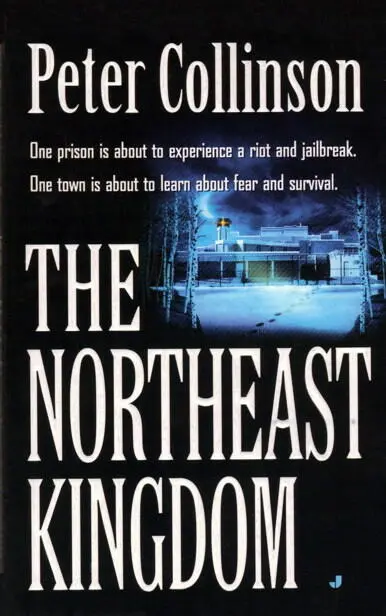
- Название:Peter Collinson
- Автор:
- Издательство:Jove
- Жанр:
- Год:2002
- Город:New York
- ISBN:978-0-515-13361-5
- Рейтинг книги:4 / 5. Голосов: 1
-
Избранное:Добавить в избранное
- Отзывы:
-
Ваша оценка:
Peter Collinson: краткое содержание, описание и аннотация
Предлагаем к чтению аннотацию, описание, краткое содержание или предисловие (зависит от того, что написал сам автор книги «Peter Collinson»). Если вы не нашли необходимую информацию о книге — напишите в комментариях, мы постараемся отыскать её.
In the upland hills of Vermont sits the small town of Gilchrist, the scenic heart of the Northeast Kingdom region. It’s also home to a high-tech twenty-first century Alcatraz — America’s most advanced maximum-security penitentiary. When the riot erupts, no one is surprised. When the break comes, no one is prepared.
NO EXIT
Gilchrist is under siege and outnumbered. All communication with the outside world has been terminated by a violent winter storm. All escape routes are guarded by the most vicious prisoners in the country. And trapped in a local inn, the town’s few survivors are left with only one recourse: to run for their lives.
NO MERCY
But fleeing into the rugged timberland is little refuge for these desperate few. They are cold, defenseless, and worse: They are being tracked by a relentless killer who has nothing left to lose.
Peter Collinson — читать онлайн бесплатно полную книгу (весь текст) целиком
Ниже представлен текст книги, разбитый по страницам. Система сохранения места последней прочитанной страницы, позволяет с удобством читать онлайн бесплатно книгу «Peter Collinson», без необходимости каждый раз заново искать на чём Вы остановились. Поставьте закладку, и сможете в любой момент перейти на страницу, на которой закончили чтение.
Интервал:
Закладка:
Fern hovered over dinner, a body in perpetual motion, returning again and again from the kitchen with platters of food. Later, dishes of Ben & Jerry’s Phish Food would follow them into the parlor, as well as Granny Smith apple wedges dusted with nutmeg and cinnamon. Also “sugar-on-snow” was a local treat — maple syrup boiled and poured over a bowl of freshly fallen snow. And coffee, tea, and homemade oatmeal-maple cookies.
The other guests were generally pleasant. Normally Rebecca resisted groups. Anytime strangers are brought together in a closed social system — a doctor’s waiting room, an airplane, a checkout line — a sort of existential jury is formed. Judgments are passed from stranger to stranger, if only silently, and any action taken by one within the group becomes collusive. If at a large dinner one person is inexcusably rude to the waiter, then by association the entire table is held responsible for his bad manners. Naturally, Rebecca’s mind carried this to extreme “lifeboat” scenarios. Who in the group would be the first to crack? Who would betray the others for his or her own gain? Who would hoard the drinking water? Who would emerge as the leader? Especially since her divorce, Rebecca had a hard time surrendering to anything that was beyond her complete control.
Fern, a platter of ham on her arm, posed an icebreaker — “What was the best meal you’ve ever eaten?” — and Rebecca enjoyed what the responses told her about the others.
First there was Terry, a bonds analyst from Fort Hill, New Jersey, who was in Gilchrist to research the prison-bond offering as a model for other towns pursuing similar projects. He wore a blazer to dinner, his buttery hair still damp from a shower. He was boorish about his job, eager to impress, but at least he kept the conversation going. His favorite meal was a luncheon he had attended in London, where he had been seated two tables away from the CEO of Sun Microsoft Systems.
Mr. Hodgkins was a gentleman in his late-fifties, polite and well-groomed without being particularly handsome. He had the air of a man of travel, a seen-it-all self-possession that made him difficult for Rebecca to read. His hair was graying and fading off the top and sides of his head, his eyebrows were wiry, his eyes cool blue. There was a whiff of money and manner, which Terry in particular deferred to, sensing a soul mate, but Hodgkins would give nothing away. Evidently, he had been at the inn for a few days already; perhaps he was looking for retirement property in the region. He declined both wine and dessert and retired to his room immediately after dinner. His favorite meal, he said with a fond smile, was a lamb dish at Maxim’s in Paris, “With a lady friend — but that was twenty years ago.”
Mia, a social worker, was from the Montreal area, traveling on vacation with her young husband, Robert. They both seemed younger than their twenty-four years. This was their first night in the United States and, in contrast to Hodgkins, the couple possessed an abundance of youth but clearly little cash, reminding Rebecca of her hungry years with Jeb. Robert was slender and goofy with a honking laugh, while Mia, when not enthusiastically defending the poor, was shy and quiet, the fabric of her black turtleneck stretched from her pulling the front fold up over her pale lips. They were a couple one looks at and wonders how they ever got together, and yet is greatly relieved they did. Mia’s favorite meal was a picnic the two of them had once shared in the middle of a soccer field on one of their first dates, cold chicken and pasta under the stars. After some deliberation Robert agreed, although he also liked Mia’s beef stew. The couple withdrew to a cushioned deacon’s bench after dinner to play Yahtzee, a game Rebecca hadn’t even known still existed.
Dr. Rosen was a tall, thin, sandy-haired podiatrist from Boston. He looked natty in a blue cardigan sweater, corduroy trousers, and tan loafers, sitting in an easy chair after dinner with a copy of Yankee magazine open on his knee; his attention was split between the game of Yahtzee to his left and a Jeopardy ! match to his right. Dr. Rosen smiled with self-satisfaction when he knew the Jeopardy ! answer, and switched his attention to the dicing game when he did not. He was content to monitor the matches rather than play, and to his credit meddled in neither. He could not think of a favorite meal but pledged to come up with one before the end of the evening. He wore a wedding band, although it was clear — to Rebecca at least — that the woman he was traveling with — a short, young, thick-waisted salon blond named Darla — was not his wife. Her favorite meal was “a cruise to the Bahamas — the entire cruise was just one big meal!” A small gem linked to a delicate gold strand around her wrist was a constant source of distraction. It took very little deducing to figure out that Darla and Dr. Rosen were in the early stages of a May-December extramarital affair.
Bert and Rita Noonan, a married couple near Dr. Rosen’s age, were visiting northern Vermont for a weekend of antiquing and cross-country skiing. They were florists from Connecticut, having left control of their small chain of stores in the capable hands of their eldest daughter. Bert and Rita were very much a team — so much so that they were nearly one person, Bert-and-Rita, two heads thinking as one. In the parlor; each opened a different newspaper and read articles to the other over decaf tea. Their favorite meal was a salmon dish served at Canyon Ranch, a spa in the Berkshires they visited twice a year. They were eerily fit and friendly, these semiretirees in casual slacks and half-glasses, like forty-year-olds suffering from a mysterious aging disease.
Coe, a teenager who worked for Fern, was tending to the wood fire in the parlor, running the carpet sweeper over Terry’s cookie crumbs, and collecting empty bowls, dishes, and plates. “Done with that, Miss Loden?” He wore a woolen court-jester hat of the snowboard generation, even indoors, and was very much the postmodern dude. No one asked him what his favorite meal was. From the look of him, Rebecca would have guessed frozen pizza.
Later that evening, sitting in a quilt-backed rocking chair with a china cup of blackberry tea on the chessboard table at her elbow, blissfully content, Rebecca noticed Coe returning from an outdoor task with a markedly jauntier pace. Smiling to himself and meeting no one’s eye, he carried a few scraps of kindling to the fireplace, breezing past her, the flaps of his untucked flannel shirt emanating the unmistakable fragrance of marijuana. The boy kneeled at the wide stone hearth, his tattered jeans frayed at the hems, the dirty white strings dripping with snow, and attended to the crackling pine wood with rapt concentration. Rebecca watched him wistfully, envying his carefree youth.
She was not the only one. On the other side of the fireplace, in a wide club chair near the player piano and the French doors leading out to the porch, a guest named Mr. Kells sat with the New York Times dipped just a few inches below his eyes. In them, fleeting yet unmistakable, was the same wistful expression that had clouded her own eyes, the same glimmer of the fuddled memories and exquisite indolence the tender aroma of pot aroused. At precisely the moment she became aware of him, Mr. Kells looked up and became aware of her — prompting her to glance away, embarrassed and protesting her innocence with a return to her copy of Vermont Life and a feature story about chain-saw art.
Mr. Kells was a football coach at a small northeastern college, in Gilchrist overnight to scout a quarterback recruit. At least, that was the occupation her writer’s mind assigned him. Big hands held the newspaper, football hands — brown-skinned, ringless, and hairless. He was in his mid-forties, thick-chested, his weight well-distributed over his tall frame but just beginning to round out in the middle, the stone build of his youth starting to soften. The plate of oatmeal-maple cookies that found its way to the piano bench near him was empty now, but for the crumbs. A few tiny woolen pills remained stuck to his white polo shirt, from a sweater he had pulled off after dinner. But his belt matched his shoes, and in general, Mr. Kells bore an agreeable, everyman look, a rugged, one-of-the-guys familiarity that belied his actual behavior.
Читать дальшеИнтервал:
Закладка:
Похожие книги на «Peter Collinson»
Представляем Вашему вниманию похожие книги на «Peter Collinson» списком для выбора. Мы отобрали схожую по названию и смыслу литературу в надежде предоставить читателям больше вариантов отыскать новые, интересные, ещё непрочитанные произведения.










Обсуждение, отзывы о книге «Peter Collinson» и просто собственные мнения читателей. Оставьте ваши комментарии, напишите, что Вы думаете о произведении, его смысле или главных героях. Укажите что конкретно понравилось, а что нет, и почему Вы так считаете.