The Kingdom - Peter Collinson
Здесь есть возможность читать онлайн «The Kingdom - Peter Collinson» весь текст электронной книги совершенно бесплатно (целиком полную версию без сокращений). В некоторых случаях можно слушать аудио, скачать через торрент в формате fb2 и присутствует краткое содержание. Город: New York, Год выпуска: 2002, ISBN: 2002, Издательство: Jove, Жанр: Триллер, на английском языке. Описание произведения, (предисловие) а так же отзывы посетителей доступны на портале библиотеки ЛибКат.
- Название:Peter Collinson
- Автор:
- Издательство:Jove
- Жанр:
- Год:2002
- Город:New York
- ISBN:978-0-515-13361-5
- Рейтинг книги:4 / 5. Голосов: 1
-
Избранное:Добавить в избранное
- Отзывы:
-
Ваша оценка:
Peter Collinson: краткое содержание, описание и аннотация
Предлагаем к чтению аннотацию, описание, краткое содержание или предисловие (зависит от того, что написал сам автор книги «Peter Collinson»). Если вы не нашли необходимую информацию о книге — напишите в комментариях, мы постараемся отыскать её.
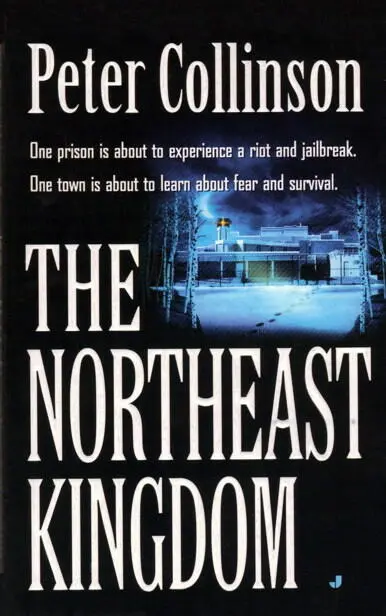
In the upland hills of Vermont sits the small town of Gilchrist, the scenic heart of the Northeast Kingdom region. It’s also home to a high-tech twenty-first century Alcatraz — America’s most advanced maximum-security penitentiary. When the riot erupts, no one is surprised. When the break comes, no one is prepared.
NO EXIT
Gilchrist is under siege and outnumbered. All communication with the outside world has been terminated by a violent winter storm. All escape routes are guarded by the most vicious prisoners in the country. And trapped in a local inn, the town’s few survivors are left with only one recourse: to run for their lives.
NO MERCY
But fleeing into the rugged timberland is little refuge for these desperate few. They are cold, defenseless, and worse: They are being tracked by a relentless killer who has nothing left to lose.
Peter Collinson — читать онлайн бесплатно полную книгу (весь текст) целиком
Ниже представлен текст книги, разбитый по страницам. Система сохранения места последней прочитанной страницы, позволяет с удобством читать онлайн бесплатно книгу «Peter Collinson», без необходимости каждый раз заново искать на чём Вы остановились. Поставьте закладку, и сможете в любой момент перейти на страницу, на которой закончили чтение.
Интервал:
Закладка:
Trait’s unusual eyes bore none of the recalcitrance of a sociopath, but instead his gaze drew her more intimately into the encounter. He was like a thick wire humming with electricity. He emanated power. She felt his radiation working on her. His voice was deep and commanding, and she gave in to it because she was safe. There were guards and cameras.
“At Marion,” he said, “the warden would parade visitors by my cell. Nobody wanted to leave the zoo without seeing the lion. The king of the jungle is safe in his cage and all is well.”
“That’s not why I’m here,” she said.
“This so-called dungeon: It is my temple. It was built to worship the warrior Luther Trait. For six thousand years the civilized man, the weak man, the modern intellectual, has constructed laws in order to protect himself. He has branded the warrior a criminal in order to confine the dominant male who would otherwise be his master. You see before you a strong man in an age where strength is feared. How do you punish the unpunishable? I am a riddle they cannot solve. That is why they watch me constantly: to study me, to learn from me. All of mankind’s worthiest impulses, shut up in this museum buried in the frozen earth. Everything you see here — this table, these guards, these bars, and walls — it’s all about one thing.”
“What’s that?”
“You. It’s all about you. Imprisonment is population control. The dominant male is the mate attractor. You, the female, are the great prize.”
“A prize?” she said. He was just pushing her buttons, seeking her out. “Is that what I am?”
“Take away these chains, these jails, and laws. Turn every man loose in the world to fend for himself. Where would you be then? Who would you run with for shelter, for protection, for survival? A smart man? A cultured man? You would align yourself with a criminal.” He leaned closer, dragging a few links of steel over the edge of the table. “You would run with a warrior. You would run with me.”
“Oh,” she said, sputtering now, offended. “Please.”
“You have something for me,” he said.
He was leaning close to her. He wore a musk of confidence.
He was waiting.
“I don’t understand,” she said.
He said again, “You have something for me.”
She wanted to dismiss this as horny bravado, but could not ignore the pale sulfur of his eyes. In them were scrutiny and insistence, and she was struck cold. She sat still, forgetting her quickened pulse rate transmitting through the body alarm. For the moment there was no one else in the room and no warden watching them on camera. There was no one else in the penitentiary.
It was as though he knew something she did not. All she could think was that there had been some gross mis-communication regarding the circumstances of her visit.
“Maybe there was some mistake, I—”
“There was no mistake.”
His stare was different now, more probing than provocative, more evaluative than involving. He finally sat back, and there was perhaps a hint of relief in his eyes. None of this meant anything to Rebecca. But like a plug pulled from a wall, the connection between them — at once so forceful and immediate — was broken.
Rebecca was mystified. “What is it that I could possibly have for you?”
Trait stood abruptly. His chair scraped violently against the floor and his surprising agility froze Rebecca.
“I’m done here,” he said.
He doubled over before he could finish speaking. He dropped to the floor as though struck on the back of the head. He lay on his side, grunting and twitching, chains rattling as he contorted.
The two nearest guards moved in immediately. A Clear order was issued, and they reached for his armpits, jerking him to his feet. The group leader opened the door, muttering into his headset.
Trait had not made a move for her, as far as Rebecca could tell. Still, she wasn’t sorry they had dropped him, only that the interview was over.
Trait’s livid brown eyes found her. His face was proud. He bore the abuse nobly, shaking off the electric charge that had humbled him and assuming his former poise. The guards released him and his hands trembled as he stood to full height.
“Next time we meet,” he said, through gritted teeth, “it will be on my terms.”
The guards fell in around Trait as he turned and strode unassisted to the door, the chains slithering like serpents at his feet.
Chapter 4
Trait came off the stairs into the bleak silence of the underground corridor and walked the range of granite and steel, his handlers keeping stride with him like the five points of his star. His thoughts were divided. As usual, he was measuring the distance of the hallway in paces, counting off the steel doors, watching the hacks and how they signaled to the cameras to rack up the steel grilles. He didn’t get out of E-Unit more than three or four times a year and made the most of every opportunity. He listened attentively to the click of the automatic door locks. He studied the camera positions and observed the sight lines down each range. He noted the way the hacks communicated by hand gestures in observance of E-Unit’s regimen of silence, and thought of the various ways that this could benefit him.
They walked him to the examining room inside the E-Unit entrance trap. The doctor was waiting but nothing happened right away — no strip search, no examination — and Trait realized who they were waiting for.
In the other half of his mind, Luther Trait was not in the penitentiary at all. He was a Nubian king strolling along the banks of the River Nile with his wartime advisors under the beating African sun. He was the leader of a complicated system of tribes that reigned over a powerful seventh-century empire stretching from modern-day Egypt into modern-day Ethiopia, descendants of the early Nubian kingdoms who battled with Egyptians for power in the vast Lower Nile region, long before the campaigns of Alexander and the age of Christ.
This was not a dream. His thoughts represented a spiritual journey to the source of his strength and will, a pilgrimage to his inner homeland. The bars and walls around him had reality in space but no reality in time, and freedom from the senses of his immediate environment unlocked the universal. Anywhere he wished to go, he freely went. In an instant he reassembled the kitchen of his early youth. He was kneeling on a chair at the gouged wooden table by the window. He picked up a Dixie cup, felt the texture of the ribbed place mat underneath his forearm, smelled the food stains hardened in the grooves. He shredded a paper napkin into thin strips. He reached across the table and tasted a pinch of sugar from the chipped bowl as he looked out the steamed window, its grime etched into his brain like a Rorschach blot. He walked to the closet in his mother’s bedroom, the one he had spent so many hours of so many days locked inside. The padlock was nothing to him now. He opened the door for the little boy sitting on the musty shoeboxes beneath the hanging old coats, squinting into the sudden light.
His journeys were not fantasies or delusions, nor empty masturbatory voyages.
The foster homes of his youth: They were as real to him as the examining room he was in now. He returned often, prowling the shadows of his past, assembling the houses before him room-by-room like a god — every stick of furniture and the people who owned them. The little boy eating cereal at the breakfast table knew what he had to do to get back to his mother. It was all prearranged. Leave the back door unlocked or free the latch on the bulkhead before the happy family leaves the house for the day. She was careful only to take little things that wouldn’t be missed, and he smelled her in the rooms, Winstons and spearmint. Then she would reclaim him and he would be back home for a few weeks of her and the closet until the time came for her to give him up again. He did whatever he had to do in order to return home again. Then there was the last house, the big one on the hill in New Jersey. The polished marble foyer and game room, pinball and soda, and his own bedroom and his own TV. Their daughter was three years older than he and she let him play with anything he wanted. He liked it there. He let himself stay too long. When the homesickness came, before a day-trip to the Central Park Zoo, he cranked open the downstairs bathroom window just a few inches, so that it might not even be noticed. He left it up to fate. That evening he smelled his mother in his bedroom, the smoke and the gum, and at once was ashamed. The next morning, the father noticed his paintings missing. The silver was gone from the dining room and the coins from the cabinets of glass. Desk drawers had been pried open and important papers taken, bank accounts drawn on. The police came and talked to Luther but he fooled them with his answers. And he had been with the family all weekend. He couldn’t wait to return home, and the ensuing days were agony. Finally he called the number from a pay phone after school. His mother’s telephone was disconnected. After that, he was rarely sad anymore, only angry.
Читать дальшеИнтервал:
Закладка:
Похожие книги на «Peter Collinson»
Представляем Вашему вниманию похожие книги на «Peter Collinson» списком для выбора. Мы отобрали схожую по названию и смыслу литературу в надежде предоставить читателям больше вариантов отыскать новые, интересные, ещё непрочитанные произведения.











Обсуждение, отзывы о книге «Peter Collinson» и просто собственные мнения читателей. Оставьте ваши комментарии, напишите, что Вы думаете о произведении, его смысле или главных героях. Укажите что конкретно понравилось, а что нет, и почему Вы так считаете.