The Kingdom - Peter Collinson
Здесь есть возможность читать онлайн «The Kingdom - Peter Collinson» весь текст электронной книги совершенно бесплатно (целиком полную версию без сокращений). В некоторых случаях можно слушать аудио, скачать через торрент в формате fb2 и присутствует краткое содержание. Город: New York, Год выпуска: 2002, ISBN: 2002, Издательство: Jove, Жанр: Триллер, на английском языке. Описание произведения, (предисловие) а так же отзывы посетителей доступны на портале библиотеки ЛибКат.
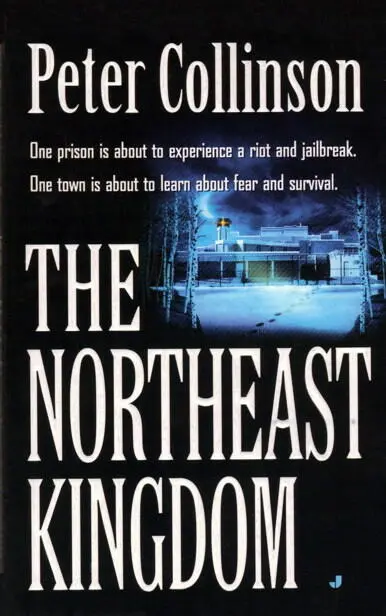
- Название:Peter Collinson
- Автор:
- Издательство:Jove
- Жанр:
- Год:2002
- Город:New York
- ISBN:978-0-515-13361-5
- Рейтинг книги:4 / 5. Голосов: 1
-
Избранное:Добавить в избранное
- Отзывы:
-
Ваша оценка:
Peter Collinson: краткое содержание, описание и аннотация
Предлагаем к чтению аннотацию, описание, краткое содержание или предисловие (зависит от того, что написал сам автор книги «Peter Collinson»). Если вы не нашли необходимую информацию о книге — напишите в комментариях, мы постараемся отыскать её.
In the upland hills of Vermont sits the small town of Gilchrist, the scenic heart of the Northeast Kingdom region. It’s also home to a high-tech twenty-first century Alcatraz — America’s most advanced maximum-security penitentiary. When the riot erupts, no one is surprised. When the break comes, no one is prepared.
NO EXIT
Gilchrist is under siege and outnumbered. All communication with the outside world has been terminated by a violent winter storm. All escape routes are guarded by the most vicious prisoners in the country. And trapped in a local inn, the town’s few survivors are left with only one recourse: to run for their lives.
NO MERCY
But fleeing into the rugged timberland is little refuge for these desperate few. They are cold, defenseless, and worse: They are being tracked by a relentless killer who has nothing left to lose.
Peter Collinson — читать онлайн бесплатно полную книгу (весь текст) целиком
Ниже представлен текст книги, разбитый по страницам. Система сохранения места последней прочитанной страницы, позволяет с удобством читать онлайн бесплатно книгу «Peter Collinson», без необходимости каждый раз заново искать на чём Вы остановились. Поставьте закладку, и сможете в любой момент перейти на страницу, на которой закончили чтение.
Интервал:
Закладка:
Forty yards away, producer Justin Keane sat inside the CNN satellite van on the phone with his boss back in Atlanta, coordinating their live-report schedule and establishing a protocol in case of breaking news. They were still the only cable channel on the scene, benefactors of fortuitous timing, having detoured on their way back from covering the birth of the Gallimard Sextuplets in L’Assomption St. Jérôme, Canada, just as the snow was really starting to hit. Their reporter had flown back separately, so Justin’s cameraman, Buzzy — the suit jacket fit him best — was doing what he could with the on-air remotes.
Justin hung up and scribbled his notes, then sat back to stretch his arms in the confined quarters of the satellite van. “May this all end so very, very soon.”
“Amen,” said Buzzy, wearing the jacket over sagging blue jeans. As he drained their last can of Mountain Dew, the overhead lights inside the truck flickered.
Justin checked the console. The image on his monitor snapped and went black.
“No, no,” Justin said, rising. “No way. Not now.”
He slid open the door, and two big guys in flannel and watch caps stood outside, looking up at him.
Locals. “Hiya,” said Justin, surprised.
The first guy pulled a large silver handgun from his waistband. “Back inside.”
Justin retreated obediently as, behind him, Buzzy’s empty soda can clinked and danced along the floor.
The armed man and his partner climbed inside.
Gilchrist police chief Rot Darrow lifted off his hat and ran his fingers through his hair. FBI agent Coté was talking on Chief Roy’s phone and rooting around in Chief Roy’s desk for a pen. But Chief Roy held his patience. The truth was that he was glad to have big law there, he was relieved to be in the presence of a higher power. This thing was more than his men could handle.
It was hysteria. What else to call it? The flight of the townspeople, which he first took for a lack of confidence in him personally, he saw now as something essentially helpful. Had they all stayed, every stray noise and they would be calling the new 911 system saying that an escaped serial killer was outside their door.
“Dad!”
It was Roy, Jr., waving him to the front. The floor of the station house was coarse with boot grit and Chief Roy winced at all the snow people were tracking in. This was like coming home early from a trip and finding your kids hosting a beer party.
Tom Duggan dogged Chief Roy to the glass doors, a shadow in undertaker’s clothes, haunting him.
“Just go home, Tom. Or throw on a uniform and help me out. One or the other. I’m up to my ears—”
“My mother, Roy.”
“I know what I said. But I can’t do anything for her right now.”
“You said you’d send a car.”
“I don’t have a man or a car to spare. Hell, these aren’t even my men anymore.”
“She’s all alone.”
“She will be all right, and so will you. So will the rest of us. Just get her on the phone.”
“You know she doesn’t answer. She doesn’t like the phone.”
Roy, Jr., was holding the door, and the three of them moved out onto the stoop. The line of cars had diminished at that late hour, as word had gotten out that the roads were jammed. The town center was quiet and blue, five streetlights brightening the snowy common like an empty stage set for a pageant.
“Tom.” Chief Roy put his hand on Tom Duggan’s narrow shoulder, a strange gesture for him. “You’re feeling guilty about this whole thing. My advice is: don’t. Go on home. Don’t try to drive out there yourself, we got enough problems on the road already and nobody to take care of them. Once things start to look better, maybe I can free up a man to check on her. And if, God forbid, things don’t get better, I imagine the National Guard will be sweeping through here to check on her for you. All right?”
Tom Duggan nodded once in resignation, turning and moving in his somber way down the brick steps to the snow, toward Duggan’s Funeral Home on the corner across the street.
Roy, Jr., came in front of the chief and adjusted his father’s clip-on police necktie. “What the hell are you doing?” said Chief Roy.
“CNN, Dad. They want to interview you. Might want the both of us.”
A crew of three men waited on the sidewalk below, big guys, the bigger one holding a camera. “Can we do this inside?” said the chief.
“Want to get the snow and the brick in,” one of them said.
The chief nodded as he fussed his way down four slippery steps. They had to think visually, he understood. Image is everything. “Good ’nough,” he said. “But let’s make it quick.”
One of them regarded Roy, Jr. “This your son, Chief?”
“It’s in the blood.” Chief Roy nodded as he spoke his usual refrain. “My father and grandfather before me.”
The reporter drew a revolver and cocked it at Roy, Jr.’s temple.
The click sounded dull in the snow. Chief Roy looked on wordlessly, feeling a hand at his waist. Someone relieved him of his side arm.
“Dad?” Roy, Jr., said, shying away from the short barrel of the gun.
Chief Roy could not grasp what was happening. He saw his son’s face and staring eyes, but nothing made sense yet.
Beyond, he saw Tom Duggan walking away through the snow, his black-clad figure fading into the night.
They knocked Roy, Jr., to his knees, then laid him facedown in the snow. Another one of them stepped up to the chief and put a nine-millimeter handgun to his stomach.
“You walk right back inside and don’t say nothing. Walk straight through to the side door and open it to us.”
Nothing was real. “I’ve got a civil emergency here...” said Chief Roy, but as soon as he heard his own words the spell was broken. He focused his attention on the snowy boot in his son’s back. Roy, Jr., was lying still and limp in the snow as though he were already dead. A gun muzzle was pressed to the back of the head Chief Roy once cupped in his hand. “Jesus Christ,” the chief said, his mind clearing. “I’ll do anything.”
“Do what I told you, and fast.”
Roy Darrow turned and started up the four steps to the double glass doors, disoriented, gripping the handrail, unable to hear anything. He entered his station and passed through it slowly. He could not summon any speed. One of his men tried to hand him a telephone receiver but he passed him by, part of his mind remembering how irritated he had been when Ann insisted on driving down to her sister’s in Cabot, “just to wait this thing out.” Now he didn’t care about his pride or the town or anything except his family and his son.
FBI Agent Coté was talking to him from the door of his office. “Got to clear some room here, Chief, this place is going to fill up with agents. Chief? Hey, Chief.”
Roy Darrow turned left at the radio room, unlocking the doors to the side parking lot, admitting the three men and a fourth. They followed him inside and then rushed past him, moving quickly throughout the station.
Special Agent Lon Coté returned to the desk inside the police chief’s office, rubbing his eyes and taking up the telephone again, still on hold. He was setting in motion the necessary mechanisms to use Title 18 violations — malicious destruction of federal property, hostage-taking — to upgrade the FBI’s official response from “advisory” to “operational,” thereby allowing them to take total command of the prison riot from the Bureau of Prisons.
A CNN cameraman walked past the office door and Coté shook his head at the lax security of the Gilchrist PD. All that would end... as soon as he could get somebody to pick up the damn phone. He looked out the room’s only window, to the flakes dancing under the streetlamps around the town common. Then he became aware of voices rising in the outer rooms.
Читать дальшеИнтервал:
Закладка:
Похожие книги на «Peter Collinson»
Представляем Вашему вниманию похожие книги на «Peter Collinson» списком для выбора. Мы отобрали схожую по названию и смыслу литературу в надежде предоставить читателям больше вариантов отыскать новые, интересные, ещё непрочитанные произведения.









Обсуждение, отзывы о книге «Peter Collinson» и просто собственные мнения читателей. Оставьте ваши комментарии, напишите, что Вы думаете о произведении, его смысле или главных героях. Укажите что конкретно понравилось, а что нет, и почему Вы так считаете.