Эбби Луби - Nuclear Romance
Здесь есть возможность читать онлайн «Эбби Луби - Nuclear Romance» весь текст электронной книги совершенно бесплатно (целиком полную версию без сокращений). В некоторых случаях можно слушать аудио, скачать через торрент в формате fb2 и присутствует краткое содержание. Город: Westport, Год выпуска: 2011, ISBN: 2011, Издательство: Armory New Media, Жанр: Триллер, на английском языке. Описание произведения, (предисловие) а так же отзывы посетителей доступны на портале библиотеки ЛибКат.
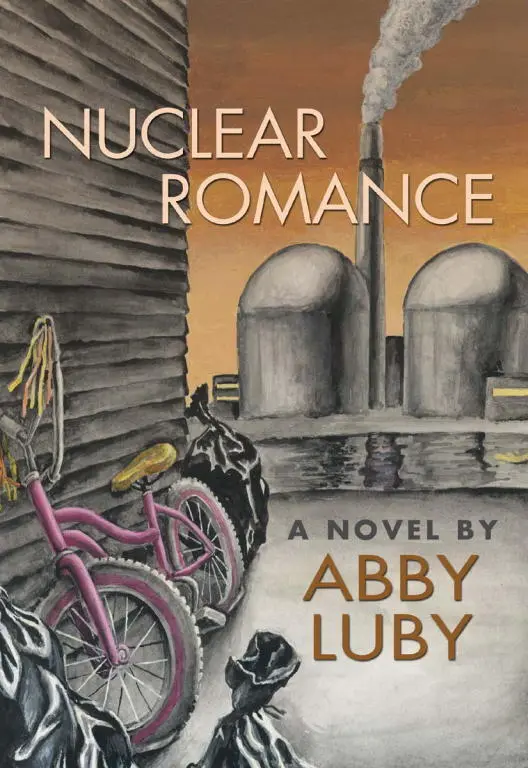
- Название:Nuclear Romance
- Автор:
- Издательство:Armory New Media
- Жанр:
- Год:2011
- Город:Westport
- ISBN:978-1-935073-16-1
- Рейтинг книги:3 / 5. Голосов: 1
-
Избранное:Добавить в избранное
- Отзывы:
-
Ваша оценка:
Nuclear Romance: краткое содержание, описание и аннотация
Предлагаем к чтению аннотацию, описание, краткое содержание или предисловие (зависит от того, что написал сам автор книги «Nuclear Romance»). Если вы не нашли необходимую информацию о книге — напишите в комментариях, мы постараемся отыскать её.
A young woman reporter falls prey to a callous plant executive who is driven to keep the multi-billion dollar nuclear company viable. A clandestine love affair develops against the backdrop of growing anti-nuclear sentiment which escalates after highly radioactive steam escapes from the plant, forcing a mass evacuation.
This novel grips readers’ imaginations with the tension and fear that surround many of today’s nuclear power plants, especially powerful in the aftermath of Japan’s recent and still unfolding nuclear disaster.
Nuclear Romance — читать онлайн бесплатно полную книгу (весь текст) целиком
Ниже представлен текст книги, разбитый по страницам. Система сохранения места последней прочитанной страницы, позволяет с удобством читать онлайн бесплатно книгу «Nuclear Romance», без необходимости каждый раз заново искать на чём Вы остановились. Поставьте закладку, и сможете в любой момент перейти на страницу, на которой закончили чтение.
Интервал:
Закладка:
“Me? A key person?”
“Because of Kaylee.”
“What about Kaylee? They never proved anything—never connected her death to the plant….”
Diana looked at Jen. “You really want to talk about this? About Kaylee, children, or babies with weak immune systems, how sick they get when exposed to radiation?”
“There were other complications with Kaylee,” Jen said. “And Mrs. Aron’s baby will be fine.”
“I certainly hope you’re right. But, if strontium 90 or any other radioactive isotope was released in the air, it could wreak havoc with a baby’s undeveloped immune system.”
“We’ve already talked about this. Kaylee didn’t die of leukemia. Or bone cancer.”
“They never said what she really died of, did they, Jen? The fact of the matter is we don’t really know, do we?”
Jen was uncertain about putting her dead daughter out there as a poster child for the anti-nuke movement. Could she do it? Would it adversely affect Ricky? Then there were the kids still swimming at the river beach….
“What… what would I have to do?”
“You would have to talk about Kaylee. About her death.”
“How? Where?”
“Here’s how it will work. We will organize meetings, rallies, right now on the heels of yesterday’s terrible accident. The media will be all over us like white on rice, I’ll make sure of that. They might put you on the spot about Kaylee’s unsolved death. You’d have to be ready for their questions. Think you could do that?”
“I’m still not sure. What would I say?”
Diana smiled. “Use your own words, words from your heart. You and I will work on a sound bite or two, ones you feel comfortable about. I promise.”
Chapter 24
Stella didn’t realize how hard she was gripping the paper. She glared at the headline and felt her stomach churn. In her fantasy she was beating on Bob’s bedroom door, thrusting the paper in his face.
This was bad. Yesterday she and her neighbors were paralyzed in their homes. Every hour the emergency officials sent out prerecorded phone messages urging everyone to stay inside and keep their windows closed. And why? Because of the behemoth power plant spewing poisonous steam. The place where her son not only worked for a living, but promoted the industry as a modern-day necessity.
Bob’s bedroom door creaked open. He walked out fully dressed.
“Don’t even talk to me, Ma.”
“What. Don’t you even want to try out today’s sound bites on me about the accident?”
He walked past her and pulled a raincoat out of the front closet.
“I don’t have to talk to you about this. It’s been a long night, and I already know what you’re going to say.”
He reached the front door and flinched when he saw the newspaper’s screaming headline.
With a fleeting moment of remorse he said, “I know this shouldn’t have happened, but you know what? I’m not the power plant, Ma. I really wish you could respect me for the job I’m doing and not blame all this stuff on me.”
Unexpectedly she softened, but he hastily opened the door and was gone. Flushed and teary, she thought that maybe he was right. Maybe it was all hype and they’ll find out the release wasn’t so bad. Maybe she shouldn’t be so hard on her son.
Bob got busy. A week after the accident he had built a campaign guaranteed to keep ALLPower in business. He stepped into the conference room and surveyed the long pristine table with pads and pens laid out for all twelve board members. At the head of the table was a marble ashtray for ALLPower’s CEO, Harry Halby, whom everyone called Hal. The ashtray was a resting place for the cigar that he would light up during a meeting, puff once for show, then let it die a long and smelly death.
Bob called his publicity agenda “ALLPower: Moving Forward and Securing Our Future.” He waited for everyone to get seated to talk them through it and show them the PowerPoint presentation. He had to sell them on the big ticket idea that was guaranteed to keep the company in a positive light, especially after the accident.
Bob’s boss Mike walked in looking haggard and sunk in.
“I’m sick of talking to reporters. They’re slimy, and they misrepresent themselves. First they’re your pals; the next thing you know you’re misquoted. The newspaper guys are the worst. And did you catch me on TV? I look like I’ve been exposed to a lethal dose. Ya think they’re using special affects to make me look green?”
“Not funny, Mike. Relax. Hal and the others will be here any minute.”
It would be a huge PR campaign with ads on the giant scoreboards at sports stadiums in New York City and New Jersey. Television and radio commercials would run on the hour; full-page ads would be placed in widely read newspapers and magazines circulated throughout the Northeast. Make people feel safe, secure. The real message: where would everyone be without the electricity made by ALLPower?
Bob was set to hire Dingham and Brown, the largest ad agency in New York City—if not the world. They were known for their work with the first Bush administration in selling the first Mideast war. From oil spills to nuclear accidents, Dingham and Brown specialized in tidying up a company’s image and burying the demons that threatened to lower the value of shareholder stock.
To land the ALLPower account, Dingham and Brown prepared a glitzy PowerPoint outlining an upbeat campaign, and when it finished, everyone nodded enthusiastically. Bob and Mike looked anxiously at Hal fingering his acrid stub.
“The price tag on this, Stalinsky?” he barked out.
“Looking at twenty-five mil.”
The board shifted in their seats. Bob was official.
“We make that in two weeks selling electricity, Hal.”
Hal gazed off as if calculating numbers. Then he stood up abruptly and looked across the table at Bob. He slowly nodded.
“Okay. But this better work. The whole industry hinges on how we remake ourselves after this accident. Tell the world they would be back in the Dark Ages without our electricity. Play up the drama—subways wouldn’t move, people would broil from the summer heat, there would be life-threatening blackouts. Ratchet it up another notch each week. You know the drill.”
Hal barreled out of the room, board members trailing after. Bob exhaled. Too bad his mother couldn’t be proud of his latest coup.
Chapter 25
Chrissy Dolan was meticulous in her story about the near meltdown, steam release, and evacuation. Now working full time at the Register , she had found her voice. She portrayed the plant’s reactors as a force to be reckoned with, not just a sprawling electricity factory silently droning on in a vacuum. This was a living entity with an immediate impact on three hundred thousand people living in the area. Her editor, Al, saw the spark and encouraged her to follow up.
“Talk to the teacher who gave birth in the car, her students who were with her,” he advised her.
The more follow-up stories the better. Also, he suggested she check in with Stalinsky. He would bend her ear, no doubt.
“And read the stuff the Padera guy wrote,” he suggested. “That’s good, high-end reporting you can learn from.”
She had the lingo down, her brain was like a sponge, “inquisitiveness” her middle name. Sometimes she couldn’t get answers fast enough. Her confidence grew. She got an e-mail from Bob Stalinsky the day after the botched evacuation, reminding of her promise for lunch.
A few days later she drove down to a diner just a few miles away from the plant. The sky was clear, and traffic was moving normally, but there were still a few random cars parked off the road, abandoned in the massive gridlock. Inside the diner she spotted Bob in a booth and sat down.
Читать дальшеИнтервал:
Закладка:
Похожие книги на «Nuclear Romance»
Представляем Вашему вниманию похожие книги на «Nuclear Romance» списком для выбора. Мы отобрали схожую по названию и смыслу литературу в надежде предоставить читателям больше вариантов отыскать новые, интересные, ещё непрочитанные произведения.







Обсуждение, отзывы о книге «Nuclear Romance» и просто собственные мнения читателей. Оставьте ваши комментарии, напишите, что Вы думаете о произведении, его смысле или главных героях. Укажите что конкретно понравилось, а что нет, и почему Вы так считаете.