Эбби Луби - Nuclear Romance
Здесь есть возможность читать онлайн «Эбби Луби - Nuclear Romance» весь текст электронной книги совершенно бесплатно (целиком полную версию без сокращений). В некоторых случаях можно слушать аудио, скачать через торрент в формате fb2 и присутствует краткое содержание. Город: Westport, Год выпуска: 2011, ISBN: 2011, Издательство: Armory New Media, Жанр: Триллер, на английском языке. Описание произведения, (предисловие) а так же отзывы посетителей доступны на портале библиотеки ЛибКат.
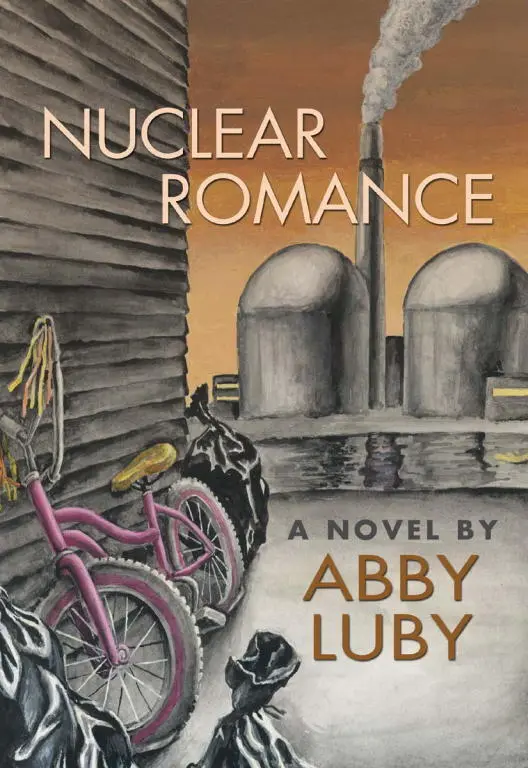
- Название:Nuclear Romance
- Автор:
- Издательство:Armory New Media
- Жанр:
- Год:2011
- Город:Westport
- ISBN:978-1-935073-16-1
- Рейтинг книги:3 / 5. Голосов: 1
-
Избранное:Добавить в избранное
- Отзывы:
-
Ваша оценка:
Nuclear Romance: краткое содержание, описание и аннотация
Предлагаем к чтению аннотацию, описание, краткое содержание или предисловие (зависит от того, что написал сам автор книги «Nuclear Romance»). Если вы не нашли необходимую информацию о книге — напишите в комментариях, мы постараемся отыскать её.
A young woman reporter falls prey to a callous plant executive who is driven to keep the multi-billion dollar nuclear company viable. A clandestine love affair develops against the backdrop of growing anti-nuclear sentiment which escalates after highly radioactive steam escapes from the plant, forcing a mass evacuation.
This novel grips readers’ imaginations with the tension and fear that surround many of today’s nuclear power plants, especially powerful in the aftermath of Japan’s recent and still unfolding nuclear disaster.
Nuclear Romance — читать онлайн бесплатно полную книгу (весь текст) целиком
Ниже представлен текст книги, разбитый по страницам. Система сохранения места последней прочитанной страницы, позволяет с удобством читать онлайн бесплатно книгу «Nuclear Romance», без необходимости каждый раз заново искать на чём Вы остановились. Поставьте закладку, и сможете в любой момент перейти на страницу, на которой закончили чтение.
Интервал:
Закладка:
A TV newsperson in the helicopter somehow got through to the bus company. Could he talk to one of the drivers via a walkie-talkie? Cell phone? He lucked out; a connection was made, and in minutes the helicopter hovered over a school bus while broadcasting a live interview with the driver.
“Can you get out of the bus so we can see you?” the reporter yelled over the roaring helicopter.
“No way. I ain’t getting cancer from stuff out there,” said the driver. “I’ve got a good mind to turn around and head back—if I only could. We want to get the kids, but honestly, we’re crazy to be out here. We’re not even required to do emergency rescues.”
“If you could turn back, would you? And leave the students?”
“Let’s put it this way. By the time I get there, the kids will be long gone. The parents are already there, most likely. That’s what all this traffic is—parents and folks trying to escape the radiated zone.”
The driver’s words were heard by millions watching TV or listening to the radio. The emergency evacuation was making live news up and down the Northeast coast.
Reports about the wind changed every fifteen minutes. Westerly winds that could push the plume out to the Atlantic Ocean were now heading north. People living in the city to the south of the plant breathed a sigh of relief. Phone interviews with scientists and meteorologists were little more than a guessing game; everyone was uncertain how the radioactive steam cloud would behave.
At Diana’s school, a throng of parents had stomped over the wooden barricades and closed in on the four policemen, now a weakening line of defense.
“You’re holding our kids against our wishes. Let us in!” one mother screamed.
Parents taunted the police, and one father belligerently headed to the side of the building, screaming out his child’s name toward the windows on the second floor.
“Stop!” called out one cop. “Stop right now. Please.”
The man kept going, yelling for his kid.
“Look Mister, you have to stop!”
“What are you gonna do? Shoot me?” the man didn’t even look back.
The cop pulled his gun from his holster and aimed it to the sky. The man kept walking, his back to the cop. A shot thundered out. Parents froze. The man stopped walking and didn’t move.
From upstairs, Diana heard the shot and broke into a sweat. The children looked at her. Some went to look out the window.
“Get away from that window. Now.” Diana demanded.
“Was that a real gun?” asked one boy.
“Not sure. Lets all stay calm.”
A few boys in the class jokingly pointed their fingers at each other in a make-believe gunfight.
Diana had to find out what was going on downstairs. Her cell phone showed a small signal and she chanced a call to Lou. Miraculously she got through.
“Diana, what’s going on? Are you still at the school?”
“Oh yes. And, I think the police have lost it. A gun just went off, and I can’t see what’s going on. We’re all on edge, especially the kids. We’re still waiting for the buses.”
“Forget the buses, Diana. They’re stuck in the biggest traffic jam of the century. We’re watching it on TV.”
“My God.”
“They just interviewed a driver and he wants to turn back. I’m sure he’s not the only one.”
Diana could hear screams from the front of the building. Maybe the riotous parents had forced their way inside. How long could four cops keep parents from their kids anyway?
“Any reports about radiation levels?” she strained into a crackling signal.
“Nothing yet. You might be safer staying inside until it blows over, or at least until they know where the plume is headed.”
Diana looked at the kids. They had become silent and were listening to her talk to Lou. Suddenly she heard glass shattering from somewhere downstairs.
“Gotta go. Will call you later.”
“What’s happening, Diana?”
“It’s glass. Broken glass. Call you later.”
She faced the kids and said, “Everyone, get your stuff. We’re going downstairs.”
Without a sound they stuffed their backpacks and followed Diana out to the hall and down the steps. With twelve kids following her, she headed to her office. Jane would have to know the truth about Mrs. Aron.
When she got into the reception area, she saw the door to her office was open, and from where she stood she could feel a strange breeze. A few kids followed her as she walked inside. They were stunned. The entire windows had been smashed with a brick, and glass fragments had sprayed on the floor. Slivers and sharp, angular fragments covered her desk, a wild, disjointed mosaic of glass. A large shard, like a dagger, catapulted into the box turtle’s aquarium and jutted out the top. Diana sprang over to look at the turtle. The glass just missed him. She reached in and held him up and his legs started to wiggle. Lucky, this one. She extracted the glass from the tank and put the reptile back.
“Wow, Ms. Chase. Why did this window get smashed?” a girl asked.
A few kids gingerly stepped around the room, glass splinters snapping under their feet. The break in the window was large enough for a person to get through.
“Someone wanted to get in real badly,” she said, dazedly.
“Where have you been?” Jane stood in the doorway looking ragged. “Who are these kids? Where is their teacher?”
“I can explain, Jane, but why don’t we all get out of here before someone gets hurt.”
They moved out to reception area, and the kids crowded in wherever they could.
“What’s going on, Diana. Where have you been? There’s a full-scale riot going on outside!”
“Yes, I can see that. Listen, Jane. The buses aren’t coming—the drivers are either too afraid or they can’t get through the traffic. They’re stuck in a major gridlock.”
“How do you know this?”
“I got through to someone who is… well, a friend who heard a news report.”
“What should we do?
Through the broken window they could hear yelling from outside.
“We have to let the parents in.”
“It will be crazy, they will trample each other.”
“Not if we do it systematically. The police can help us with that.”
“And just how will we convince the police to let the parents in?”
“Leave it to me.”
Diana headed toward the front doors, and when she got there, she saw the backs of the police spread out in front of the doors. Their hands were on their holsters. Just a few feet beyond, angry, hysterical parents were jeering, shaking their fists. Surprisingly, one door was unlocked and she slipped outside.
“Excuse me. Officers?”
One turned around and said “You shouldn’t be out here. Are you a teacher?”
“I’m Diana Chase, the assistant principal. I think you should know that the bus drivers can’t get here because there’s a huge traffic jam. It was just on TV. Many of the drivers want to turn back, but probably won’t get too far. Traffic is at a complete standstill.”
The crowd got quiet and tried to hear what she was saying. The cops looked at Diana and then at one another.
“Do you understand? No buses are coming.”
“No buses?” one of the cops said. “How come we haven’t heard this?” He looked at the other cops.
“What should we do?”
“Phone lines are jammed as well,” said Diana. “It might be a good idea to let the kids go home with their parents. Many have parked their cars to walk up here, and it’s probably those cars that are blocking traffic. If they left with their kids now, things could get moving, don’t you think?”
Parents edged in to hear her speak. One father suddenly yelled out, “No buses! You gotta let us take our kids!”
Читать дальшеИнтервал:
Закладка:
Похожие книги на «Nuclear Romance»
Представляем Вашему вниманию похожие книги на «Nuclear Romance» списком для выбора. Мы отобрали схожую по названию и смыслу литературу в надежде предоставить читателям больше вариантов отыскать новые, интересные, ещё непрочитанные произведения.






Обсуждение, отзывы о книге «Nuclear Romance» и просто собственные мнения читателей. Оставьте ваши комментарии, напишите, что Вы думаете о произведении, его смысле или главных героях. Укажите что конкретно понравилось, а что нет, и почему Вы так считаете.