Ane Riel - Resin
Здесь есть возможность читать онлайн «Ane Riel - Resin» весь текст электронной книги совершенно бесплатно (целиком полную версию без сокращений). В некоторых случаях можно слушать аудио, скачать через торрент в формате fb2 и присутствует краткое содержание. Город: London, Год выпуска: 2018, ISBN: 2018, Издательство: Transworld Publishers, Жанр: Триллер, на английском языке. Описание произведения, (предисловие) а так же отзывы посетителей доступны на портале библиотеки ЛибКат.
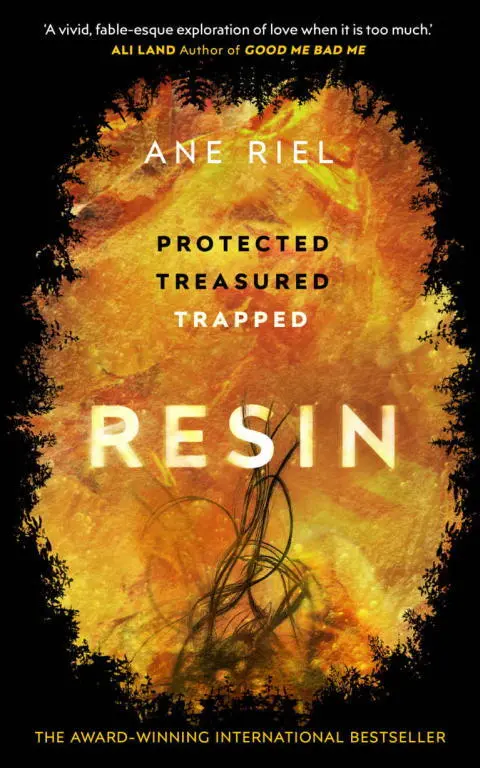
- Название:Resin
- Автор:
- Издательство:Transworld Publishers
- Жанр:
- Год:2018
- Город:London
- ISBN:978-0-857-52545-1
- Рейтинг книги:3 / 5. Голосов: 1
-
Избранное:Добавить в избранное
- Отзывы:
-
Ваша оценка:
Resin: краткое содержание, описание и аннотация
Предлагаем к чтению аннотацию, описание, краткое содержание или предисловие (зависит от того, что написал сам автор книги «Resin»). Если вы не нашли необходимую информацию о книге — напишите в комментариях, мы постараемся отыскать её.
But behind the boxes and the baskets crowding her dad’s workshop, Liv was hiding. This way, her dad had said, she’d never have to go to school; this way, she’d never have to leave her parents. This way, Liv would be safe.
Suspenseful and heartbreaking, Resin is the story of what can happen when you love someone too much – when your desire to keep them safe becomes the very thing that puts them in danger. For more information on Ane Riel and her books, see her website at
Resin — читать онлайн бесплатно полную книгу (весь текст) целиком
Ниже представлен текст книги, разбитый по страницам. Система сохранения места последней прочитанной страницы, позволяет с удобством читать онлайн бесплатно книгу «Resin», без необходимости каждый раз заново искать на чём Вы остановились. Поставьте закладку, и сможете в любой момент перейти на страницу, на которой закончили чтение.
Интервал:
Закладка:
Was it malice? Was Jens Horder an evil man? Judging by what people had told him about Jens, quite the opposite. Kind and helpful, gentleness personified. And behind the gentleness, clearly devastated by the loss of his twins. He might be an introverted and monosyllabic man, but that wasn’t a sign of malice, was it? Surely he must be a frightened man, to retreat and put in place emotional and physical barriers to prevent people from getting too close.
But traps? Such vile, cruel traps?
Roald looked up towards the Horder home. It consisted of several buildings and a big, closed skip stood in front of one of them. The postman had mentioned the skip repeatedly and gone on about how Jens Horder was hiding Mafia money inside it. Or worse. Of everyone who drank at the pub, the postman was the only one who insisted on drinking nothing but Red Tuborg; then again, he was a few stamps short of full postage. Still, in his own way, he was the most entertaining too. Roald, for his part, wouldn’t want to be without him. The others had merely proffered dull theories about how perhaps the Horders had finally decided to get rid of some of their stuff up on the Head, and not a moment too soon.
Except for the postman, no one really spoke about Jens and Maria Horder these days. Then there was the whole subject of the drowned daughter; that made it difficult for most people to talk about the couple. It wasn’t enough to be separated from the tragedy by a thin strip of land. Tragedies take time.
Roald wondered whether to make his way down to the gravel road and then follow it up towards the house, but in the end opted to take a direct route. The risk of stumbling across more traps was surely the same in either case, so he kept an eye out for where he put his feet between the small trees, the grassy knolls and the twigs.
He paused only when a rabbit jumped past him on its way to the forest. More than anything, he wanted to run back towards the Neck, but he knew he had no choice but to carry on.
The memory of the boy in his kitchen still haunted him.
Once he got closer to the skip, he could see how old and battered it was. It had probably been cheap, and it was unlikely to be rented, given how long it had sat there, according to the postman. It had slanted walls and hatches along the top.
Roald walked around it. There was a gap of a couple of metres at most between the skip and the wooden building behind it. There was little actual clear space because there was junk everywhere. The nearest hatch was unlocked, and he opened it to look inside. The skip was filled practically to the brim with what looked, undeniably, like rubbish. The postman was unlikely to be right in his bizarre assumptions.
It would have made sense to walk the short stretch along the skip to the end of the house, but the small window at the far end of the wooden building that overlooked the forest piqued Roald’s curiosity. He decided to explore what was behind it.
He had to step blindly in between wooden posts and hubcaps and sheets of tarpaulin and collapsed log piles before he could reach it. All the time, he prayed that a set of metal teeth wouldn’t suddenly snap shut around his foot.
But he could have saved himself the trouble. Behind the windowpane, it was as if someone had constructed a wall of densely packed books and compressed rubbish, and even if all the lights in the world had been lit up beyond it, they still wouldn’t have been able to penetrate it. Down on the small windowsill, squashed between the glass and a tinfoil tray, was a dusty hairbrush matted with blond hair. Next to it was something that had once been a plant.
Roald decided to walk around the end of the house which was nearest to him, and as he glanced towards the spruces, he thought he spied movement. He stopped and narrowed his eyes, but he couldn’t make out what it was. He was still holding the arrow in his hand and suddenly felt unpleasantly exposed. After all, someone had fired that arrow, not that long ago.
Whatever he might have seen behind the wooden building was nothing compared to the sight he encountered in the farmyard. Shocked, he stared at the forest of rubbish shooting up everywhere. A red silage harvester soared above it all. It reminded him of a dinosaur looking across a landscape of prehistoric junk.
And it wasn’t the only animal. Roald shuddered when he spotted a rat making a dash for a steel tube. Faint sounds could be heard everywhere whenever the breeze caused something to lift or bump into something else. A piece of transparent plastic flapped under a wooden pallet, the cardboard tube from a roll of toilet paper unfurled itself in front of a tarnished copper pot. The wooden building to his right was actually rather beautiful, but blighted by its surroundings. There was a door and a window near him, and further down another couple of windows and a door. At the end of the farmyard, the main house rose in the morning sun. Painted white, but peeling so badly you could be forgiven for having doubts that it had ever been painted. The curtains on the ground floor were closed, but from the first floor two windows glared at Roald like a blind animal with pitch-black eyes covered by a milky membrane.
If he was to reach the front door, he would have to zigzag between the piles because there didn’t seem to be a direct route. Some noises made him turn his attention to the barn across the farmyard. It was a stone building in just as poor condition as the house. Despite a thick layer of moss, the corrugated-iron roof looked far from waterproof. Could they really be keeping animals in there?
Roald decided to walk around the piles and up to the half-door at the end of the barn. The top half was ajar, and in the darkness he saw a horse. Dappled grey. Its far too skinny neck and head hung over the edge of its stall, as if held in place, barely, by an invisible rope. A faint whinnying was coming from its nostrils. He could hear more animals inside the barn. Something shifted, something breathed, something squeaked. He had no wish to investigate. The acrid stench not only suggested that mucking out was long overdue but also that something inside there was dead.
From behind the barn he heard another pitiful sound, and he walked around to see what it was. In the chicken coop a solitary cockerel with miserable plumage was trying to communicate. Its eyes seemed dead, probably because it was looking at his dead fellows on the ground: five ruffled chickens whose eyes were just as empty. He could see that a fox had tried to tunnel its way under, but the chicken coop seemed to have been secured against that kind of attack. Perhaps it would have been more merciful if the chickens had ended their days with a sudden death.
There was a field beyond the chicken coop, but the only things moving out there were a couple of crows and three black plastic bin liners rolling languidly across the autumn grass whenever the wind caught them. Further away lay something which might be a dead, horned animal. Or maybe just the remains of one; whatever it was, it didn’t move.
Roald walked along the field, past the pump and the upended wheelbarrow, straddled some big stones and old tubs, and approached the back of the house. There was a washing line with a fluttering newspaper and a couple of yellowing, torn sheets on it. An impressive rosebush next to it stretched its branches up into the wind like tentacles, waiting for the next crumbling bedsheet. It was a little windy here, where the forest didn’t provide quite so much shelter.
At the end of the house was a door with a windowpane, only partly covered by a piece of fabric. It was dark inside, but he got the impression that it led to some kind of pantry.
He hesitated for a moment. Would he be better off walking around and knocking on the front door? Should he do that? Then again, the place seemed so deserted it surely didn’t matter what he did. With his hands up around his eyes, he pressed his nose to the windowpane. When his eyes had adjusted to the darkness, he spotted his missing freezer gloves from the pub’s stock room. They were lying on top of some bubble wrap, which he also recognized, and nearby was that roll of oilcloth he had bought at the ironmonger’s in Sønderby. It gave him a strange feeling that he was entitled to enter.
Читать дальшеИнтервал:
Закладка:
Похожие книги на «Resin»
Представляем Вашему вниманию похожие книги на «Resin» списком для выбора. Мы отобрали схожую по названию и смыслу литературу в надежде предоставить читателям больше вариантов отыскать новые, интересные, ещё непрочитанные произведения.








Обсуждение, отзывы о книге «Resin» и просто собственные мнения читателей. Оставьте ваши комментарии, напишите, что Вы думаете о произведении, его смысле или главных героях. Укажите что конкретно понравилось, а что нет, и почему Вы так считаете.