Ane Riel - Resin
Здесь есть возможность читать онлайн «Ane Riel - Resin» весь текст электронной книги совершенно бесплатно (целиком полную версию без сокращений). В некоторых случаях можно слушать аудио, скачать через торрент в формате fb2 и присутствует краткое содержание. Город: London, Год выпуска: 2018, ISBN: 2018, Издательство: Transworld Publishers, Жанр: Триллер, на английском языке. Описание произведения, (предисловие) а так же отзывы посетителей доступны на портале библиотеки ЛибКат.
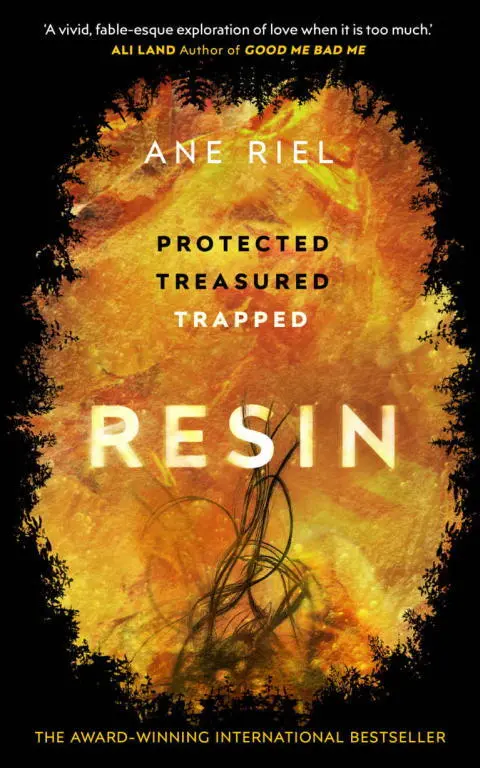
- Название:Resin
- Автор:
- Издательство:Transworld Publishers
- Жанр:
- Год:2018
- Город:London
- ISBN:978-0-857-52545-1
- Рейтинг книги:3 / 5. Голосов: 1
-
Избранное:Добавить в избранное
- Отзывы:
-
Ваша оценка:
Resin: краткое содержание, описание и аннотация
Предлагаем к чтению аннотацию, описание, краткое содержание или предисловие (зависит от того, что написал сам автор книги «Resin»). Если вы не нашли необходимую информацию о книге — напишите в комментариях, мы постараемся отыскать её.
But behind the boxes and the baskets crowding her dad’s workshop, Liv was hiding. This way, her dad had said, she’d never have to go to school; this way, she’d never have to leave her parents. This way, Liv would be safe.
Suspenseful and heartbreaking, Resin is the story of what can happen when you love someone too much – when your desire to keep them safe becomes the very thing that puts them in danger. For more information on Ane Riel and her books, see her website at
Resin — читать онлайн бесплатно полную книгу (весь текст) целиком
Ниже представлен текст книги, разбитый по страницам. Система сохранения места последней прочитанной страницы, позволяет с удобством читать онлайн бесплатно книгу «Resin», без необходимости каждый раз заново искать на чём Вы остановились. Поставьте закладку, и сможете в любой момент перейти на страницу, на которой закончили чтение.
Интервал:
Закладка:
Or maybe they were calling out to me.
But I didn’t dare do anything without Dad’s permission. And I couldn’t pluck up the courage to go to the barn on my own, mostly because I was terrified of what I would find there, I guess.
That morning the noises had been even more mournful than before. I thought I could hear the horse cry.
But it wasn’t the animals that had made me the saddest that day. It was Mum.
Mum was also full of holes, but they weren’t small, dry openings that I could stitch. They were big, festering sores. When I helped her wash with the flannel and the bowl and she moved about on the mattress, I could see them. They were caused by her lying down so much and being so heavy, she explained to me on her notepad. It was tiny compared to Mum, and the pen practically disappeared inside her hand.
She was so big.
And yet it was as if Mum’s body had changed. It distributed itself differently on the bed. It had grown limper – like the teddy bear when too much of the white stuffing had come out of a hole and I hadn’t put it back in yet. Perhaps it was because I didn’t bring her food as often as I used to. I tried to, but it was difficult. Dad told me not to give her too much.
I no longer knew what Dad was doing. He was there, and at the same time, he wasn’t.
The worst thing was that the holes grew worse, and Mum was crying. That morning she had written on her notepad that she had asked Dad to go to the main island. He needed to get something from the chemist to heal her sores. And painkillers. I didn’t understand the last part. How did you kill pain? The same way you killed a person? Her handwriting had changed. The sentences had grown shorter, and her handwriting wasn’t as neat as it once was.
Better still, if he could get a doctor , she added at the end. We need help now.
That last line really freaked me out, because Dad had told me about doctors. They were the kind of people you needed to watch out for more than anyone else. They made people sick, he said. And interfered in things they shouldn’t. They took people away.
Imagine if they took Mum away. And what about me? What if a doctor came here to visit Mum and saw me? Would he take me away? Make me ill? What if he killed me? I didn’t want to die for real.
So I didn’t understand what Mum was talking about.
I had also come to the conclusion that I didn’t understand Dad either. I understood nothing at all. Carl couldn’t help, but it was nice that he was there, so that we could not understand anything together.
I didn’t know what I hoped Dad would come back with. I had seen him drive down the gravel road and disappear behind the spruces by the barrier. Before he left, he had taken some money from the money box in the container. The box was jam-packed with banknotes with people and lizards and squirrels and sparrows and fish and butterflies on them, and small brown coins and slightly bigger ones with the face of a lady who could be the butcher’s wife in profile.
Dad didn’t like money leaving the box. ‘We need to look after it, just as we look after you and the things and your baby sister in the coffin.’
I was tempted to add: ‘And Mum in the bed and the animals in the barn.’ But I didn’t.
We also had animals inside the house now. There were rabbits everywhere. I can’t imagine where they had come from – we had only had two to begin with. As we always closed and locked the doors, they never came outside unless I took one of them with me to the container. That was the upside to there being so many of them: Dad would never know if one was missing.
Sometimes I wondered what would happen if the rabbits inside the house met the ones outside? Would they be able to talk to each other? I had never been scared of the wild rabbits, but the ones in the house frightened me because there were so many of them. Somehow they seemed wilder than the wild ones.
Then there were the noises they made. When only one of them made a small noise, I didn’t mind, but when the whole house grunted, it stopped being nice. And it wasn’t just the rabbits making noises; there were other animals: shiny animals darting down the walls and across the floor, where they would make a crunching sound if you accidentally stepped on them. I never did so on purpose. Glossy blue-green flies buzzed around open cans. Faded butterflies bashed their brown wings against the windowpanes somewhere behind all the stuff, or where they had been caught in a web, rotating themselves to death. Small mice and much bigger mice with very long tails. Something was always scratching, grunting or squeaking somewhere. At times it would be Mum.
I had slept in many places around the house. Upstairs in my own little bedroom, until I could no longer get in because of all the stuff we kept there. In the furthest room, until it got too difficult to reach it. With Mum, until there was no longer room for two people. In the living room, at the bottom of the stairs, even right inside the door in the workshop. After all, I could take my duvet anywhere.
But now I nearly always slept in the container with Carl. It was quiet. At most a few mice would be pottering about. Small ones. I liked the small ones, but I never forgave the one who tried to eat my baby sister.
I slept most of the day. The light felt sharp, so sharp that it hurt, unless it was mixed with darkness.
I preferred being outside in the moonlight, where the darkness glowed by itself. Or I would use my torches. I had them in all sizes and strengths and with many different types of batteries. But whenever I sat in the container, I lit a pillar candle which I placed inside a small lantern.
I liked watching the flame.
If the container hatch was ajar, or there was a draught coming from one of the holes Dad had made, the flame might flatten, get up and twist around itself. The rest of the time it would just dance around its wick. I tried to imagine the flame hardening like resin, so that millions of years later people would find it, bite it and say: ‘Yes, that’s an old flame. Once upon a time it was fire.’ And a child would be allowed to look inside it and see the ancient wick.
But I couldn’t escape the light completely. The daylight. You see, Dad had started sending me into the forest to collect more resin. I drained the trees and I brought back as much as I could – in small buckets which he tipped into the barrels.
‘We need more, Liv. Fetch me more. The trees don’t mind. Cut holes in more trees. We need more. Much more.’
I didn’t know what he was going to do with it all, but I didn’t mind because it made him start talking to me again. Even if it was just to ask me for more resin. I was sad that he didn’t want to come with me to the forest. I think it would have done him good. I enjoyed being out there, but I missed him. The forest wasn’t the same without Dad.
The upside was that he was back in the workshop. Him working on something was much better than him being around without really being present. One day when he had driven to Korsted to fetch something, I went to the workshop to have a look. I was pleased to see that he had tidied up around the workbench, which made it easier for him to move about. There was a pile of planks and I could smell fresh wood. It was so nice that I started to smile. It reminded me of something I liked.
And yet I felt uneasy. Because soon afterwards he came back with a lot of junk. I also caught a glimpse of a bag of gauze and cans of grapeseed oil.
There was too much of everything.
When I realized what he was making a few days later, it stopped being nice. It was huge. It was many times the size of the tiny coffin he had made for my baby sister.
The day it happened I was sitting in the container, closing up the teddy bear and thinking about the holes and Mum and the waterfall and the money and the rabbits and the doctors and resin and the frozen fire. And Dad’s coffin.
Читать дальшеИнтервал:
Закладка:
Похожие книги на «Resin»
Представляем Вашему вниманию похожие книги на «Resin» списком для выбора. Мы отобрали схожую по названию и смыслу литературу в надежде предоставить читателям больше вариантов отыскать новые, интересные, ещё непрочитанные произведения.







Обсуждение, отзывы о книге «Resin» и просто собственные мнения читателей. Оставьте ваши комментарии, напишите, что Вы думаете о произведении, его смысле или главных героях. Укажите что конкретно понравилось, а что нет, и почему Вы так считаете.