Дик Фрэнсис - Break In
Здесь есть возможность читать онлайн «Дик Фрэнсис - Break In» весь текст электронной книги совершенно бесплатно (целиком полную версию без сокращений). В некоторых случаях можно слушать аудио, скачать через торрент в формате fb2 и присутствует краткое содержание. Город: London, Год выпуска: 1985, ISBN: 1985, Издательство: Michael Joseph, Жанр: Триллер, на английском языке. Описание произведения, (предисловие) а так же отзывы посетителей доступны на портале библиотеки ЛибКат.
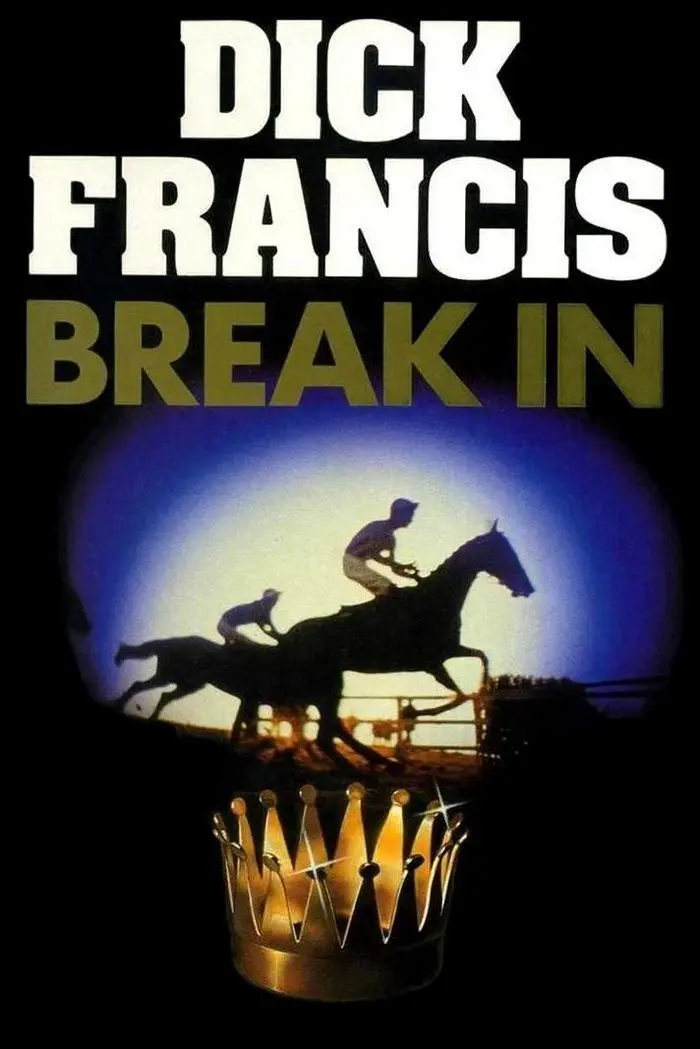
- Название:Break In
- Автор:
- Издательство:Michael Joseph
- Жанр:
- Год:1985
- Город:London
- ISBN:978-0-7181-2597-4
- Рейтинг книги:3 / 5. Голосов: 1
-
Избранное:Добавить в избранное
- Отзывы:
-
Ваша оценка:
Break In: краткое содержание, описание и аннотация
Предлагаем к чтению аннотацию, описание, краткое содержание или предисловие (зависит от того, что написал сам автор книги «Break In»). Если вы не нашли необходимую информацию о книге — напишите в комментариях, мы постараемся отыскать её.
Direct, forceful and inventive, he goes to the defence of his twin sister whose husband faces ruin when a spiteful newspaper campaign sets out to wreck his career as a racehorse trainer. Kit’s courage succeeds beyond the point of drawing the fire upon himself so that he in turn becomes a target.
Break In is about family relationships, about love, hatred and obsession; it is about the use and abuse of power by the gutter press, who will go to any lengths to get the information they seek and then use that information in any way they choose; and throughout it is about the day-to-day life of a top-flight horseman, for whom race-riding is the most demanding, the most rewarding love of all.
Break In is vintage Francis, with pulsating descriptions of the races themselves at which he himself was champion A first-class thriller written by the acknowledged master of his field.
Break In — читать онлайн бесплатно полную книгу (весь текст) целиком
Ниже представлен текст книги, разбитый по страницам. Система сохранения места последней прочитанной страницы, позволяет с удобством читать онлайн бесплатно книгу «Break In», без необходимости каждый раз заново искать на чём Вы остановились. Поставьте закладку, и сможете в любой момент перейти на страницу, на которой закончили чтение.
Интервал:
Закладка:
‘Steeplechasing,’ I said.
‘Oh.’ She nodded. ‘We didn’t have jumpers.’
‘I’m making a film,’ I said. ‘It’s about hard luck stories in racing. And I wondered if you would help with one segment. For a fee, of course.’
They glanced at each other, searching each other’s reactions, and in their private language apparently decided not to turn down the offer without listening.
‘What would we have to do?’ Lucy asked prosaically.
‘Just talk. Talk to my camera.’ I indicated the bag I was carrying along with the baskets. ‘It wouldn’t be difficult.’
‘Subject?’ the Major asked, and before I could tell him he sighed and said, ‘Metavane?’
‘Yes,’ I said.
They faced up to it as to a firing squad, and Lucy said eventually, ‘For a fee. Very well.’
I mentioned an amount. They made no audible comment, but it was clear from their nods of acceptance that it was enough, that it was a relief, that they badly needed the money.
We made our slow progress across the car park and down the path and through their bright blue front door, and at their gestured invitation I brought out the camera and fed in a tape.
They grouped themselves naturally side by side on the sofa whose chintz cover had been patched here and there with different fabrics. They sat in a room unexpectedly spacious, facing large sliding windows which let out on to a tiny secluded paved area where in summer they could sit in the sun. There was a bedroom, Lucy said, and a kitchen and a bathroom, and they were comfortable, as I could see.
I could see that their furniture, although sparse, was antique, and that apart from that it looked as if everything saleable had been sold.
I adjusted the camera in the way I’d been taught and balanced it on a pile of books on a table, kneeling behind it to see through the viewfinder.
‘OK,’ I said, ‘I’ll ask you questions. Would you just look into the camera lens while you talk?’
They nodded. She took his hand: to give courage, I thought, rather than to receive.
I started the camera silently recording and said, ‘Major, would you tell me how you came to buy Metavane?’
The Major swallowed and blinked, looking distinguished but unhappy.
‘Major,’ I repeated persuasively, ‘please do tell me how you bought Metavane?’
He cleared his throat. ‘I er... we... always had a horse, now and then. One at a time. Couldn’t afford more, do you see? But loved them.’ He paused. ‘We asked our trainer... he was called Allardeck... to buy us a yearling at the sales. Not too expensive, don’t you know. Not more than ten thousand. That was always the limit. But at that price we’d had a lot of fun, a lot of good times. A few thousand for a horse every four or five years, and the training fees. Comfortably off, do you see.’
‘Go on, Major,’ I said warmly as he stopped. ‘You’re doing absolutely fine.’
He swallowed. ‘Allardeck bought us a colt that we liked very much. Not brilliant to look at, rather small, but good blood lines. Our sort of horse. We were delighted. He was broken in during the winter and during the spring he began to grow fast. Allardeck said we shouldn’t race him then until the autumn, and of course we took his advice.’ He paused. ‘During the summer he developed splendidly and Allardeck told us he was very speedy and that we might have a really good one on our hands if all went well.’
The ancient memory of those heady days lit a faint glow in the eyes, and I saw the Major as he must have been then, full of boyish enthusiasm, inoffensively proud.
‘And then, Major, what happened next?’
The light faded and disappeared. He shrugged. He said, ‘Had a bit of bad luck, don’t you know.’
He seemed at a loss to know how much to say, but Lucy, having contracted for gain, proved to have fewer inhibitions.
‘Clement was a member of Lloyd’s,’ she said. ‘He was in one of those syndicates which crashed... many racing people were, do you remember? He was called upon, of course, to make good his share of the losses.’
‘I see,’ I said, and indeed I did. Underwriting insurance was fine as long as one never actually had to pay out.
‘A hundred and ninety-three thousand pounds,’ the Major said heavily, as if the shock was still starkly fresh, ‘over and above my Lloyd’s deposit, which was another twenty-five. Lloyd’s took that, of course, straight away. And it was a bad time to sell shares. The market was down. We cast about, do you see, to know what to do.’ He paused gloomily, then went on, ‘Our house was already mortgaged. Financial advisors, you understand, had always told us it was best to mortgage one’s house and use the money for investments. But the investments had gone badly down... some of them never recovered.’
The flesh on his old face drooped at the memory of failure. Lucy looked at him anxiously, protectively stroking his hand with one finger.
‘It does no good to dwell on it,’ she said uneasily. ‘I’ll tell you what happened. Allardeck got to hear of our problems and said his son Maynard could help us, he understood finance. We’d met Maynard once or twice and he’d been charming. So he came to our house and said if we liked, as we were such old owners of his father, he would lend us whatever we needed. The bank had agreed to advance us fifty thousand on the security of our shares, but that still left a hundred and forty. Am I boring you?’
‘No, you are not,’ I said with emphasis. ‘Please go on.’
She sighed. ‘Metavane was going to run in about six weeks and I suppose we were clutching at straws, we hoped he would win. We needed it so badly. We didn’t want to have to sell him unraced for whatever we could get. If he won he would be worth very much more. So we were overwhelmed by Maynard’s offer. It solved all our problems. We accepted. We were overjoyed. We banked his cheque and Clement paid off his losses at Lloyd’s.’
Sardonic bitterness tugged at the corners of her mouth, but her neck was still stretched high.
‘Was Maynard charging you interest?’ I asked.
‘Very low,’ the Major said. ‘Five per cent. Damned good of him, we thought.’ The downward curve of his mouth matched his wife’s. ‘We knew it would be a struggle, but we were sure we would get back on our feet somehow. Economise, do you see. Sell things. Pay him back gradually. Sell Metavane, when he’d won.’
‘Yes,’ I said. ‘What happened next?’
‘Nothing much for about five weeks,’ Lucy said. ‘Then Maynard came to our house again in a terrible state and told us he had two very bad pieces of news for us. He said he would have to call in some of the money he had just lent us as he was in difficulties himself, and almost worse, his father had asked him to tell us that Metavane had lamed himself out at exercise so badly that the vet said he wouldn’t be fit to run before the end of the season. It was late September by then. We’d counted on him running in October. We were absolutely, completely shattered, because of course we couldn’t afford any longer to pay training fees for six months until racing started again in March, and worse than that, a lame unraced two-year-old at the end of the season isn’t worth much. We wouldn’t be able to sell him for even what we’d paid for him.’
She paused, staring wretchedly back to the heartbreak.
‘Go on,’ I said.
She sighed. ‘Maynard offered to take Metavane off our hands.’
‘Is that how he put it?’
‘Yes. Exactly. Take him off our hands is what he said. He said moreover he would knock ten thousand off our debt, just as if the colt was still worth that much. But, he said, he desperately needed some cash, and couldn’t we possibly raise a hundred thousand for him at once.’ She looked at me bleakly. ‘We simply couldn’t. We went through it all with him, explaining. He could see that we couldn’t pay him without borrowing from a moneylender at a huge interest and he said in no way would he let us do that. He was understanding and charming and looked so worried that in the end we found ourselves comforting him in his troubles, and assuring him we’d do everything humanly possible to repay him as soon as we could.’
Читать дальшеИнтервал:
Закладка:
Похожие книги на «Break In»
Представляем Вашему вниманию похожие книги на «Break In» списком для выбора. Мы отобрали схожую по названию и смыслу литературу в надежде предоставить читателям больше вариантов отыскать новые, интересные, ещё непрочитанные произведения.

Обсуждение, отзывы о книге «Break In» и просто собственные мнения читателей. Оставьте ваши комментарии, напишите, что Вы думаете о произведении, его смысле или главных героях. Укажите что конкретно понравилось, а что нет, и почему Вы так считаете.