Джонатан Келлерман - Crime Scene
Здесь есть возможность читать онлайн «Джонатан Келлерман - Crime Scene» весь текст электронной книги совершенно бесплатно (целиком полную версию без сокращений). В некоторых случаях можно слушать аудио, скачать через торрент в формате fb2 и присутствует краткое содержание. Город: New York, Год выпуска: 2017, ISBN: 2017, Издательство: Ballantine Books, Жанр: Триллер, на английском языке. Описание произведения, (предисловие) а так же отзывы посетителей доступны на портале библиотеки ЛибКат.
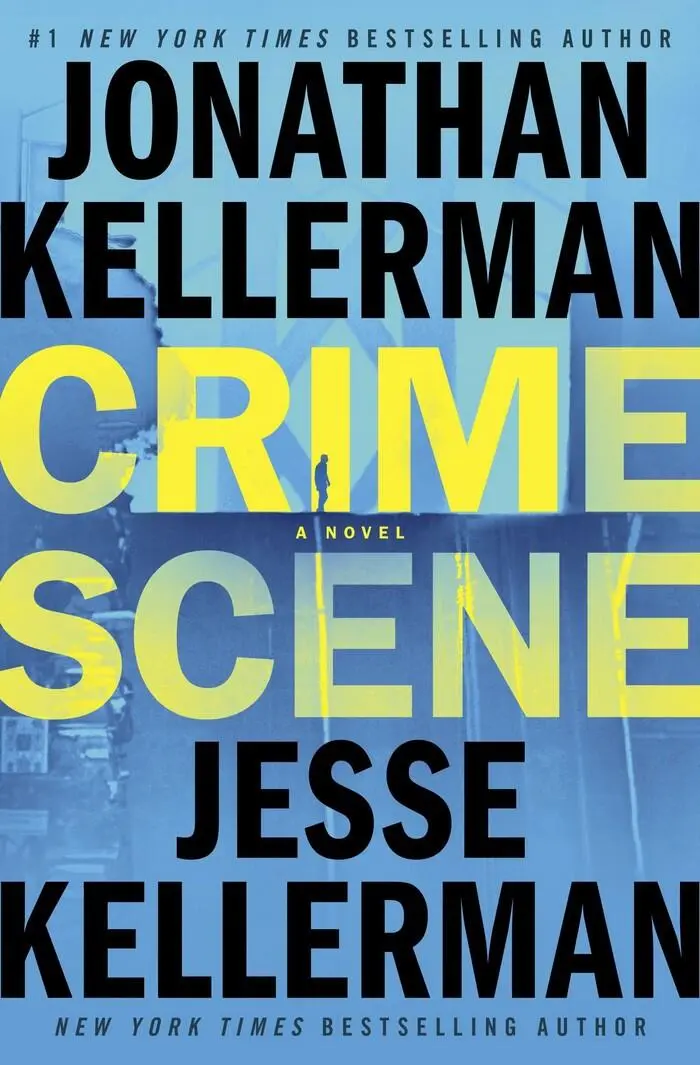
- Название:Crime Scene
- Автор:
- Издательство:Ballantine Books
- Жанр:
- Год:2017
- Город:New York
- ISBN:978-0-399-59460-1
- Рейтинг книги:4 / 5. Голосов: 1
-
Избранное:Добавить в избранное
- Отзывы:
-
Ваша оценка:
Crime Scene: краткое содержание, описание и аннотация
Предлагаем к чтению аннотацию, описание, краткое содержание или предисловие (зависит от того, что написал сам автор книги «Crime Scene»). Если вы не нашли необходимую информацию о книге — напишите в комментариях, мы постараемся отыскать её.
Eccentric, reclusive Walter Rennert lies cold at the bottom of his stairs. At first glance the scene looks straightforward: a once-respected psychology professor, done in by booze and a bad heart. But his daughter Tatiana insists that her father has been murdered, and she persuades Clay to take a closer look at the grim facts of Rennert’s life.
What emerges is a history of scandal and violence, and an experiment gone horribly wrong that ended in the brutal murder of a coed. Walter Rennert, it appears, was a broken man — and maybe a marked one. And when Clay learns that a colleague of Rennert’s died in a nearly identical manner, he begins to question everything in the official record.
All the while, his relationship with Tatiana is evolving into something forbidden. The closer they grow, the more determined he becomes to catch her father’s killer — even if he has to overstep his bounds to do it.
The twisting trail Clay follows will lead him into the darkest corners of the human soul. It’s his job to listen to the tales the dead tell. But this time, he’s part of a story that makes his blood run cold.
Crime Scene — читать онлайн бесплатно полную книгу (весь текст) целиком
Ниже представлен текст книги, разбитый по страницам. Система сохранения места последней прочитанной страницы, позволяет с удобством читать онлайн бесплатно книгу «Crime Scene», без необходимости каждый раз заново искать на чём Вы остановились. Поставьте закладку, и сможете в любой момент перейти на страницу, на которой закончили чтение.
Интервал:
Закладка:
He wore a broadcloth button-down shirt tucked into Levi’s. Both belt and suspenders had been enlisted in the battle between pants and gut. I liked the gut’s chances. It had gravity on its side.
I waited till the last student had finished sweeping up to make myself known.
“Reverend Willamette said you might be by,” Fletcher said. His hand felt like one single callus.
“I saw you were scheduled to teach tonight,” I said.
“Wish you’d called first,” he said, settling on a work stool. “I could’ve saved you the trouble of coming down here.”
“You’re going to tell me you don’t know where Julian is.”
“I do not. Haven’t seen him in ages.”
For form’s sake, I asked how long, expecting the same answer I’d gotten from everyone I’d spoken to so far: more than ten years. But Ellis Fletcher said, “Hell,” and removed his cap, blue with VIETNAM VETERAN stitched in gold. He rubbed at his forehead with the heel of his hand. “Must be two or three years now.”
“No kidding,” I said. “That recently?”
He gave me a strange smile. “You call that recent?”
“No one else’s seen him since two thousand five,” I said.
Fletcher looked puzzled. “I — okay, I guess.”
“The pastor told me you let him come in to use the shop in off hours.”
“That was way back in the beginning,” Fletcher said. “Geoff said he had this boy, special case, would I show him the ropes. All right, why not, send him on over. For a little while Julian was here all the time. Then he sorta dropped out of sight.”
“When was that?”
He paused. “Come to think, right around when you said.”
“Oh-five.”
“That sounds about right.”
“But you did see him after that,” I said.
He slapped the cap against his knee, knocking loose a cloud of sawdust. “Not frequently. Once a year at most. He didn’t give me any warning, he’d just turn up. Like you.”
I smiled. “What did he come to see you about?”
“Nothing special. Showing his face, I think.”
“You’re the one he chose to show it to.”
The suggestion seemed to unsettle him. “If you say so.”
“His mother. His sister. Reverend Willamette,” I said. “They haven’t seen him. You must’ve meant a lot to him.”
“I really don’t know what to tell you,” he said.
Aware of his growing discomfort, I backed off a hair. “What’d you two discuss?”
“We didn’t ‘discuss’ anything,” he said. “That wasn’t the nature of the relationship. I’d ask him what he’d been building, so forth. You know, chitchat.”
He tugged the cap back on. “The man’s not one for talk.”
“So I’ve heard.”
“Good with his hands, though.”
“Heard that, too,” I said. “Did he mention where he was living, or who with?”
“I always assumed he was with her. His mother.” Concern came into his face. “You’re here because he’s done something.”
“Not necessarily.”
“You’re here,” Fletcher repeated.
“I’m trying to be careful, Mr. Fletcher. Stay ahead of things. For Julian’s sake, as much as anyone’s. When he came by did he talk about having a job?”
“No.”
“Do you know how he got by?”
He shook his head.
“All right,” I said. “More generally, could you get a sense of where his head was at?”
Fletcher stared out the shop window, at the main floor. The presses and saws and lathes made a gruff but steady chant, oddly soothing. “I get these students,” he said, shifting on the stool, “kids. They buy everything on the internet. They don’t need to touch it first. You bet they never stopped to think how it got that way. Where it started from. It’s click click click click, until one morning they wake up starving and they don’t know why. They can’t put a name on it. It doesn’t have a name. So away they go on the internet again, click click click, until they end up in my class, asking me questions. They want to lock everything down in rules. ‘How do I know when to change the grit?’ ” He paused. “I do what I can. But I can’t make them feel.”
“And Julian?”
“Nothing was for show. He didn’t crave praise, or attention. He did what he did.”
“You taught him well.”
Fletcher shook his head. “Can’t teach talent. Intuition for the wood — you’re born with it or you’re not. I gave him pointers now and again. Showed him pictures or plans from my books and magazines. Most the time I just kept an eye out so he wouldn’t steal my tools.”
“You thought he might?”
“In the beginning, sure. All I knew about him is, here’s this kid just came out of prison. After a while I got to see him for who he was.”
“You know what he went to prison for.”
“I do,” he said and left it at that.
“Did he ever speak to you about the murder?”
“Never.”
“Did the name Walter Rennert ever come up?”
“I don’t know who that is.”
“Nicholas Linstad?”
“Him neither.”
“Did he ever talk about wanting to hurt anyone? Get revenge?”
“No,” Fletcher said. “You’re worrying me, Deputy.”
“Please don’t.” Yet. “Like I said, this is me being extra-careful.”
“Ounce of prevention,” he said.
I nodded.
He gave me a long look, let his features go slack. “Hell, you’re just doing your job.”
I wasn’t. But I appreciated his attitude.
Fletcher said, “Ask me, it’s hard to see him hurting anyone. Ever. Not by the time I met him.”
He raised his arm. “That was his table, in the back. He’d shove himself in there and put his earmuffs on, working by himself, not talking, not asking questions. Maybe I go over there to see how he is, and he shows me. But otherwise he does his thing in peace.” A crooked smile. “Big as he was, I sometimes forgot he was there.”
A chop saw howled, devoured, was satisfied.
“This way a second,” Fletcher said.
Exiting the shop, he led me past an emergency eyewash station and through a door marked STAFF ONLY BEYOND THIS POINT THANK YOU. He stopped at a stainless-steel trough sink to rinse his hands before heading down a row of school lockers. A pale young woman with black ear gauges and a purple Mohawk sat on the bolted bench, blotting her armpits with a hand towel. She waved to Fletcher, who acknowledged her with a salute.
His was the second-to-last locker on the left. He dialed in the combination. “I keep this around for when folks get in their heads they want me to make them something.”
The locker didn’t hold much: a crusty bottle of Gold Bond, a brown paper lunch sack, a spare shirt on the hook. From the shelf, he took down a photo album — not the twenty-first-century ready-made version, but crack-spined, with pocket pages housing three-by-five snapshots.
It was a portfolio of sorts, although it focused more on process than on results, documenting the creation of several pieces, step by step, from raw material to finished product. Fletcher himself hovered at the margins, like some almighty set of hands. He did beautiful work.
He flipped a page, put his finger down. “That’s him.”
I had yet to see a picture of Triplett as an adult. The Zhao murder file contained his mugshot, one of six in a photo array provided to Nicholas Linstad, who had circled him and written in the margin this is the person I saw outside Donna Zhao’s apartment building on 31-10-1993.
The photo in the album was a candid, taken while Triplett leaned over a plane.
He sure hadn’t grown up any smaller.
Wearing a gray hoodie. Same as the guy I’d chased. Same as the person Linstad spotted lurking near Donna Zhao’s building. The same gray hoodie found blood-soaked and wrapped around the murder weapon.
Читать дальшеИнтервал:
Закладка:
Похожие книги на «Crime Scene»
Представляем Вашему вниманию похожие книги на «Crime Scene» списком для выбора. Мы отобрали схожую по названию и смыслу литературу в надежде предоставить читателям больше вариантов отыскать новые, интересные, ещё непрочитанные произведения.



Обсуждение, отзывы о книге «Crime Scene» и просто собственные мнения читателей. Оставьте ваши комментарии, напишите, что Вы думаете о произведении, его смысле или главных героях. Укажите что конкретно понравилось, а что нет, и почему Вы так считаете.