Kate Mosse - Labyrinth
Здесь есть возможность читать онлайн «Kate Mosse - Labyrinth» весь текст электронной книги совершенно бесплатно (целиком полную версию без сокращений). В некоторых случаях можно слушать аудио, скачать через торрент в формате fb2 и присутствует краткое содержание. Жанр: Триллер, на английском языке. Описание произведения, (предисловие) а так же отзывы посетителей доступны на портале библиотеки ЛибКат.
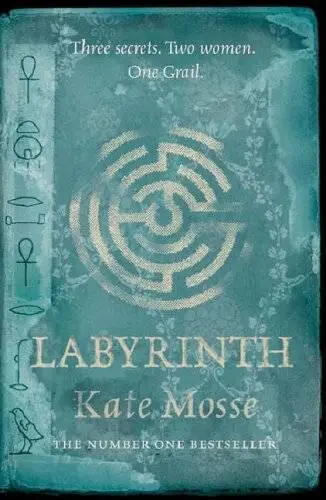
- Название:Labyrinth
- Автор:
- Жанр:
- Год:неизвестен
- ISBN:нет данных
- Рейтинг книги:3 / 5. Голосов: 1
-
Избранное:Добавить в избранное
- Отзывы:
-
Ваша оценка:
Labyrinth: краткое содержание, описание и аннотация
Предлагаем к чтению аннотацию, описание, краткое содержание или предисловие (зависит от того, что написал сам автор книги «Labyrinth»). Если вы не нашли необходимую информацию о книге — напишите в комментариях, мы постараемся отыскать её.
Labyrinth — читать онлайн бесплатно полную книгу (весь текст) целиком
Ниже представлен текст книги, разбитый по страницам. Система сохранения места последней прочитанной страницы, позволяет с удобством читать онлайн бесплатно книгу «Labyrinth», без необходимости каждый раз заново искать на чём Вы остановились. Поставьте закладку, и сможете в любой момент перейти на страницу, на которой закончили чтение.
Интервал:
Закладка:
The following morning, the Host struck camp and headed south across open country towards the Roman city of Narbonne. At the front of the column of men was the Abbot of Citeaux, flanked by the Papal Legates, his temporal authority strengthened by the devastating defeat of the city that had dared to harbour heresy. Every cross of white or gold seemed to shimmer like the finest cloth upon the backs of God’s warriors. Every crucifix seemed to catch the rays of the brilliant sun.
The conquering army wound its way like a snake through the landscape of saltpans, stagnant pools and extensive tracts of yellow scrub, whipped by the fierce winds that blew off the Golfe du Lion. Vines grew wild along the roadsides, as well as olive and almond trees.
The French soldiers, untried and unused to the extreme climate of the south, had never seen terrain like it. They crossed themselves, seeing it as proof that they had indeed entered a land abandoned by God.
A deputation led by the Archbishop of Narbonne and the Viscount of the city met the Crusaders at Capestang on the twenty-fifth of July.
Narbonne was a rich trading port on the Mediterranean Sea, although the heart of the city was some distance inland. With rumours of the horrors inflicted upon Beziers fresh in their minds – and hoping to save
Narbonne from the same fate – both church and state were prepared to sacrifice their independence and honour. In front of witnesses, the Bishop of Narbonne and the Viscount of Narbonne knelt before the Abbot and made full and complete submission to the Church. They agreed to deliver all known heretics to the Legates, to confiscate all property owned by Cathars and Jews, even to pay a tax on their possessions to subsidise the Crusade.
Within hours, terms had been ratified. Narbonne would be spared.
Never had a war chest been won, so easily.
If the Abbot and his Legates were surprised at the speed with which the Narbonnais relinquished their birthright, they did not show it. If the men who marched beneath the vermilion colours of the Count of Toulouse were embarrassed by the lack of courage of their countrymen, they did not voice it.
The order was given to change course. They would stay outside Narbonne for the night, then head for Olonzac in the morning. After that, it was but a few days’ march to Carcassonne itself.
The following day, the fortified hilltop town of Azille surrendered, throwing its gates open wide to the invaders. Several families denounced as heretics were burned on a pyre hastily constructed in the central marketplace. The black smoke wound through the narrow, steep streets slipped over the thick walls of the town to the flat countryside beyond.
One by one, the small chateaux and villages surrendered without a sword being raised. The neighbouring town of La Redorte followed Azille’s example, as did most of the hamlets and dusters of tiny dwellings in between. Other places fortes they found deserted.
The Host helped themselves to what they wanted from the bursting granaries and well-stocked fruit stores and moved on. What little resistance the army did encounter was met with violent and swift reprisals, Steadily, the savage reputation of the army spread, like a malignant shadow stretching out black before them. Little by little, the ancient bond between the people of the eastern Languedoc and the Trencavel dynasty was broken.
On the eve of the Feast Day of Sant-Nazaire, a week after their victory at’s, the advance guard reached Trebes, two days ahead of the main army.
During the course of the afternoon, it grew steadily more humid. The hazy afternoon light gave way to a glowering grey. A few rumbles of thunder growled in the sky, followed by a violent crack of lightning. As the Crusaders rode through the gates of the town, left unguarded and open, the first drops of rain began to fall.
The streets were eerily deserted. Everyone had disappeared, stolen away like wraiths or spirits. The sky was an endless expanse of black and purple, as bruised clouds scudded across the horizon. When the storm hit, sweeping across the plains surrounding the town, the thunder cracked and roared overhead as if the heavens themselves were disintegrating.
The horses slithered and slipped on the cobbled stones. Each alleyway, every passage, became a river. The rain pounded ferociously on shield and helmet. Rats scurried to the steps to the church, seeking refuge from the swirling torrents. The tower was hit by lightning, but did not burn.
Soldiers from the north fell to their knees, crossing themselves and praying that God would spare them. The flat lands around Chartres, the fields of Burgundy or the wooded countryside of Champagne offered nothing so extreme.
As quickly as it had struck, like a lumbering beast, the storm passed on. The air became fresh and pleasant. The Crusaders heard the bells in the nearby monastery start to ring out in thanks for their safe deliverance. Taking it as a sign the worst was over, they emerged from the trees and set to work. The squires searched for safe grazing for the horses. Servants began to unpack their masters’ belongings and went in search of dry kindling to lay the fires.
Gradually, the camp took shape.
Dusk fell. The sky was a patchwork of pinks and purples. As the final wisps of trailing white cloud drifted away, the northerners got their first glimpse of the towers and turrets of Carcassonne, revealed suddenly on the horizon.
The Cite seemed to rise out of the land itself, a stone fortress in the sky looking down in grandeur upon the world of men. Nothing they had heard had prepared the Crusaders for this first sight of the place they had come to conquer. Words did not begin to do justice to its splendour.
It was magnificent, dominant. Impregnable.
CHAPTER 48
When he came to his senses, Simeon was no longer in the wood, but in some sort of byre. He had a memory of travelling, a long way. His ribs were sore from the motion of the horse.
The smell was terrible, a mixture of sweat, goat, damp straw and something he could not quite identify: a sickliness, like decaying flowers. There were several harnesses hanging from the wall and a pitchfork propped up in the corner closest to the door, which came no higher than a man’s shoulder. On the wall opposite the door were five or six metal rings for “tethering animals.
Simeon glanced down. The hood they’d put over his head was lying next to him on the ground. His hands were still tied, as were his feet.
Coughing and trying to spit the coarse threads of the material out of mouth, he levered himself up into a sitting position. Feeling bruised stiff, Simeon slowly shuffled backwards on the ground until he tied the door. It took some time, but the relief of feeling something against his shoulders and back was immense. Patiently, he pushed himself to his feet, his head nearly hitting the roof. He banged against the door. The wood groaned and strained, but it was barred from the outside and would not open.
Simeon had no idea where he was, still close to Carcassonne or further afield. He had half memories of being carried on horseback through the woods then over flat land. From the little he knew of the terrain, he guessed that meant they were somewhere around Trebes.
He could see a slither of light under the small gap at the bottom of the a dark blue, but not yet the pitch black of night. When he pressed ear to the ground, he could hear the murmur of his captors close by.
They were waiting for someone to arrive. The thought chilled him; evidence, although he barely needed it, that this was no random ambush.
Simeon shuffled his way back to the far side of the byre. Over time, he dozed, slumping sideways and jerking awake, then sliding into sleep again.
The sound of someone shouting brought him to his senses. Immediately, every nerve in his body was alert. He heard the sound of men scrambling to their feet, then a thud as the heavy wooden bar securing the door was removed.
Читать дальшеИнтервал:
Закладка:
Похожие книги на «Labyrinth»
Представляем Вашему вниманию похожие книги на «Labyrinth» списком для выбора. Мы отобрали схожую по названию и смыслу литературу в надежде предоставить читателям больше вариантов отыскать новые, интересные, ещё непрочитанные произведения.






Обсуждение, отзывы о книге «Labyrinth» и просто собственные мнения читателей. Оставьте ваши комментарии, напишите, что Вы думаете о произведении, его смысле или главных героях. Укажите что конкретно понравилось, а что нет, и почему Вы так считаете.