Kate Mosse - Labyrinth
Здесь есть возможность читать онлайн «Kate Mosse - Labyrinth» весь текст электронной книги совершенно бесплатно (целиком полную версию без сокращений). В некоторых случаях можно слушать аудио, скачать через торрент в формате fb2 и присутствует краткое содержание. Жанр: Триллер, на английском языке. Описание произведения, (предисловие) а так же отзывы посетителей доступны на портале библиотеки ЛибКат.
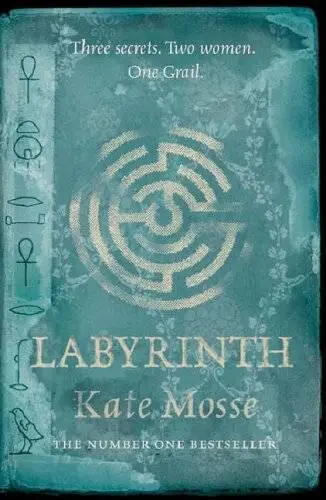
- Название:Labyrinth
- Автор:
- Жанр:
- Год:неизвестен
- ISBN:нет данных
- Рейтинг книги:3 / 5. Голосов: 1
-
Избранное:Добавить в избранное
- Отзывы:
-
Ваша оценка:
Labyrinth: краткое содержание, описание и аннотация
Предлагаем к чтению аннотацию, описание, краткое содержание или предисловие (зависит от того, что написал сам автор книги «Labyrinth»). Если вы не нашли необходимую информацию о книге — напишите в комментариях, мы постараемся отыскать её.
Labyrinth — читать онлайн бесплатно полную книгу (весь текст) целиком
Ниже представлен текст книги, разбитый по страницам. Система сохранения места последней прочитанной страницы, позволяет с удобством читать онлайн бесплатно книгу «Labyrinth», без необходимости каждый раз заново искать на чём Вы остановились. Поставьте закладку, и сможете в любой момент перейти на страницу, на которой закончили чтение.
Интервал:
Закладка:
Beyond the carousel, Alice could see the gray heads and shoulders of tombs and gravestones behind the walls of the cemetery, a row of cypress and yew protecting the sleepers from casual glances. To the right of the gates, a group of men played petanque.
For a moment, she stood still, facing the entrance to the Cite head on, preparing herself to go in. To her right was a stone pillar from which an ugly stone gargoyle stared out, its flat face uncompromising and blunt. It looked newly restored.
SUM CARCAS . I am Carcas.
Dame Carcas, the Saracen queen and wife of King Balaack, after whom Carcassonne was said to be named after resisting a five-year siege by Charlemagne.
Alice walked over the covered drawbridge, which was squat and confined and fashioned from stone, chain and wood. The boards creaked and clattered beneath her feet. There was no water in the moat beneath her, only grass speckled with wild flowers.
It led into the Lices, a dusty, wide area between the outer and inner ring of fortifications. To left and right, children were climbing on the walls and staging mock battles with plastic swords. Straight ahead was the Porte Narbonnaise. As she passed beneath the high, narrow arch, Alice raised her eyes. A benign stone statue of the Virgin Mary looked down at her.
The moment Alice passed through the gates all sense of space vanished. The rue Cros-Mayrevieille, the cobbled main street, was very narrow and sloped upwards. The buildings were packed so closely together that a person could lean out of the top story of one house and join hands with someone on the opposite side.
The high buildings trapped the noise. Different languages, shouting, laughing, gesturing as a car crawled by with barely a hand’s width to spare on either side. Shops leaped out at her, selling postcards, guidebooks, a mannequin in the stocks advertising a museum of inquisitional instruments of torture, soaps and cushions and tableware, everywhere replica swords and shields. Twisted wrought-iron brackets stuck out from the wall with wooden signs attached to them: I’Eperon Medieval, the Medieval Spur, sold replica swords and porcelain dolls; A Saint Louis sold soap, souvenirs and tableware.
Alice let her feet guide her to the main square, Place Marcou. It was small and filled with restaurants and clipped plane trees. Their spreading branches, wide like entwined and sheltering hands above the tables and chairs, competed with the brightly colored awnings. The names of the individual cafes were printed on the top-Le Marcou, Le Trouvere, Le Menestrel.
Alice strolled over the cobbles and out the other side, finding herself back at the junction of the rue Cros-Mayrevieille and the Place du Chateau, where a triangle of shops, creperies and restaurants surrounded a stone obelisk about two and one-half meters high, topped by a bust of the nineteenth-century historian Jean-Pierre Cros-Mayrevieille. Around the bottom was a bronze frieze of the fortifications.
She walked forward until she was standing in front of a sweeping semicircular wall that protected the Chateau Comtal. Behind the imposing locked gates were the turrets and battlements of the castle. A fortress within a fortress.
Alice stopped, realizing that this had been her destination all along. The Chateau Comtal, home of the Trencavel family.
She peered through the tall wooden gates. There was something familiar about it all, as if she was returning to a place she’d been once, long ago, and forgotten. There were glass ticket booths on either side of the entrance, blinds drawn, with printed signs advertising the opening hours. Beyond that was a gray expanse of gravel and dust, not grass, which led to a flat, narrow bridge, about two meters across.
Alice stepped away from the gates, promising herself she’d come back first thing in the morning. She turned to the right and followed signs for the Porte de Rodez. It was set between two distinctive, horseshoe-shaped towers. She climbed down the wide steps, worn away in the middle by countless feet.
The difference in age between the inner and outer walls was most evident here. The outer fortifications, which she read had been built at the end of the thirteenth century and restored during the nineteenth, were gray and the blocks were relatively equal in size. Detractors would claim it was just another indication of how inappropriately the restoration had been carried out. Alice didn’t care. The spirit of the place was what moved her. The inner wall, including the western wall of the Chateau Comtal itself, was composed of a mixture of red tiles of the Gallo-Roman remains and the crumbling sandstone of the twelfth century.
Alice felt a sense of peace after the noise within the Cite, a feeling of belonging here, among such mountains and skies. With her arms resting on the battlements, she stood looking down to the river, imagining the cold touch of the water between her toes.
Only when the remains of the day gave way to dusk, did Alice turn and head back into the Cite.
CHAPTER 34
Carcassona
JULHET 1209
They rode in single file as they approached Carcassonne, Raymond-Roger Trencavel at the head, followed closely by Bertrand Pelletier. The chevalier Guilhem du Mas brought up the rear.
Alai’s was at the back with the clergy.
Less than a week had passed since she had left, but it seemed much longer. Spirits were low. Although the Trencavel ensigns fluttered intact in the breeze and the same number of men were returning as had set out, the expression on the viscount’s face told the story of the failure of their petition.
The horses slowed to a walk as they approached the gates. Alai’s leaned forward and patted Tatou on the neck. She was tired and she’d thrown a shoe, but the mare’s stamina could not be faulted.
The crowds were several deep as they passed under the Trencavel coat of arms hanging between the two towers of the Porte Narbonnaise. Children ran alongside the horses, throwing flowers in their path and cheering. Women waved makeshift pennants and kerchiefs out of top-floor windows, as Trencavel led them up through the streets toward the Chateau Comtal.
Alai’s felt nothing but relief as they crossed the narrow bridge and through the Eastern Gates. The Cour d’Honneur erupted in sound, everybody waving and calling out. Ecuyers sprang forward to take their masters’ horses, servants ran to make ready the bathhouse, scullions headed for the kitchen with pails of water ready so that a feast could be prepared.
Among the forest of waving arms and smiling faces, Alais caught sight of Oriane. Her father’s servant, Francois, was standing close behind. She flushed at the thought of how she had tricked him and slipped away from under his nose.
She saw Oriane scanning the crowd. Her eyes came briefly to rest upon her husband, Jehan Congost. A look of contempt flitted across Oriane’s face, before she moved on and to her discomfort, fixed her gaze upon Alai’s. Alais pretended not to notice, but she could feel her sister staring at her across the sea of heads. When she looked again, Oriane had gone.
Alais dismounted, taking care not to knock her injured shoulder, and handed Tatou’s reins to Amiel to take to the stables. Her relief at being home had already passed. Melancholy settled over her like a winter fog. Everyone else seemed to be in someone’s arms, a wife, a mother, an aunt, a sister. She searched for Guilhem, but he was nowhere to be seen. In the bathhouse already. Even her father had gone.
Alais wandered into the smaller courtyard, seeking solitude. She couldn’t shake a verse by Raymond de Mirval from her mind, although he made her mood worse. “Res contr’Amor non es guirens, lai on sos poders’s”atura.“ There is no protection against love, once it chooses to exert its power.
Читать дальшеИнтервал:
Закладка:
Похожие книги на «Labyrinth»
Представляем Вашему вниманию похожие книги на «Labyrinth» списком для выбора. Мы отобрали схожую по названию и смыслу литературу в надежде предоставить читателям больше вариантов отыскать новые, интересные, ещё непрочитанные произведения.








Обсуждение, отзывы о книге «Labyrinth» и просто собственные мнения читателей. Оставьте ваши комментарии, напишите, что Вы думаете о произведении, его смысле или главных героях. Укажите что конкретно понравилось, а что нет, и почему Вы так считаете.