Nora Roberts - Tribute
Здесь есть возможность читать онлайн «Nora Roberts - Tribute» весь текст электронной книги совершенно бесплатно (целиком полную версию без сокращений). В некоторых случаях можно слушать аудио, скачать через торрент в формате fb2 и присутствует краткое содержание. Жанр: Триллер, на английском языке. Описание произведения, (предисловие) а так же отзывы посетителей доступны на портале библиотеки ЛибКат.
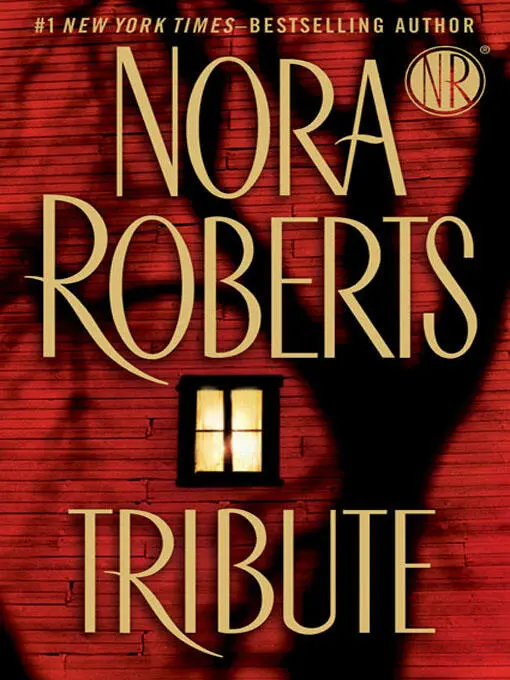
- Название:Tribute
- Автор:
- Жанр:
- Год:неизвестен
- ISBN:нет данных
- Рейтинг книги:4 / 5. Голосов: 1
-
Избранное:Добавить в избранное
- Отзывы:
-
Ваша оценка:
Tribute: краткое содержание, описание и аннотация
Предлагаем к чтению аннотацию, описание, краткое содержание или предисловие (зависит от того, что написал сам автор книги «Tribute»). Если вы не нашли необходимую информацию о книге — напишите в комментариях, мы постараемся отыскать её.
Plunging into the project with gusto, she's almost too busy to notice her neighbor, graphic novelist Ford Sawyer – but his lanky form, green eyes, and easy, unflappable humor (not to mention his delightfully ugly dog, Spock) are hard to ignore. Determined not to perpetuate the family tradition of ill-fated romances, Cilla steels herself against Ford's quirky charm, but she can't help indulging in a little fantasy.
But love and a peaceful life may not be in the cards for Cilla. In the attic, she has found a cache of unsigned letters suggesting that Janet Hardy was pregnant when she died – and that the father was a local married man. Cilla can't help but wonder what really happened all those years ago. The mystery only deepens with a series of intimidating acts and a frightening, violent assault. And if Cilla and Ford are unable to sort out who is targeting her and why, she may – like her world-famous grandmother – be cut down in the prime of her life.
Tribute — читать онлайн бесплатно полную книгу (весь текст) целиком
Ниже представлен текст книги, разбитый по страницам. Система сохранения места последней прочитанной страницы, позволяет с удобством читать онлайн бесплатно книгу «Tribute», без необходимости каждый раз заново искать на чём Вы остановились. Поставьте закладку, и сможете в любой момент перейти на страницу, на которой закончили чтение.
Интервал:
Закладка:
“It’s a good thing because I pay him five hundred a year for that seal.”
“He loves you. It came across when I subtly and cleverly pumped him about you.”
He felt a quick and happy twinge. “You pumped him about me?”
“Subtly,” she repeated. “And cleverly. And he’s a nice guy, so…” She scanned the room, the equipment again, and he could almost feel her longing. “How about we barter? I’ll happily take advantage of your equipment, and if you have something around the house that needs fixing or dealing with, I’ll take care of it.”
“You’re going to be my handyman?”
“I’m pretty damn handy.”
“Will you wear your tool belt, and a really short skirt?”
“Tool belt, yes. Skirt, no.”
“Damn it.”
“If I can’t fix it, I’ll send one of the guys over. Maybe one of them will wear a really short skirt.”
“I can always hope.”
“Deal?”
“Deal.”
“Great.” Smiling, she studied the room again. “I’m going to take advantage first thing tomorrow. Why don’t I take you out to dinner to seal the deal?”
“I’ll rain-check that as I’ve got the menu planned up in Chez Sawyer.”
“You’re going to cook.”
“My specialty.” He took her arm to turn her toward the steps. “I only have the one that doesn’t involve nuking. It involves tossing a couple steaks on the grill, stabbing a bunch of peppers on a skewer and baking a couple of potatoes. How do you like your steak?”
“So I can hear it faintly whisper moo.”
“Cilla, you’re a woman after my own heart.”
SHE WASN’T. She wasn’t after anything but the pursuit of her own goals, and the satisfaction of finding them. But she had to admit, Ford made it tempting. He engaged her mind, putting it at ease and keeping it on alert. It was, Cilla thought, a clever skill. She enjoyed his company, more than she felt was altogether wise, particularly since she’d planned to spend more of her time alone.
And he looked damn good standing over a smoking grill.
They ate on his back veranda, with the well-fed Spock snoring in table-scrap bliss. And she found the down-to-basics meal exactly right. “God, it’s so beautiful here. Peaceful.”
“No urges for club crawls or a quick foray down Rodeo Drive?”
“I had my fill of both a long time ago. Seems like fun at the time, but it goes sour fast if it’s not really your place. It wasn’t mine. What about you? You lived in New York for a while, didn’t you? No urges to take another bite out of the Big Apple?”
“It was exciting, and I like going back now and then, soaking up that energy. The thing was, I thought I was supposed to live there, given what I wanted to do. After a while, I realized I was doing more work when I came down to visit my parents for a few days, hang with friends, than I was in the same stretch of time up there. I finally figured out there were just too many people thinking up there, all hours of the day and night. And I thought better down here.”
“That’s funny,” she replied.
“What is?”
“In an interview once, a reporter asked my grandmother why she bought this little farm in Virginia. She said she could hear her own thoughts here, and that they tended to get drowned out with everyone else’s when she was in L.A.”
“I know exactly what she meant. Have you read many of her interviews? ”
“Read, reread, listened to, watched. I can’t remember a time she didn’t fascinate me. This brilliant light, this tragic icon, who I came from. I couldn’t escape her, so I needed to know her. I resented her when I was a kid. Being compared to her, and always falling short.”
“Comparisons are designed to make someone fall short.”
“They really are. By the time I was twelve or thirteen, they actively pissed me off. So I started to study her, very purposefully, looking for the trick, the secret. What I found was a woman who was stupendously and naturally talented. Anyone compared to her would fall short. And realizing that, I didn’t resent her anymore. It would be like resenting a diamond for sparkling.”
“I grew up hearing about her, because she had the place here. Died here. My mother would play her records a lot. She went to a couple of parties at the farm,” he added. “My mother.”
“Did she?”
“Her claim to fame is kissing Janet Hardy’s son, that would be your uncle. A little odd, isn’t it, you and me sitting out here like this, and back years, my mother and your uncle made out in the shadows across the road. Might be odder still when I tell you my mama did some of the same with your daddy.”
“Oh God.” On a burst of laughter, Cilla picked up her wine, took a quick drink. “You’re not making that up?”
“Pure truth. This would be, of course, before she settled on my father, and your father went out to Hollywood after your mother. Complicated business, now that I think about it.”
“I’ll say.”
“And mortifying for me, when she told me. Which was with some glee, when I ended up in your father’s class in high school. The thought that my mother had locked lips with Mr. McGowan was damn near traumatizing at the time.” His eyes lit with humor. “Now, I like the synchronicity that my mother’s son has locked lips with Mr. McGowan’s daughter.”
Circles, Cilla thought. She’d thought of circles when she’d come to rebuild her grandmother’s farm. Now here was another circle linked to that. “They must’ve been so young,” she said softly. “Johnnie was only eighteen when he died. It must’ve been horrible for Janet, for the parents of the other two boys-one dead, one paralyzed. She never got over it. You can see in every clip, every photo of her taken after that night, she was never the same.”
“My mother used to use that accident as a kind of bogeyman when I got old enough to drive. You’d see Jimmy Hennessy around town from time to time in his wheelchair, and she never missed the opportunity to remind me of what could happen if I was careless enough to drink or get high, then get behind the wheel or into a car with someone who’d been using.”
He shook his head, polished off his steak. “I still can’t go to a bar and guiltlessly enjoy a single beer if I’ve got to drive myself home. Mothers sure can screw things up for you.”
“Does he still live here? The boy-well, not a boy now-the one who survived the wreck?”
“He died last year. Or the year before. I’m not sure.”
“I didn’t hear about it.”
“He lived at home his whole life. His parents looked after him. Rough.”
“Yes. His father blamed Janet. Blamed her for bringing her Hollywood immorality here, for letting her son run wild, for buying him the fast car.”
“There were two other boys in that car. Nobody forced them into it,” Ford pointed out. “Nobody poured beer forcibly down their throats or pumped pot into their systems. They were young and stupid, all three of them. And they paid a terrible price for it.”
“And she paid them. According to my mother-and her bitterness over it tells me it’s true-Janet paid each of the families of those boys a considerable sum of money. Undisclosed amount, even to my mother. And again, according to the gospel of Dilly, Janet only kept the farm as a kind of monument to Johnnie, and tied it up in trusts for decades after her own death for the same reason. But I don’t believe that.”
“What do you believe?”
“I believe Janet kept it because she was happy here. Because she could hear her own thoughts here, even when those thoughts were dark and dreadful.” She sighed, sat back. “Give me another glass of wine, will you, Ford? That’ll make three, which is my absolute personal high-end limit.”
Читать дальшеИнтервал:
Закладка:
Похожие книги на «Tribute»
Представляем Вашему вниманию похожие книги на «Tribute» списком для выбора. Мы отобрали схожую по названию и смыслу литературу в надежде предоставить читателям больше вариантов отыскать новые, интересные, ещё непрочитанные произведения.




Обсуждение, отзывы о книге «Tribute» и просто собственные мнения читателей. Оставьте ваши комментарии, напишите, что Вы думаете о произведении, его смысле или главных героях. Укажите что конкретно понравилось, а что нет, и почему Вы так считаете.