John Katzenbach - Just Cause
Здесь есть возможность читать онлайн «John Katzenbach - Just Cause» весь текст электронной книги совершенно бесплатно (целиком полную версию без сокращений). В некоторых случаях можно слушать аудио, скачать через торрент в формате fb2 и присутствует краткое содержание. Жанр: Триллер, на английском языке. Описание произведения, (предисловие) а так же отзывы посетителей доступны на портале библиотеки ЛибКат.
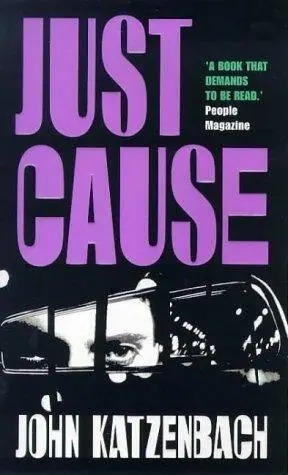
- Название:Just Cause
- Автор:
- Жанр:
- Год:неизвестен
- ISBN:нет данных
- Рейтинг книги:4 / 5. Голосов: 1
-
Избранное:Добавить в избранное
- Отзывы:
-
Ваша оценка:
Just Cause: краткое содержание, описание и аннотация
Предлагаем к чтению аннотацию, описание, краткое содержание или предисловие (зависит от того, что написал сам автор книги «Just Cause»). Если вы не нашли необходимую информацию о книге — напишите в комментариях, мы постараемся отыскать её.
Just Cause — читать онлайн бесплатно полную книгу (весь текст) целиком
Ниже представлен текст книги, разбитый по страницам. Система сохранения места последней прочитанной страницы, позволяет с удобством читать онлайн бесплатно книгу «Just Cause», без необходимости каждый раз заново искать на чём Вы остановились. Поставьте закладку, и сможете в любой момент перейти на страницу, на которой закончили чтение.
Интервал:
Закладка:
So, he thought, she was more than just her friend. She was my friend, too. Saved our lives.
Self-hatred filled him. All the authority and power in the world, and I couldn't protect her.
He remembered the war. Medic! they called, and I went. Did I save any of them? He remembered a white boy, one week in the platoon, a cowboy from Wyoming who'd taken a round in the chest, a sucking chest wound. It'd whistled, taunting him as he struggled to save the soldier. He'd had his eyes locked onto Tanny Brown, watching through the haze of hurt and shock for a sign that would tell him he was going to live or die. He'd still been looking when the last breath wheezed through his chest. It was the same look that George and Betty Shriver had worn when he came to their door carrying the worst news.
Brown shook his head. How long have I known George Shriver? Since the day I went to work in his father's store and he took a mop and worked next to me.
His hand twitched. I've buried too many. He looked at the picture a final time before setting it back on top of the bureau. It's not over, he insisted. I owe you too much.
He walked from his daughter's room into his bedroom. He no longer thought of exhaustion or rest. Fueled by outrage and debt, he began collecting a change of clothes and stuffing them into an overnight bag, wondering when the next commuter flight down to Miami left the airport.
13. A Hole In The Story
He had no plan.
Matthew Cowart faced the day after the execution of Blair Sullivan with all the enthusiasm of a man who'd been told he was next. He drove his rental car rapidly through the night, down more than half the length of the state, jumping on Interstate 95 south of Saint Augustine. He cruised the three-hundred-plus miles at an erratic pace, often accelerating to ninety miles per hour, oddly surprised he was not stopped once by a trooper, though he passed several heading in the opposite direction. He soared through the darkness, fueled by all the furious contradictions ricocheting back and forth in his head. The first morning sunshine began to rise as he pushed past the Palm Beaches, shedding no light on his troubles. It was well after dawn when he finally deposited the car with a surly Hertz agent at Miami International Airport, who had difficulty understanding why Cowart had not returned the vehicle to its North Florida origin. A Cuban taxi-cab driver, jabbering about baseball and politics without making a distinction between the two and using an energetic mixture of languages, muscled his way through the city's morning rush-hour traffic to Cowart's apartment, leaving the reporter standing alone at the curbside, staring up into the wavy, pale blue heat of the sky.
He paced about his apartment uncomfortably, wondering what to do. He told himself he should go in to the newspaper but was unable immediately to summon the necessary energy. The newspaper suddenly no longer seemed a place of sanctuary, but instead a swamp or a minefield. He stared down at his hands, turning them over, counting the lines and veins, thinking how ironic it was that so few hours earlier he'd been desperate to be alone and now that he was, he was incapable of deciding what to do.
He plumbed his memory for others trapped in the same type of circumstances, as if others' mistakes would help diminish his own. He recalled William F. Buckley's efforts to free Edgar Smith from Death Row in New Jersey in the early sixties and Norman Mailer's assistance to Jack Abbott. He remembered the columnist standing in front of a bank of microphones, angrily admitting to being duped by the killer. He could picture the novelist fighting through the glare of camera lights, refusing to talk about his murderous charge. It's not the first reporter to make an error, he thought. It's a high-risk profession. The stakes are always tough. No reporter is immune from a carefully executed deception.
But that only made him feel worse.
He sat up in his seat, as if talking to someone in a chair opposite him and said, 'What could I have done?'
He rose and started pacing about the room. 'Dammit, there was no evidence. It made sense. It made perfect sense. Dammit. Dammit.'
Rage suddenly overcame him, and he reached out and swept a stack of newspapers and magazines from a countertop. Before they had settled, he picked up a table and overturned it, crashing it into a sofa. The thud of the furniture smashing together was intoxicating. He started to mutter obscenities, picking up pace, assaulting the room. He seized some dishes and threw them to the floor. He swept clear a shelf filled with books. He knocked over chairs, punched the walls, finally throwing himself down next to a couch.
'How could I have known?' he shouted. The silence in the room was his only answer. A different exhaustion filled him, and he leaned his head back and stared at the ceiling. Abruptly, he laughed. 'Boy,' he said, affecting a lugubrious Hollywood-Southern accent, 'you done fucked up good. Fucked up righteous. Done fucked up in a unique and special way.' He drew out the words, letting them roll around the disheveled apartment.
He sat up quickly. 'All right. What are we going to do?' Silence. 'That's right' he laughed again. 'We just don't know, do we?'
He rose and walked through the mess to his desk and tore open a bottom drawer. He shuffled through a stack of papers until he found a year-old copy of the Sunday paper with his first story. It had already started to yellow slightly. The newsprint felt brittle to his touch. The headline jumped at him and he started reading through the story.
Questions raised about Panhandle murder case, he abbreviated the words of the opening paragraph out loud. 'No shit.'
He continued to read as far as he could, past the lead and through the opening page to the jump and the double-truck inside. He wouldn't look at the picture of
Joanie Shriver but stared angrily at the photos of Sullivan and Ferguson.
He was about to crumple the paper and throw it into the wastebasket when he stopped and looked at it again. Grabbing a yellow highlight pen, he started marking the occasional word or phrase. After he finished the entire story a second time, he laughed. In all the words written, there was nothing wrong. There was nothing really untrue. Nothing inaccurate.
Except everything.
He looked at what he'd written again: All the 'questions' had been correct. Robert Earl Ferguson's conviction had been based on the flimsiest evidence concocted in a prejudicial atmosphere. Was the confession beaten out of Ferguson? His stories had only cited what the prisoner had contended and the policemen denied. It was Tanny Brown, Cowart thought, who had been unable to explain the length of time Ferguson had been held in custody before 'confession.' It had deserved to be set aside. The jury that had convicted him had been steamrollered into their decision by passions. A savagely murdered little white girl and an angry black man accused of the crime and represented by an incompetent old attorney. A perfect formula for prejudice. His own words -illegally obtained – putting him on the Row. There was no question about all that, about the injustice that had beset Ferguson in the days after Joanie Shriver's body-had been discovered.
Except for one isolated detail. He had killed the little girl. At least, according to a mass murderer.
His head spun.
Cowart continued to scan through his story. Blair Sullivan had been in Escambia County at the time of the murder. That had been confirmed and double-confirmed. There was no question Sullivan had been in the midst of a murderous spree. He should have been a suspect – if the police had bothered to look past the obvious.
The only outright lie – if it was one – that he could detect belonged to Ferguson, when he had accused Sullivan of confessing to the crime. But that was Ferguson talking – carefully attributed and quoted, not himself.
Читать дальшеИнтервал:
Закладка:
Похожие книги на «Just Cause»
Представляем Вашему вниманию похожие книги на «Just Cause» списком для выбора. Мы отобрали схожую по названию и смыслу литературу в надежде предоставить читателям больше вариантов отыскать новые, интересные, ещё непрочитанные произведения.




Обсуждение, отзывы о книге «Just Cause» и просто собственные мнения читателей. Оставьте ваши комментарии, напишите, что Вы думаете о произведении, его смысле или главных героях. Укажите что конкретно понравилось, а что нет, и почему Вы так считаете.