John Katzenbach - Just Cause
Здесь есть возможность читать онлайн «John Katzenbach - Just Cause» весь текст электронной книги совершенно бесплатно (целиком полную версию без сокращений). В некоторых случаях можно слушать аудио, скачать через торрент в формате fb2 и присутствует краткое содержание. Жанр: Триллер, на английском языке. Описание произведения, (предисловие) а так же отзывы посетителей доступны на портале библиотеки ЛибКат.
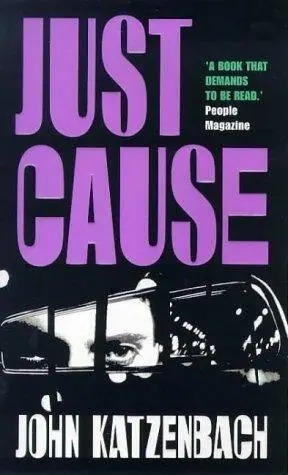
- Название:Just Cause
- Автор:
- Жанр:
- Год:неизвестен
- ISBN:нет данных
- Рейтинг книги:4 / 5. Голосов: 1
-
Избранное:Добавить в избранное
- Отзывы:
-
Ваша оценка:
Just Cause: краткое содержание, описание и аннотация
Предлагаем к чтению аннотацию, описание, краткое содержание или предисловие (зависит от того, что написал сам автор книги «Just Cause»). Если вы не нашли необходимую информацию о книге — напишите в комментариях, мы постараемся отыскать её.
Just Cause — читать онлайн бесплатно полную книгу (весь текст) целиком
Ниже представлен текст книги, разбитый по страницам. Система сохранения места последней прочитанной страницы, позволяет с удобством читать онлайн бесплатно книгу «Just Cause», без необходимости каждый раз заново искать на чём Вы остановились. Поставьте закладку, и сможете в любой момент перейти на страницу, на которой закончили чтение.
Интервал:
Закладка:
I forget, too, he thought. We all do.
The hallway outside the girls' rooms was hung with dozens of family pictures. He spotted one of himself, in his fullback's outfit, cradling a football. He could see where the slick, shiny material of the jersey was frayed up near the shoulder pads. The red-and-gray uniforms at his school had been the used outfits from a neighboring white district. The girls don't understand that, he thought. They don't understand what it was like to know that every uniform, every book in the library, every desk in the classrooms, had once been used in the white high school, and then discarded. He recalled picking up his second-hand helmet for the first time and seeing a dark sweat line on the inside. He had touched the padding, trying to see if it felt different. Then he'd raised his fingers to his nose to check the smell. He shook his head at the memory. The war changed that for me, he thought. He smiled. Nineteen-sixty-nine. The march on Washington had been six years before. The Civil Rights Bill would pass the year after. The Voting Rights Bill in 1965. The whole South was convulsed with change. He'd returned from the service and gone to college on the GI Bill and then, coming home to Pachoula, had learned that the all-black school where he'd carried the ball was no longer. A large, ugly, stolid cinderblock regional high school was under construction. There were weeds growing on the playing fields he'd known. The red-and-brown dirt that had streaked his uniform was covered by a tangled growth of crabgrass and stinkweed. He remembered cheers, and thought there had been too few victories in his life.
He shook his head again. Mustn't forget, he thought. He remembered the epithet that had burst from the dead man's brother's lips a few hours earlier. None of it has changed.
He knocked on his eldest daughter's door. 'Come on, Lisa! Rise and shine. Let's go!' He turned quickly and banged away on the younger girl's door. 'Samantha! Up and at 'em. Hit the deck running. Schooltime!'
The groans amused him, turning his thoughts momentarily away from Pachoula, the murdered girl, and the two men who'd occupied space on Death Row.
Tanny Brown spent the next half hour in suburban-father school-day routine, prodding, cajoling, demanding, and finally accomplishing the desired result: both girls out the door, with homework intact, lunches made, in time to catch the school bus. With the two girls gone, his father had retreated to his bedroom to try to take a nap, and he was left alone with the growing morning. Sunlight flooded the room, making him feel as if everything was twisted about. He felt like some old nocturnal beast trapped by the daylight, lurching from shadow to shadow, searching for the familiarity and safety of night.
He looked across the room and his eyes focused on an empty flower vase that stood on a shelf. It was tall, with a graceful hourglass shape, and a single painted flower climbing up the ceramic side. It made him smile. He remembered his wife buying the vase when he took her on a vacation to Mexico, and hand-carrying it all the way back to Pachoula, afraid to trust it to doormen, luggage handlers, or porters. When they returned home, she put it in the center of the dining-room table and always kept it filled with flowers. She was like that. If there was something she wanted, there was no end to what she would do to accomplish it. Even if it meant carrying a silly vase by hand.
No flowers anymore, he thought, except for the girls.
He remembered how hard they'd tried to save her at the emergency room, how, when he'd arrived, they were still working, crowded around, running adrenaline and plasma lines, massaging her heart, trying to coax some life into her body. He'd known with a single look that it was useless. It had been something left over from the war, a way of understanding when some invisible line had been crossed and when, even with all of science gathered, connected, and being utilized, death still beckoned inexorably. They'd worked hard, passionately. She had been there herself, some twenty minutes earlier, working alongside all of them. Twenty minutes to get her raincoat, maybe make some small, end-of-the-workday joke, say good night to the rest of the emergency-room crew, walk to her car, drive five blocks and be rammed broadside by a drunk driver in a pickup truck. Even after she was dead, when they knew there was no hope, they kept working. They knew she would have done the same for them.
He stared at the ceiling but couldn't sleep, regardless of how exhausted he was. He realized that he no longer wondered when he would get over missing her, having come to understand that he would never get over her death. He had reached an accommodation with it, which was sufficient to get him from day to day.
He rose and walked into his youngest daughter's room, moved over to her bureau and started to push aside some of the girlish things collected there, a case overflowing with beads and rings and ribbons, a toy bear with a torn ear, an old loose-leaf binder stuffed with a different year's schoolwork, a tangle of combs and brushes. It did not take long to find what he was searching for: a small silver frame with a photo inside. He held it up in front of him. The frame gleamed when it caught the sunlight.
It was a picture of two little girls, one black, one white, one raven-haired, one blonde, arm-in-arm, giggling, braces and wildly mussed makeup, feather boas and dress-up clothes.
He looked at the two faces in the photograph.
Friends, he thought. Anyone would look at that picture and realize that nothing else counted, that they just liked each other, shared secrets and passions, tears and jokes. They had been nine and mugging shamelessly for his camera. It had been Halloween, and they had dressed up in colorful, cacophonous outfits, outdoing each other with wild, outrageous appearance, all laughter and unfettered childish glee.
He was almost overcome with fury. All he could see was Blair Sullivan, mocking him. I hope it hurt, he thought. I hope it ripped your soul from your body with all the pain in the world.
Sullivan's face disappeared, and he thought of Ferguson.
You think you're free. You think you're going to get away with it. Not a chance.
He looked down at the picture in his hand. He especially liked the way the girls had their arms around each others' shoulders. His daughter's black arm hung down around the front of Joanie Shriver's. body, and Joanie's arm hung around his daughter's, so the two girls were hugging close, framing each other.
Her first and best friend, he thought.
He stared at Joanie's eyes. They were a vibrant blue. The same color as the Florida sky on the morning of his wife's funeral. He had stood apart from the rest of the mourners, clutching his two daughters beneath his arms, listening to the drone of the preacher's voice, words about faith and devotion and love and being called home to the valley, and hearing little of it. He had felt crippled, unsure whether he would be able to summon the energy to take another step. He had pinned his daughters to his sides, aware only that each of them was convulsed with tears. He had wanted to be enraged but knew that would have been too simple, that he was instead going to be cursed with a dull constant agony blended with the terror that with their mother gone, he would somehow lose his daughters. That with their center ripped away, they couldn't hold together. He had lost his tongue, didn't know what to say to them, didn't know what to do for them, especially Samantha, the younger, who had sobbed uncontrollably since the accident.
The other mourners had kept their distance, but Joanie Shriver had pulled away from the comforting grasp of her own father, serious beyond her years, wearing her best dress and, eyes filled with tears, had walked past the lines of people, right up to him and said, 'Don't you worry about Samantha. She's my friend and I will take care of her.' And in that moment, she'd reached out and taken hold of his daughter's hand and stood there holding it as well. And she'd been true to her word. She'd always been there, whenever Samantha needed to turn to someone. Weekends. Lonely holidays. After school days. Helping him to restore a routine and solidity to life. Nine years old and wiser by far than any adult.
Читать дальшеИнтервал:
Закладка:
Похожие книги на «Just Cause»
Представляем Вашему вниманию похожие книги на «Just Cause» списком для выбора. Мы отобрали схожую по названию и смыслу литературу в надежде предоставить читателям больше вариантов отыскать новые, интересные, ещё непрочитанные произведения.





Обсуждение, отзывы о книге «Just Cause» и просто собственные мнения читателей. Оставьте ваши комментарии, напишите, что Вы думаете о произведении, его смысле или главных героях. Укажите что конкретно понравилось, а что нет, и почему Вы так считаете.