William Bernhardt - Capitol Murder
Здесь есть возможность читать онлайн «William Bernhardt - Capitol Murder» весь текст электронной книги совершенно бесплатно (целиком полную версию без сокращений). В некоторых случаях можно слушать аудио, скачать через торрент в формате fb2 и присутствует краткое содержание. Жанр: Триллер, на английском языке. Описание произведения, (предисловие) а так же отзывы посетителей доступны на портале библиотеки ЛибКат.
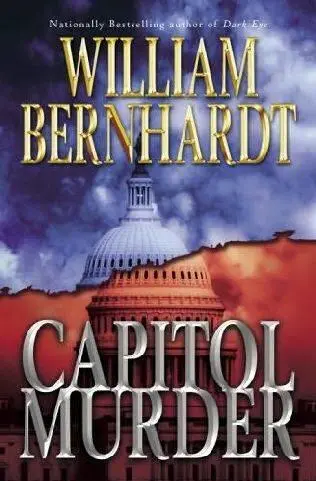
- Название:Capitol Murder
- Автор:
- Жанр:
- Год:неизвестен
- ISBN:нет данных
- Рейтинг книги:3 / 5. Голосов: 1
-
Избранное:Добавить в избранное
- Отзывы:
-
Ваша оценка:
Capitol Murder: краткое содержание, описание и аннотация
Предлагаем к чтению аннотацию, описание, краткое содержание или предисловие (зависит от того, что написал сам автор книги «Capitol Murder»). Если вы не нашли необходимую информацию о книге — напишите в комментариях, мы постараемся отыскать её.
Kincaid's legal success has earned him a dubious reward: a journey through the looking glass into the Beltway. Here, in the heart of the nation's capital, a powerful U.S. senator has been caught first in a sordid sex scandal, then in a case of murder.
Senate aide Veronica Cooper was found in a secret Senate office beneath the Capitol building, on Senator Todd Glancy's favorite couch, blood pouring from the knife wound in her throat. The young woman's death comes on the heels of the release of a sordid videotape depicting her and Senator Glancy in compromising positions.
With the senator's reputation in tatters, the evidence against him-as a sexual predator and possibly a killer-mounts. By the time a nationally televised murder trial begins, Kincaid and his team know they're facing the challenge of a lifetime. According to public opinion, and even in Kincaid's most private thoughts, Glancy is one more politician who cannot admit his own culpability.
But while a dramatic trial unfolds in the courtroom-loaded with pitfalls, traps, and an astounding betrayal-another trial is taking place on the mean streets of D.C., as Kincaid's investigator pursues a young woman who was a friend of Veronica Cooper's, plunging Kincaid into a bizarre world of Goths, sadomasochists, and a community of self-proclaimed vampires. Somewhere in this violent underworld lies the secret behind Veronica Cooper's demise… and the crux of Senator Glancy's innocence or guilt.
In a case that pits Kincaid and his freewheeling partner Christina McCall against the brutal machinery of Washington politics, the answers they seek are hidden in a murderous maze of lies and hidden motives. And in William Bernhardt's best novel yet, getting to the truth is an unparalleled experience in pure, satisfying suspense.
Capitol Murder — читать онлайн бесплатно полную книгу (весь текст) целиком
Ниже представлен текст книги, разбитый по страницам. Система сохранения места последней прочитанной страницы, позволяет с удобством читать онлайн бесплатно книгу «Capitol Murder», без необходимости каждый раз заново искать на чём Вы остановились. Поставьте закладку, и сможете в любой момент перейти на страницу, на которой закончили чтение.
Интервал:
Закладка:
Padolino proceeded along those lines for nearly an hour, reviewing all the evidence that had been presented during the case and never missing an opportunity to remind the jury of the unsavory secrets that had been revealed about the defendant. “Using a typically disreputable defense tactic, they have attempted to save the defendant by trashing his victim-but it didn’t work, did it? They say the victim had an active sex life-the implication being that this makes it okay for Senator Glancy to have sex with one of his young employees, perhaps even to murder her. A detective was called to provide more slander. Even the senator’s wife was called to talk trash about poor dead Veronica Cooper-but in each case, what we learned about Senator Glancy was far more illuminating. That he has had not one but many affairs. That he favors aberrant, sickening sexual practices-practices which in many respects resemble the wounds found on the victim. Worst of all, that he has engaged in sexual promiscuity with a minor-a seventeen-year-old girl-and subjected her to the same ugly perversions as the others. That he cut her on the neck, just as Veronica Cooper was cut-fatally. Good God-” Padolino’s voice swelled. “You saw that video. What isn’t this man capable of doing?”
Padolino turned, pivoting, then walked slowly to the edge of the jury box and laid his hand upon the rail. “Don’t misunderstand me. My heart bled just like yours did when we heard the testimony of that poor woman, Beatrice Taylor, when she told us about the torment, the horrors that she and her friends endured. But that had nothing to do with the supernatural. That had to do with a megalomaniacal drug pusher. He wasn’t controlling those girls with the hypnotic power of his vampire eyes-he was controlling them with drugs. And whether he drank blood or not, it doesn’t change the fact that there is no such thing as a vampire and there is no evidence-not the slightest shred of evidence-that this man was ever on the grounds of the Senate, not on the day Veronica Cooper died or at any other time. Ms. Taylor suggests that he bribed a guard to get into the Senate building without recording his name on the daily registry. Well, isn’t that convenient? I’ve heard that you can’t see vampires in a mirror. Apparently you can’t see them in the United States Capitol building, either.”
He paused, looking at each juror in turn. Ben could tell he was winding up for the grand finale. “You know what this is? It’s the Big Lie Defense. Tell a little lie, and people may be suspicious, think you’re just trying to get yourself off. But if you can concoct something huge, something outrageously unlikely, people are actually more likely to buy it, on the theory that no one would dare tell a tale that tall unless it were true. That’s what has happened in this trial, my friends. They couldn’t give you another likely suspect. So instead-they gave you Count Dracula.”
He stepped closer, and even though his voice grew softer, it seemed more urgent, more insistent. “But you’re not that gullible, are you? You’re not that easily misled by courtroom shenanigans. You can still distinguish right from wrong, truth from fiction, the likely from the impossible. You know in your hearts what really happened. Senator Glancy and Veronica Cooper were having an illicit sexual relationship. She tried to blackmail him. So he killed her and dumped the body in his private hideaway till he could think of something better to do with it. It’s that simple. And that’s why I know you’ll do the right thing-and find the defendant guilty of the murder of Veronica Cooper. Guilty of murder in the first degree.”
“Let’s get one thing straight right up front,” Ben said, as he approached the jury box. “This case does not come down to which of Mr. Padolino’s scenarios you think is most likely. In fact, I will tell you-and the judge will reinforce this later when he gives you your formal instructions before deliberation-that it makes no difference whatsoever which you think is most likely. Because the standard before you is not ‘what’s more likely.’ The standard is whether the prosecution has proven Todd Glancy’s guilt beyond a reasonable doubt. If they have done anything less-regardless of what you think is most likely-you must acquit.
“The prosecutor has done his best to belittle the evidence we have presented-even though we have presented tons of it, with one consistent witness after another. Let me tell you something. I am well aware that there is no such thing as a vampire. But what I am telling you is that this nut thought he was a vampire, that he behaved as a vampire, that he led others, with the force of his personality, his sexual prowess, and his drugs, to believe that he was a vampire, and induced them to become a part of his vampiric cult. It is undisputed that he killed Colleen Smith as well as Amber Daily, and more to the point-that he had a motive for killing Veronica Cooper. So let me rephrase Mr. Padolino’s question. Which is more likely: that Veronica Cooper was killed by a sadistic maniac who was responsible for the deaths of at least two of her friends and the torture of numerous other women? Or that she was killed by a United States senator, a man with no criminal record whatsoever.”
Ben reminded the jury that the evidence against his client was mostly circumstantial. “Contrary to what the prosecutor has said, there is no evidence directly pointing to Senator Glancy. They did all the pointing-the police and the prosecutors-because he was the most obvious and easiest person to accuse.”
“Your honor,” Padolino said, rising, “I object. This isn’t relevant and it slanders the good men and women who are devoted public-”
“Sit down,” Herndon said firmly. “And don’t get up again.”
Ben jerked his thumb toward the prosecutor. “Mr. Padolino thinks it’s unfair for me to insinuate that the police investigation of this case was lazy. But ask yourselves this: why didn’t they discover the vampire coven? Why didn’t they discover Stigmata, a club the victim had been habituating for months? Why didn’t they know she was a drug addict? Why didn’t they know she frequently traveled with three other young women-all of whom disappeared? My investigator was able to uncover these secrets-why couldn’t they? Answer: because they didn’t look. Senator Glancy wasn’t arrested because of any overwhelming evidence. He was arrested because the true killer had the sense to implicate someone he knew the cops-and the public-would be predisposed to distrust. Because he was a politician.”
Ben faced the jury squarely and ratcheted his voice up a few decibels. “Is this important? You bet it is. Sure, the majority of law enforcement officers in this country are good honest people and we owe them our respect and our thanks. But every time I turn around, it seems as if our civil rights are eroding. We overlook police procedural violations, police brutality, because after all, the suspects are almost always guilty, right? The Second Amendment supposedly protects us from unwarranted intrusions, search and seizures, arrest without charge or probable cause, but every day we see those rights whittled away. We pass laws we know aren’t constitutional, but shield the offense by giving them names like the Patriot Act-as if there was something patriotic about violating the constitutional freedoms that are the bedrock upon which this country was founded.
“Is this important?” Ben asked again, this time his voice was even louder than before. “You better believe it. Because this is the United States of America. We created the modern democracy. We invented the Constitution, a written document that guarantees the people’s rights-and restricts the powers of the government. I love this country, but every time we let another constitutional right be trampled upon, every time we look the other way while some wrongful act is committed in the name of homeland security, or national defense, or patriotism, we become a little less American. The erosion of one civil right only leads to another, and I would suggest, ladies and gentlemen, that’s exactly what’s happening here-and it’s wrong. Because here in the United States, we don’t lock people away because it’s fashionable to think the worst of politicians. We don’t arrest people because a crime is committed in their workspace. And we don’t prosecute people without performing a thorough investigation that has convinced us- convinced us-that we have the right man.”
Читать дальшеИнтервал:
Закладка:
Похожие книги на «Capitol Murder»
Представляем Вашему вниманию похожие книги на «Capitol Murder» списком для выбора. Мы отобрали схожую по названию и смыслу литературу в надежде предоставить читателям больше вариантов отыскать новые, интересные, ещё непрочитанные произведения.



Обсуждение, отзывы о книге «Capitol Murder» и просто собственные мнения читателей. Оставьте ваши комментарии, напишите, что Вы думаете о произведении, его смысле или главных героях. Укажите что конкретно понравилось, а что нет, и почему Вы так считаете.