Mark Billingham - Death Message
Здесь есть возможность читать онлайн «Mark Billingham - Death Message» весь текст электронной книги совершенно бесплатно (целиком полную версию без сокращений). В некоторых случаях можно слушать аудио, скачать через торрент в формате fb2 и присутствует краткое содержание. Жанр: Триллер, на английском языке. Описание произведения, (предисловие) а так же отзывы посетителей доступны на портале библиотеки ЛибКат.
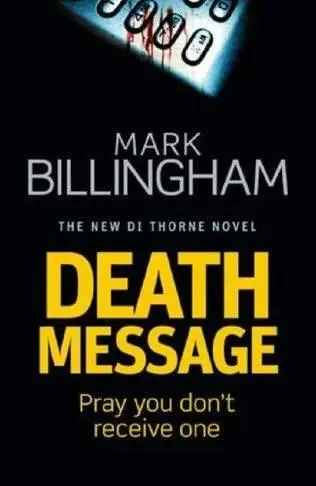
- Название:Death Message
- Автор:
- Жанр:
- Год:неизвестен
- ISBN:нет данных
- Рейтинг книги:3 / 5. Голосов: 1
-
Избранное:Добавить в избранное
- Отзывы:
-
Ваша оценка:
Death Message: краткое содержание, описание и аннотация
Предлагаем к чтению аннотацию, описание, краткое содержание или предисловие (зависит от того, что написал сам автор книги «Death Message»). Если вы не нашли необходимую информацию о книге — напишите в комментариях, мы постараемся отыскать её.
Death Message — читать онлайн бесплатно полную книгу (весь текст) целиком
Ниже представлен текст книги, разбитый по страницам. Система сохранения места последней прочитанной страницы, позволяет с удобством читать онлайн бесплатно книгу «Death Message», без необходимости каждый раз заново искать на чём Вы остановились. Поставьте закладку, и сможете в любой момент перейти на страницу, на которой закончили чтение.
Интервал:
Закладка:
Thorne listened, and knew it was all a perfectly proper and well-thought-out waste of time.
With what he knew, he considered other things they might do if he had not painted himself, and the whole investigation, into a dark corner. They could try to trace the hooker. It couldn’t be that difficult. She might have spotted something, and was almost certainly the last person, bar Marcus Brooks, to have seen Martin Cowans alive.
But that wouldn’t happen – couldn’t – not while Thorne kept his information to himself.
He kept on telling himself it didn’t matter. They knew who the killer was, after all. The details might matter later, but right now, knowing exactly how Brooks had gone about this latest murder wasn’t likely to help catch him.
‘We’re concentrating on the Premiership this year anyway. Champions League doesn’t matter.’
Thorne turned round. ‘You’re gutted. Admit it.’
‘We’ll put all our effort into stuffing you lot when we come to your place in a fortnight,’ Hendricks said.
They watched as the body was carried past.
‘Time of death would be good,’ Thorne said.
‘I’d like to get naked with Justin Timberlake, but, you know…’
‘Approximately?’
Hendricks watched the stretcher-bearers trying to keep the body level as they struggled up the grass bank. ‘He’d been in the water a good while. Plenty of bloating. Twenty-four hours, I reckon; maybe a bit more.’
‘So, late last night?’
‘Probably some time yesterday evening.’
Thorne knew that the worry had been for himself, for his own career, rather than for the man who had authorised the murders of a young woman and her son. But all the same, he felt the anxiety lift in a rush: Cowans had been dead by the time he’d received the message. There was nothing Thorne could have done to save him.
‘That any use to you?’ Hendricks asked.
‘Yeah, thanks.’ But the relief was short-lived. There had been no pattern to the sending of the messages: Brooks had waited over a week before sending the image of Tucker; but he had sent the picture of Hodson from the hospital moments after he’d killed him; then the clip of Skinner had arrived the day before his murder. Brooks would probably do it differently next time, too, and Thorne knew that he might not be so lucky.
Andy Stone jogged across to join them, looking thoroughly pleased with himself. ‘Well, at least we know Cowans wasn’t killed by a woman,’ he said.
Thorne could see, by Stone’s expression, that it was a set-up. He raised his eyebrows at Hendricks. ‘Yeah, go on then…’
Stone threw it away nicely. ‘Well, when was the last time any woman you know took out a bin-bag?’
It was a good joke, and got an appropriate response. Thorne laughed harder than he might have done normally, seizing on the chance.
It was a straightforward journey back, west to Hanger Lane, straight into town along the A40. He would cut down through Knightsbridge and Belgravia to Louise’s place in Pimlico. With Holland needing to get home to Elephant and Castle, no more than ten minutes further on at this hour, Thorne offered to drop him off first.
The roads were almost deserted and the rain had stopped. Watching for the cameras, easing off when he needed to, Thorne drove quickly past Ealing golf course and the Hoover factory. He turned the radio down, spoke as if it were the middle of a conversation they’d been having. ‘Brooks was just unlucky. He was an ideal candidate when it came to setting someone up for Tipper’s murder. The fall-guy.’
‘For Skinner?’
‘For Skinner, almost certainly, and whoever his mate is: “Jennings” or “Squire”. Why did they want Tipper dead, though?’
‘Maybe they were being paid by another gang. Why bother paying someone to do it, when you’ve got a couple of tame coppers who can get it organised for you?’
Thorne nodded. ‘What if it was the Black Dogs they were working for?’
Holland considered it. ‘Someone in Tipper’s own gang wanted shot of him?’
‘Possibly,’ Thorne said. ‘Or these two coppers just wanted rid of him themselves. Maybe Tipper was getting greedy. Not paying them enough, threatening to expose them or whatever.’
The idea struck a chord with Holland, who turned to face Thorne. ‘The crime report said the place was completely trashed, and Brooks always said that the two coppers had told him to take “paperwork”. If they were on Tipper’s payroll, maybe there were records of bribes, or photos or something. Stuff they needed back.’ He nodded as though telling himself that he’d had worse ideas.
Thorne saw that it made good sense and said as much to Holland. He pushed the car on past Wormwood Scrubs, brooding on their left, then across the flyover at White City. He veered slightly, to avoid taking the wheels over something wet and flattened in the middle lane. A fox or a cat…
‘What if Skinner was still working for the Black Dogs?’ Holland said.
It was something Thorne had started to wonder himself. If Skinner and his partner had killed Tipper, they might have struck up a new and improved deal with his successor – Martin Cowans. If that was the case, had they known about the plan to exact a terrible revenge on Marcus Brooks? It had been hard to tell much from talking to Skinner because he’d been too busy lying about knowing Marcus Brooks at all.
All the same, Thorne had sensed when they had spoken that Skinner was scared. That Brooks’ name was one he hadn’t thought about in a long time.
When Thorne dropped Holland off, the DS mumbled something about what he’d said in the Burger King at lunchtime; about how he hadn’t meant it to sound so aggressive. Thorne mumbled something back about how it didn’t matter.
It was after three when Thorne arrived at the flat in Pimlico. Louise was dead to the world, but Thorne, despite the hour and the day he’d had, felt strangely wide awake. Louise’s laptop was sitting open on a desk in the corner of the sitting room. He toyed with logging on and playing some poker, but settled in the end for tea and some low-volume Hank Williams. He had brought a selection of CDs across a few weeks before. Williams, Cash and a couple of newer bands. Had lined them up on a separate shelf as a small, alphabetically arranged alternative to the David Gray and Diana Krall in Louise’s collection.
While Hank complained about a world he would never get out of alive, Thorne sat flicking through one of Louise’s magazines. He ran over their conversation in bed the night before. The nervous whispering. He thought about Kitson leaving the pub so that she could say goodnight to her kids, and Brigstocke trying to get three of them ready for school before work every morning, and decided that he was probably not cut out to be a father.
It had been Thorne’s mum who had done the shouting when he’d been a kid. Who’d thrown a hairbrush with painful accuracy when he’d grown too big to chase. As far as he could remember, his father had always been patient, and though he was turning into his old man in all sorts of ways he wasn’t grateful for, Thorne didn’t think he’d inherited the tolerance.
He saw young white boys with bum-fluff, in hoodies and bling, talking like rap stars and swearing at shop assistants. He saw pre-pubescent girls scowling in belly tops. He saw kids dropping litter, and barging onto buses, and talking on their phones in the cinema. And he felt like grabbing the nearest hairbrush.
Definitely not cut out for it…
When his prepay started to beep and buzz on the table, Thorne jumped up and rushed across to grab it before the noise woke Louise.
It was a text message from Marcus Brooks:
if u r awake, maybe u r as messed up as me. or maybe I’m just keeping u busy, in which case, sorry. just think about the overtime though.
Читать дальшеИнтервал:
Закладка:
Похожие книги на «Death Message»
Представляем Вашему вниманию похожие книги на «Death Message» списком для выбора. Мы отобрали схожую по названию и смыслу литературу в надежде предоставить читателям больше вариантов отыскать новые, интересные, ещё непрочитанные произведения.

Обсуждение, отзывы о книге «Death Message» и просто собственные мнения читателей. Оставьте ваши комментарии, напишите, что Вы думаете о произведении, его смысле или главных героях. Укажите что конкретно понравилось, а что нет, и почему Вы так считаете.