Will Staeger - Painkiller
Здесь есть возможность читать онлайн «Will Staeger - Painkiller» весь текст электронной книги совершенно бесплатно (целиком полную версию без сокращений). В некоторых случаях можно слушать аудио, скачать через торрент в формате fb2 и присутствует краткое содержание. Жанр: Триллер, на английском языке. Описание произведения, (предисловие) а так же отзывы посетителей доступны на портале библиотеки ЛибКат.
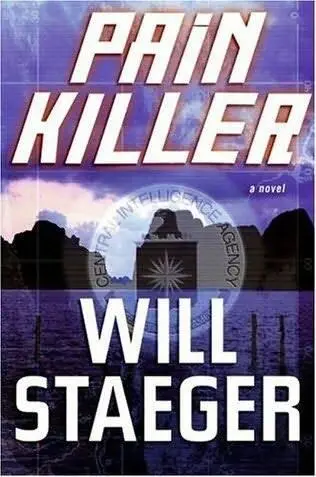
- Название:Painkiller
- Автор:
- Жанр:
- Год:неизвестен
- ISBN:нет данных
- Рейтинг книги:4 / 5. Голосов: 1
-
Избранное:Добавить в избранное
- Отзывы:
-
Ваша оценка:
Painkiller: краткое содержание, описание и аннотация
Предлагаем к чтению аннотацию, описание, краткое содержание или предисловие (зависит от того, что написал сам автор книги «Painkiller»). Если вы не нашли необходимую информацию о книге — напишите в комментариях, мы постараемся отыскать её.
Painkiller — читать онлайн бесплатно полную книгу (весь текст) целиком
Ниже представлен текст книги, разбитый по страницам. Система сохранения места последней прочитанной страницы, позволяет с удобством читать онлайн бесплатно книгу «Painkiller», без необходимости каждый раз заново искать на чём Вы остановились. Поставьте закладку, и сможете в любой момент перейти на страницу, на которой закончили чтение.
Интервал:
Закладка:
It turned out that her busted-date dessert spot had been a cyber café, and she’d remembered that walking out of the commissary following the sissy-drink session with Rader.
She talked to the coffee jock behind the counter and paid for an hour on one of the computers in cash. She picked out a Mac, clicked onto the Yahoo! portal, and created a new account under a fictitious name. Trying a few clever code names, she discovered all of them to be taken. In the end she settled on EastWest7.
Then she confronted the blank screen.
There was, she supposed, only one question that remained once all the secret-agent, leave-the-office-early-and-drive-to-Annapolis excitement was over, and she was forced to figure out what to say to Senator Alan Kircher: had she really found something that warranted the clandestine whistle-blower routine? Rothgeb and his theories aside, the minute she engaged in a dialogue with somebody outside the Agency on the topic of classified intel, her future with CIA would probably prove instantly and drastically shortened. Somebody, somewhere, would eventually find out what she was up to; they always did. Laramie thinking she could last two weeks or two years, but sooner or later, send this correspondence and she’d be pink-slipped.
She composed a note on the screen before her:
Dear Senator Kircher.
Our friends in the East may not be as friendly as your friends are telling you.
An intelligent source
And there it was. The whistle-blower’s first correspondence-Deep Throat’s opening salvo. Eddie Rothgeb’s screenplay, she thought, proceeding as outlined.
Her right hand depressed the mouse and the cursor sent the e-mail, Laramie thinking her fingers possessed the courage that she did not. No matter.
Whichever part of her had done it, she thought, that was all it took.
18
There came the cold sweat-the sheen that chilled his skin. He burrowed into the sheets, hiding from the wrath of the ceiling fan, its wind biting icily at his sweaty skin. In the fitful, restless circuit that followed, he would fall into the dream, exit it shivering, cover his perspiring skin from the elements with the sheets, and fall again into the dream.
Brief, abrupt segments of the forgotten period of his life would appear in different ways, from different angles, so that even within the cycle of the same three nightmares, he would learn something new about the portions of his life his conscious mind required him to forget. The visions came in blurred, stunted images, each snapshot bringing another, bursting into his mind’s eye then retreating-never clear or complete.
Naked, running, seeing the blood on his naked body, he knew there was too much of it to be solely his own. He felt the lingering stab of pain from the bullet they had put in his back; he sliced his bare feet on the gravel road. Brain fogged, vision blurred, he peered into the searing sun and sharp blue sky, trying to piece together direction. North, south, east-he was headed east. He couldn’t be sure-he didn’t know where they had taken him-but if they’d kept him imprisoned anywhere within miles of the assassination team’s drop point, then he knew there was a chance, going east, to reach the Sulaco. Río Sulaco-his promised land, that river a highway to his freedom.
He barreled into the jungle, never slowing, feeling the whip and sting of branches, of vines, thorns, nettles, the itch of insect bites-and still he ran, measuring the sun through the trees. Continuing east. East, to the Río Sulaco.
He ran for hours. Nothing remained within-nothing. There was only exterior pain, throbbing, sharp; if he’d been able to see himself he’d have given up, Cooper a swollen mass of red welts. His naked, blistered, bleeding feet had lost their skin, propelling him eastward as little more than raw, seeping stumps.
No river came. No highway, no power lines, no homes, no crops. Only jungle. He fell at least a hundred times, flying headlong over logs, roots, stumps-anthills-each time rising more slowly than the last. After a particularly rough tumble, he felt death’s cool breath on his hot neck.
Enough, he remembered thinking. I’ve gone far enough.
They couldn’t be following him, not after the hours he’d spent running, his journey taking him across tens of miles of all-but-impenetrable jungle. He set his face into the dirt, closed his eyes, and slumped. It was time for sleep, the fatigue too great for consciousness. Even, perhaps, too great for life.
He heard birds, and insects, and wind.
Wind.
It was a steady wind-too steady a wind, so steady that he knew it was not wind. It was water. Moving water, rushing like the wind through the trees.
He rose again. Scarcely capable of standing upright, he shuffled forward, attempting to run but managing little more than a crawl. Soon, he smelled it and, finally, saw it-that wide, lazy road of black water-and he stumbled, plodding down the muddy riverbank, tripping again and falling head-first, plunging, and then he splashed, his head sinking beneath the surface and bobbing up like a float at the end of a fishing line. He had found his salvation, his escape-he would ride the current a hundred miles, a thousand if he could.
The river was warm. It stung the welts, the bites, the blisters and sores, but it felt good. It felt like freedom. The mosquitoes came off his skin, drowning in droves, and a short-lived euphoria consumed him. The excitement robbed him of the last remaining energy in his body, and he found himself slipping beneath the surface. The current began to sweep him downstream, and it was all he could do to keep his mouth out of the water, and then he could no longer manage even that, and he went under. His consciousness faded, the world blinking out as it passed by, the banks of the river moving past with greater and greater velocity in shorter and shorter flashes.
In a section of whitewater, one of his legs struck a rock and snapped like a twig, and he felt his head crack against something hard. He lost his bearings, suddenly forgetting how he’d come to be here. He tried to gasp but couldn’t find any air; there was only water, which he’d inhaled and could not expel. Panic struck him, but there was no physical strength remaining for him to tap into. He struggled, flailing, trying in vain to push his head above the surface-sucking, heaving. The world began to fade around the edges, then crumble to blackness, and finally, with no remaining hope, he felt a deep sense of calm.
Cooper always welcomed the calm. When it came, he knew the second of the three dreams in the cycle had finished. He would open his eyes and find the welcome confines of his bungalow, surviving to await the third dream.
When he opened his eyes tonight, though, he found that he hadn’t awakened in the bed of his bungalow. He hadn’t been pulled from the delta of the Río Sulaco by a kindhearted fisherman, either, in the way that his third dream usually began.
Instead, he saw rocks. He reached for an object that was hard to see, buried as it was beneath a set of smaller stones, and as he pulled on it the object broke free, and he saw that it was a plank of wood. He looked up, frantically now, in hopes he wouldn’t see what he suspected he would-but, to his horror, he saw precisely what he knew he would see.
Standing around his broken body, doing their little dance, were Cap’n Roy’s band of Marine Base cops. They kept on with the show as Cooper watched them from his nook in the rocks, Riley and the others doing their best to distract any wandering eyes with the illusion that work was being done out here, so that the wandering eyes would fail to notice the pile of rags and rotting flesh and bone that had washed ashore.
19
One year before the USS Chameleon was sunk by the Vietnamese mine, a group of London businessmen each kicked in five thousand pounds sterling and purchased one-half of a private island in the British Virgin Islands. Another twenty-five-hundred U.S. dollars built each partner a two-room bungalow, and the partners had themselves a nifty investment property. Part vacation time-share, part tax shelter, it allowed its owners to split up the high-season calendar among themselves and rent out the rooms for the remainder of the year. On paper, the resort lost money; in reality, it provided the partners a small but undeclared cash dividend at the end of each year.
Читать дальшеИнтервал:
Закладка:
Похожие книги на «Painkiller»
Представляем Вашему вниманию похожие книги на «Painkiller» списком для выбора. Мы отобрали схожую по названию и смыслу литературу в надежде предоставить читателям больше вариантов отыскать новые, интересные, ещё непрочитанные произведения.











Обсуждение, отзывы о книге «Painkiller» и просто собственные мнения читателей. Оставьте ваши комментарии, напишите, что Вы думаете о произведении, его смысле или главных героях. Укажите что конкретно понравилось, а что нет, и почему Вы так считаете.