Will Staeger - Painkiller
Здесь есть возможность читать онлайн «Will Staeger - Painkiller» весь текст электронной книги совершенно бесплатно (целиком полную версию без сокращений). В некоторых случаях можно слушать аудио, скачать через торрент в формате fb2 и присутствует краткое содержание. Жанр: Триллер, на английском языке. Описание произведения, (предисловие) а так же отзывы посетителей доступны на портале библиотеки ЛибКат.
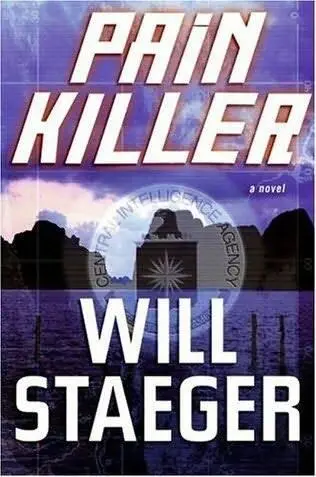
- Название:Painkiller
- Автор:
- Жанр:
- Год:неизвестен
- ISBN:нет данных
- Рейтинг книги:4 / 5. Голосов: 1
-
Избранное:Добавить в избранное
- Отзывы:
-
Ваша оценка:
Painkiller: краткое содержание, описание и аннотация
Предлагаем к чтению аннотацию, описание, краткое содержание или предисловие (зависит от того, что написал сам автор книги «Painkiller»). Если вы не нашли необходимую информацию о книге — напишите в комментариях, мы постараемся отыскать её.
Painkiller — читать онлайн бесплатно полную книгу (весь текст) целиком
Ниже представлен текст книги, разбитый по страницам. Система сохранения места последней прочитанной страницы, позволяет с удобством читать онлайн бесплатно книгу «Painkiller», без необходимости каждый раз заново искать на чём Вы остановились. Поставьте закладку, и сможете в любой момент перейти на страницу, на которой закончили чтение.
Интервал:
Закладка:
When the strange report came in from the spy fleet that week-the fleet being a thousand-vessel unit the new head of the PLN intelligence wing, vice admiral and fledgling polo enthusiast Deng Jiang, had ordered built at the start of his tenure-a senior analyst, sifting through the data, thought that he might have stumbled across something. An Atlantic-based spy boat had reported an underwater concussion followed by an S.O.S. signal tapped against a metal hull, and if the report from the trawler were true, the possibility was self-evident:
Somebody had lost a submarine.
Deng quietly monitored the progress of the obvious U.S. Navy salvage effort. Knowing how the Americans operated, he found this to be a textbook case-the navy’s failed four-year “civilian” salvage operation answered Deng’s initial curiosity as to who had lost the submarine. Continuing reports told him that the search continued for four years, but in due course the Americans ran out of patience and scrapped the salvage mission.
In the meantime, Deng had been given the whole army.
Not a religious man, and therefore resistant to superstition, Deng had never once considered that a supernatural phenomenon might have caused the disappearance of the USS Chameleon. A submarine could sink and be salvaged, or sink and be left to decay on the ocean floor, but one could not simply vanish. Deng was also an extraordinarily patient man, who did not believe at all in luck. He believed, instead, that a man controlled his own destiny, and that luck was earned. Thus, when the U.S. Navy quit their recovery efforts, Deng decided to mount a salvage operation of his own.
The Chameleon had sunk in the southernmost portion of the North Atlantic, along a ridge beside the Puerto Rico Trench. Aside from a depth of some four and one-half miles, the Puerto Rico Trench boasted two other compelling characteristics: active suboceanic volcanoes and frequent earthquakes, the latter because the trench lay above a series of fault lines.
The portion of the trench into which the Chameleon had sunk was possessed of a peculiar geography. At the edge of the trench, there stood a suboceanic mountain range. From base to peak, some of the mountains measured higher than six thousand feet. Nosing through the depths, the Chameleon had struck an outcropping of rock near the peak of one of the taller mountains. The underwater ledge did nothing to slow the Chameleon’s downward momentum, but did break off from the mountain and begin its own plunge down the slope. Along the way, the huge lump of volcanic rock tore off numerous similar outcroppings, which in turn generated a massive cloud of silt.
This avalanche meant that as the Chameleon struck the ocean floor on the shallow northern side of the trench, it was immediately pile-driven into the muddy bottom by some two hundred million tons of volcanic rock, silt, and debris. When the cloud of silt settled, the Chameleon and its crew of 154 sailors had been buried, the layers of mud, sand, and rock covering the length of the sub with somewhere between twenty-seven and forty feet of debris. There was no discernible shape on the ocean floor above it, at least none that resembled an American nuclear submarine, and no detectable metal with any proximity to the surface of the silt.
Four years and eight months later, the nineteen hundred and fifty-seventh earthquake to rattle this section of the Puerto Rico Trench since the Chameleon’s demise registered a 6.8 on the Richter scale and sluiced a new, smaller trench north of the mountain range. Over the next three weeks, a two-mile-long stretch of the mountain range slipped into this trench. There were avalanches for months, spurred by aftershocks of the quake, all of which represented nothing more than ordinary geologic activity for the region surrounding the Puerto Rico Trench, with one exception: a portion of the Chameleon’s bow had been freshly exposed to the sea.
For the U.S. Navy, who had recently abandoned its salvage mission, the geologic activity that freed the Chameleon meant nothing. It passed like the sound of a tree in a forest where no ears were present to listen. For others-namely, the supreme commander of the People’s Liberation Army of the People’s Republic of China-the Puerto Rico Trench’s most recent sequence of earthquakes meant something entirely different.
To General Deng, it meant that the mystery as to the whereabouts of the missing submarine had been solved.
17
Laramie stood in the doorway to Malcolm Rader’s office.
“There’s a caramel macchiato with your name on it in the commissary,” she said. “You’ve got to take a walk to get it, though.”
Laramie knew Rader was a sucker for the sissy drinks at the Starbucks kiosk. A career analyst somewhere near the peak of his tenure, Rader had two kids in college and one ready to hit the road, and it was evident he hadn’t made it to the gym since the first kid arrived. Disorganized, absentminded, and overweight, he compensated for these issues with a frenzied, spastic work ethic-Laramie thinking you never quite understood what Rader was saying or doing, but she couldn’t remember his taking a vacation since she’d been working here, and he seemed to be aware of everything. She wasn’t even sure whether he took meetings out of the office-another floor, or room, maybe, but she’d never seen him anywhere outside the building.
“What are we meeting about,” Rader said, “or talking. And walking.”
“Korea,” Laramie said. “North Korea, to be precise.”
There were three mounds of papers on Rader’s desk. He shifted his weight in his chair and nearly vanished behind a particularly massive stack.
“What about it,” he said. “Them. Whatever.”
“It’s about North Korea and China, and how they’re related.” She let her statement hang out there.
“This is more on your Taiwan theory,” Rader said.
“The same.”
He frowned, eyes slipping to his monitor-the twin temptations of Laramie’s intel and the caramel macchiato competing with his inclination to answer e-mails and remain productive.
Finally he stood. “You’re buying, correct?”
“Absolutely.”
“Fine.”
Rader had hired her. He wasn’t exactly a mentor, but occasionally she asked his advice, and when she did, he always accommodated her. The man was a decent boss.
But he wasn’t listening.
She’d thought about what she’d found through a second sleepless night, and once she developed a theory-involving speculation, but reasonable, fact-based speculation, with sound conclusions-she’d thought carefully about what to do, and say. She decided to start with him.
“Look,” she said, leaning over her coffee, “it’s too much of a mismatch. The timing. The politics. All of it. What does the State Council of the People’s Republic of China care anymore about North Korea? These nations are not allies-not politically, not militarily. Think about it, Malcolm: there’s no reason the majority rule of the State Council would intend to be identified internationally with Korea. North Korea’s foreign policy essentially consists of an annual rotating nuclear-proliferation extortion scheme, while China’s embracing capitalism-the council is expanding China’s business relationship with the West. Opening its borders. Getting gung ho about free trade. Meanwhile North Korea puts its policy-making energy into threatening the U.S. whenever its people run low on rice.”
Rader sipped his sissy drink. “Your point?”
“Bear with me. The other side of this? It’s almost not possible that these two exercises are not connected. I considered the possibility of coincidence when I made the discovery, but you know as well as I do-better than I do-that the facts I presented to you on the way down here point, odds on, to collusion: I practice to invade my neighbor in June during a cloudy day in a place and time that known paths of spy satellites would not cover-and you practice to invade yours in April-on a cloudy day, et cetera.”
Читать дальшеИнтервал:
Закладка:
Похожие книги на «Painkiller»
Представляем Вашему вниманию похожие книги на «Painkiller» списком для выбора. Мы отобрали схожую по названию и смыслу литературу в надежде предоставить читателям больше вариантов отыскать новые, интересные, ещё непрочитанные произведения.











Обсуждение, отзывы о книге «Painkiller» и просто собственные мнения читателей. Оставьте ваши комментарии, напишите, что Вы думаете о произведении, его смысле или главных героях. Укажите что конкретно понравилось, а что нет, и почему Вы так считаете.