Jodi Compton - The 37th Hour
Здесь есть возможность читать онлайн «Jodi Compton - The 37th Hour» весь текст электронной книги совершенно бесплатно (целиком полную версию без сокращений). В некоторых случаях можно слушать аудио, скачать через торрент в формате fb2 и присутствует краткое содержание. Жанр: Триллер, на английском языке. Описание произведения, (предисловие) а так же отзывы посетителей доступны на портале библиотеки ЛибКат.
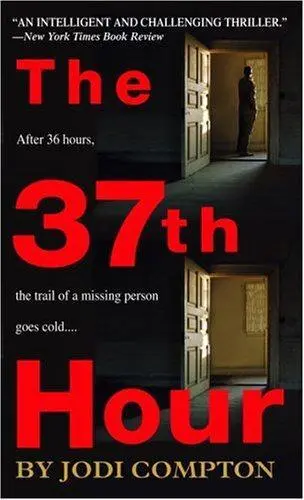
- Название:The 37th Hour
- Автор:
- Жанр:
- Год:неизвестен
- ISBN:нет данных
- Рейтинг книги:3 / 5. Голосов: 1
-
Избранное:Добавить в избранное
- Отзывы:
-
Ваша оценка:
The 37th Hour: краткое содержание, описание и аннотация
Предлагаем к чтению аннотацию, описание, краткое содержание или предисловие (зависит от того, что написал сам автор книги «The 37th Hour»). Если вы не нашли необходимую информацию о книге — напишите в комментариях, мы постараемся отыскать её.
The 37th Hour
On a chilly Minnesota morning, Sarah comes home to the house she shares with her husband and fellow cop, Michael Shiloh. Shiloh was supposed to be in Virginia, starting his training with the FBI. A seasoned missing-persons investigator, Sarah is used to anxious calls from wives and parents. She's used to the innocent explanations that resolve so many of her cases. But from the moment she learns that he never arrived at Quantico, she feels a terrible foreboding. Now, beneath the bed in which they make love, Sarah finds Shiloh 's neatly packed bag. And in that instant the cop in her knows: Her husband has disappeared.
Suddenly Sarah finds herself at the beginning of the kind of investigation she has made so often. The kind that she and her ex-partner, Genevieve, solved routinely – until a brutal crime stole Genevieve's daughter and ended her career. The kind that pries open family secrets and hidden lives. For Sarah this investigation will mean going back to the beginning, to Shiloh's religion-steeped childhood in Utah, the rift that separated him from his family – and the one horrifying case that struck them both too close to home. As Sarah turns over more and more unknown ground in her husband's past, she sees her lover and friend change into a stranger before her eyes. And as she moves further down a trail of shocking surprises and bitter revelations, Sarah is about to discover that her worst fear – that Shiloh is dead – may be less painful than what she will learn next…
In a novel of runaway tension, Jodi Compton masterfully weaves together the quiet details of everyday life with the moments that can shatter them forever. At once a beguiling mystery and a powerful rumination on family, friendship, and loss, The 37th Hour is a thriller that will catch you off guard at every turn – instantly compelling and utterly impossible to put down.
The 37th Hour — читать онлайн бесплатно полную книгу (весь текст) целиком
Ниже представлен текст книги, разбитый по страницам. Система сохранения места последней прочитанной страницы, позволяет с удобством читать онлайн бесплатно книгу «The 37th Hour», без необходимости каждый раз заново искать на чём Вы остановились. Поставьте закладку, и сможете в любой момент перейти на страницу, на которой закончили чтение.
Интервал:
Закладка:
“Sportsman.”
“Hey,” I said. “Who’s this?”
“This is Bruce, who’s this?”
He sounded like he was in his early twenties, and his tone was professionally flirtatious, like a bartender’s. There was crowd noise in the background.
“Is this a bar?” I asked. “You’re not a sporting-goods store or anything?”
“We’re a bar all right.” The bartender laughed. “You need directions?”
Airball, I thought. Just some saloon down in the sticks.
“No,” I said. “Actually, I’m trying to find out if anyone there knows a man named Michael Shiloh.”
“Ummm,” Bruce said. “I know a lot of the guys who come in here-and of course everyone who works here-and I don’t know him.”
“Okay,” I said, and gave him my name and work number anyway. “In case you make a connection later,” I explained.
“Area code 612,” he said, commenting on my phone number. “Sounds like you’re in the Cities. I guess you’re not gonna drop by.” There was a sudden burst of enthusiastic noise in the background, the cheers of people following a televised sporting event. “Too bad, you sound like a fun gal.”
I was sure that was the last thing in the world I sounded like.
“Thanks for the thought,” I said. “Just have someone give me a call if that name’s familiar to them, okay?”
“I sure will,” Bruce said.
After I had brushed my teeth and washed my face and done everything I normally did before I slept, I sat above the covers of the bed with my legs curled underneath me, afraid to actually go to sleep.
I was afraid of what my mind would bring me in the dark. In the late watches, all troubles seem darker and past mistakes more inescapably destructive.
When the charges against Royce Stewart, Kamareia’s murderer, were dismissed, the full impact of it didn’t really hit me until one sleepless night a few days after the judge released his ruling. I’d had to slip out of bed and into the living room, where the sound of my grief wouldn’t disturb Shiloh.
Something woke him, though, and he came out into the unlighted room and held me with my wet face against his bare chest and stroked my hair, and in the dark he told me about a dream he’d been having.
I dream about Kamareia’s blood on my hands, he’d said.
The words startled me. None of what happened was your fault, I told him.
No, he said, I mean literally. That afternoon when we found her, I got her blood on my hands. After you went to the hospital with her, I was trying to calm Gen, and I put my hand on her cheek. I got her daughter’s blood on her face. I didn’t want her to see, I wanted to take her into the kitchen to wash it off, but there was a mirror at the foot of the stairs. I knew she was going to see it. And she did. I keep dreaming about that, about looking down and seeing Kamareia’s blood on my skin. I dream about washing it off. Horror novelists tell you that small amounts of blood give water a pink tinge, but it’s not true. It’s just a fainter and fainter red until finally the water runs clear.
The dissociative, faraway sound in his voice made me uneasy. Grasping at anything comforting to say, I repeated, “It wasn’t your fault.” I could think of nothing else to tell him.
No, he said. It’s his fault.
I knew who he meant. Shiloh’s arms tightened around me, and he said, He should have died for what he did to Genevieve alone.
Sometimes I thought about Shiloh’s dream of blood when people who didn’t know him well called him remote and detached.
When I finally did get in bed and turn out the bedside lamp, I directed my thoughts to something positive, to tomorrow. Tomorrow I would be in Utah, meeting Shiloh’s family at last.
Shiloh’s sister Naomi had always been, by his account, the sibling most interested in him. She had said on the phone that she was interested in how we’d met.
If Naomi Wilson was still as devoutly Christian as Shiloh had made his whole family out to be, I thought, she might not be ready to hear all the details of that story.
chapter 13
Several years ago, my father’s last girlfriend-whose name I learned and forgot in the span of a week-called to tell me my father was dead. She (Sandy? Was that it?) barely tracked me down in time for me to make the service. I’d had just enough time to call my sergeant and explain, and then buy a black dress and a pair of heels at Carson Pirie Scott before catching a flight west on a bargain regional carrier.
After spending most of his adult life in New Mexico, my father had tired of the cold winters and isolation of the high country and moved to Nevada, where his money would stretch even further than it had in the Southwest. In the desert sun of Nevada, his life savings bought him a condominium and some good times with a new girlfriend. The girlfriend (Shelly?) was a full ten years younger than him. That didn’t surprise me. My father had always been a very handsome man, and he had remained that way until the heart attack claimed him. Or so people in Nevada told me.
Sandy or Shelly had arranged for him to be buried in Nevada. There was no reason to take the body back to New Mexico. My mother wasn’t there; she was buried in Minnesota with her people. My brother, killed while serving in the army, had merited burial in a military cemetery with honors.
So my father was buried in a modern memorial garden on the outskirts of town, one of those where flowers too uniformly bright to be real decorate acres of sameness, and the grave markers, also alike, lie flush in the ground, hidden by green grass until you are nearly on top of them. As the nonsectarian chaplain said his few words under the canopy that shaded the coffin and mourners, I let my mind wander until one of my high heels pierced the overwatered turf and began to sink in, bringing me back to reality with a jolt.
One paper plate of food, forty-five minutes of small talk with my father’s friends and neighbors, and one long rental car drive later, and I was on my way back to Minneapolis again.
There wasn’t a spare seat in the coach section of the flight back. My fellow travelers seemed mostly to be retirees who’d been on gambling vacations, taking a break from Minnesota in January in the warmth of the West. As soon as we were in the air, the pilot got on the overhead and cautioned us, smooth-voiced, that the flights ahead of us were experiencing some “chop” from storms over the plains. The other pilots weren’t kidding. Fifteen minutes after his initial announcement, the pilot got back on the mike and told the two flight attendants to take their seats.
The plane bounced like a sled being pulled too fast over old snowpack that had turned to hard, uneven ice. The whole airframe made crunching, shuddering noises, bouncing hard enough to shake the wattle of the blue-haired old woman sleeping next to me.
I’m not afraid of flying, but that night I had a very odd feeling, one I’ve never had since. I felt completely adrift and out of control. I was surrounded by human beings, but they were strangers. I felt lost, as if up in this black stratum between clouds and stars not even God could know where I was. I looked hard out the window, hoping for city lights, anything that could give me a point of reference. There was none.
I hadn’t bought a real drink while I had the chance, and now I wanted one. For me it was always a physical craving that had two locations: I felt it under my tongue, and deep in my chest. I chewed the last cubes of ice from my Coke and felt a pang of regret when they ran out.
Had my mother lived, I was sure, we would have been close. She died when I was nine. My brother Buddy had been a bully, full of a sense of entitlement to whatever he wanted. Physical strength was the only thing he’d respected; at five years younger, I’d never had enough. My father, a long-distance truck driver, had slept in the main room of our trailer when he’d been at home, just so Buddy and I could have separate rooms. He never knew it, but he really needn’t have bothered.
Читать дальшеИнтервал:
Закладка:
Похожие книги на «The 37th Hour»
Представляем Вашему вниманию похожие книги на «The 37th Hour» списком для выбора. Мы отобрали схожую по названию и смыслу литературу в надежде предоставить читателям больше вариантов отыскать новые, интересные, ещё непрочитанные произведения.









Обсуждение, отзывы о книге «The 37th Hour» и просто собственные мнения читателей. Оставьте ваши комментарии, напишите, что Вы думаете о произведении, его смысле или главных героях. Укажите что конкретно понравилось, а что нет, и почему Вы так считаете.