C Box - Winterkill
Здесь есть возможность читать онлайн «C Box - Winterkill» весь текст электронной книги совершенно бесплатно (целиком полную версию без сокращений). В некоторых случаях можно слушать аудио, скачать через торрент в формате fb2 и присутствует краткое содержание. Жанр: Триллер, на английском языке. Описание произведения, (предисловие) а так же отзывы посетителей доступны на портале библиотеки ЛибКат.
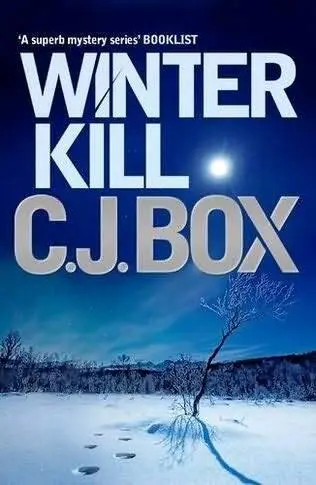
- Название:Winterkill
- Автор:
- Жанр:
- Год:неизвестен
- ISBN:нет данных
- Рейтинг книги:3 / 5. Голосов: 1
-
Избранное:Добавить в избранное
- Отзывы:
-
Ваша оценка:
Winterkill: краткое содержание, описание и аннотация
Предлагаем к чтению аннотацию, описание, краткое содержание или предисловие (зависит от того, что написал сам автор книги «Winterkill»). Если вы не нашли необходимую информацию о книге — напишите в комментариях, мы постараемся отыскать её.
Winterkill — читать онлайн бесплатно полную книгу (весь текст) целиком
Ниже представлен текст книги, разбитый по страницам. Система сохранения места последней прочитанной страницы, позволяет с удобством читать онлайн бесплатно книгу «Winterkill», без необходимости каждый раз заново искать на чём Вы остановились. Поставьте закладку, и сможете в любой момент перейти на страницу, на которой закончили чтение.
Интервал:
Закладка:
Using a.22 pistol loaded with cracker shells, Joe drove toward the sleeping elk while firing out the window. The cracker shells arced over the animals and popped in the air. It worked: The herd rumbled out of the meadow and back toward the mountains, through the place in the barbed-wire fence that they had flattened to get in. It’s going to be a busy winter of chasing elk out of haystacks, Joe thought. The heavy snow in the mountains would drive them down for feed, and the worst snows of the year, usually in March and April, were still to come.
At least elk are usually pretty easy to clean up after, Joe thought. Moose were far worse. Moose were known to walk through a multi-strand barbed-wire fence as if it were dental floss and drag the fence along with them, popping the strands free from the staples in the posts like buttons from a ripped shirt.
After chasing the elk away, Joe stopped by the rancher’s small white house. The rancher, named Herman Klein, was a third-generation landowner who Joe knew to be a good man. Klein had told Joe before, after a similar incident, that he wouldn’t mind feeding the elk if the damned things didn’t get so greedy .
As Joe pulled into the ranch yard, Klein walked out of the barn, where he had been working on his tractor. He wiped grease from his hands on his Carhartt coveralls and invited Joe in for coffee. After they had performed the winter ranch ritual of leaving their boots and heavy coats in the mud room before walking in stocking feet to the kitchen table, Klein poured Joe a cup of thick black coffee. While Mrs. Klein arranged sugar cookies on a plate, Joe filled out a report to submit to the Game and Fish Commission confirming the loss of hay and the damage to the fence. Joe didn’t mind doing this at all. He considered Herman Klein a good steward of the land, a thoughtful manager who improved the range and riparian areas on both his private and leased land.
“Joe, can I ask you a question?”
“Shoot,” Joe said, as he finished up the damage claim.
Klein tapped the morning Saddlestring Roundup on the table. “What in the hell is going on in Saddlestring these days?”
The headline read SECOND FEDERAL EMPLOYEE ASSAULTED. There was a photo of Melinda Strickland holding a press conference on the steps of the Forest Service office the day before, deploring the “outrageous attack” on Birch Wardell of the BLM by “local thugs.”
“Is there really a movement afoot to go after the Forest Service and the BLM?”
Joe looked up. “That’s what she seems to think, Herman.” The press conference itself was a unique event in Twelve Sleep County.
“Is she serious?”
“I think she is.”
“That’s complete bullshit,” Klein snorted, shaking his head.
“Herman!” Mrs. Klein scolded, placing the cookies on the table. “Watch your language.”
“I’ve heard much worse,” Joe smiled.
“Not from Herman, you haven’t.”
His cell phone was burring in his pickup when Joe climbed in. He plucked it from its holder on the dashboard.
“Game Warden Joe Pickett.”
“Joe Pickett?” asked a female voice he didn’t recognize.
“That’s what I said.”
“Please hold for Melinda Strickland.”
Joe moaned inwardly. Strickland was the last person he wanted to talk to. He was placed on hold. Background music played. He identified the song as “Last Train to Clarksville” by the Monkees. Only the U.S. Forest Service would have a waiting tape that old, he thought.
He held. Maxine watched him hold, and minutes passed. He assumed that when the President of the United States wanted to talk with the President of Russia, this was how it worked.
“Joe?” It was Melinda Strickland. She sounded chirpy.
“Yes.”
“Joe, my friend, how are things going? Are you hanging in there?”
Her tone was that of a lifelong chum who was concerned with his health and welfare, which puzzled him.
“I’m fine,” he said haltingly. “Why do you ask?”
“I’m getting hammered by the press asking questions about how you found Birch Wardell out on that road. They want to know how he got hit by your car, and all of that, you know?”
Joe took the phone away from his ear and stared at it. Hammered by the press?
“I hit Birch Wardell with my car because he was standing in the middle of the road,” Joe said flatly. “It was an accident. Then I took him to the hospital and stayed with him until I was sure he was okay.”
“Joe, you don’t need to use that tone,” she said soothingly. “I’m on your side here, you know? They just keep asking me about you being there when Lamar Gardiner was killed, then you being there again when Birch Wardell was hurt.”
Joe felt a flush of anger. “Are you suggesting I had something to do with those incidents?”
“Oh, God no,” she said. “I’m on your side.”
“What other side is there?” Joe asked. “And who exactly is ‘hammering’ you with questions?” In Saddlestring, there was the Roundup, an FM radio station, and one local AM station that played preprogrammed music, stock reports, and CNN radio newsbreaks.
There was a long pause, and then she filled the silence with a rush of words. “That’s not why I called, Joe. Lamar Gardiner scheduled a public meeting for Friday night on the USFS strategic plan for this district… you know, the road closures. He announced the meeting quite a few weeks ago and I’m going to go ahead and chair it. I was hoping you would come and offer support. I know Lamar’s policies were controversial, and I could use your help on this.”
The quick change of direction caught Joe by surprise.
“I can be there,” Joe said, although he immediately wished he hadn’t.
“Great, great. Thank you, Joe.” Her chirpiness resumed. “You be careful out there, my friend. Things may be a little dicey until we get all this stuff figured out with the Sovereigns-and who knows if they’ll go after state government representatives as well as federal land managers.”
“Are the Sovereigns being targeted for Birch Wardell’s ambush?” Joe asked. He had heard nothing of this.
“I’m not at liberty to say,”
Then she wished him a good day and hung up. Joe listened to the silence on the phone for a moment, still not sure what had just transpired.
The conversation left him flummoxed. He wished he had recorded it so he could replay it later, and try to make sense of it. Melinda Strickland seemed to be implying things-that Joe was the subject of controversy and suspicion, that forces were out to get her, that maybe Joe was aligned with those forces-while at the same time assuring him that everything was fine and that she and Joe were working well together. Her backtracking, when he asked her for specifics, he thought wryly, left a smell of burning rubber as she floored it into reverse.
He turned off his cell phone so she couldn’t call again.
Instead of returning home and to his office, Joe turned toward the BLM joint range-management study area. He wanted a clearer picture of the crash site and the terrain that Birch Wardell described. It took nearly an hour and a half on drifted-in gravel roads to get to the place where Wardell had seen the light-colored pickup that had fled from him and led to the accident.
Joe stopped in the road and looked up the gently rising hill where Wardell said he had first seen the other vehicle. Gunmetal-gray sagebrush dotted the hillside, each bush supporting a shark-fin wedge of drifted snow. The rest of the ground was blown clean of snow, revealing gray dirt and yellow grass. It was the first grass he had seen for a couple of weeks.
From where he sat in the idling truck, Joe could make out tire tracks in the crushed grass that led from the road he was now on to the top of the hill. The tracks, he assumed, were Wardell’s. On the top of the hill, against the sky, he could see a broken signpost. It was all just as Wardell had described it.
Читать дальшеИнтервал:
Закладка:
Похожие книги на «Winterkill»
Представляем Вашему вниманию похожие книги на «Winterkill» списком для выбора. Мы отобрали схожую по названию и смыслу литературу в надежде предоставить читателям больше вариантов отыскать новые, интересные, ещё непрочитанные произведения.








Обсуждение, отзывы о книге «Winterkill» и просто собственные мнения читателей. Оставьте ваши комментарии, напишите, что Вы думаете о произведении, его смысле или главных героях. Укажите что конкретно понравилось, а что нет, и почему Вы так считаете.