Tom Smith - Child 44
Здесь есть возможность читать онлайн «Tom Smith - Child 44» весь текст электронной книги совершенно бесплатно (целиком полную версию без сокращений). В некоторых случаях можно слушать аудио, скачать через торрент в формате fb2 и присутствует краткое содержание. Год выпуска: 2008, ISBN: 2008, Издательство: Grand Central Pub, Жанр: Триллер, на английском языке. Описание произведения, (предисловие) а так же отзывы посетителей доступны на портале библиотеки ЛибКат.
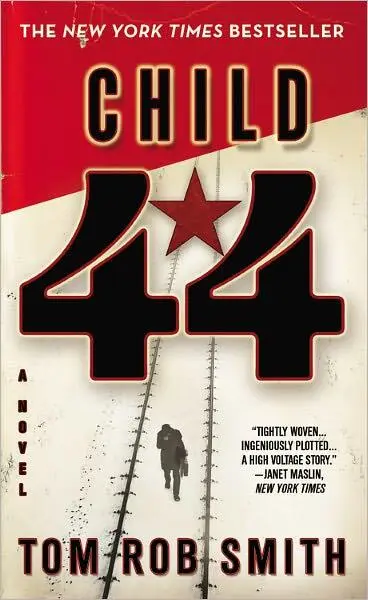
- Название:Child 44
- Автор:
- Издательство:Grand Central Pub
- Жанр:
- Год:2008
- ISBN:9780446402385
- Рейтинг книги:3 / 5. Голосов: 1
-
Избранное:Добавить в избранное
- Отзывы:
-
Ваша оценка:
Child 44: краткое содержание, описание и аннотация
Предлагаем к чтению аннотацию, описание, краткое содержание или предисловие (зависит от того, что написал сам автор книги «Child 44»). Если вы не нашли необходимую информацию о книге — напишите в комментариях, мы постараемся отыскать её.
The novel is based on real Russian serial killer Andrei Chikatilo, also known as the Rostov Ripper, who was responsible for 52 murders in communist Russia. In addition to highlighting the problem of Soviet-era criminality in a state where "there is no crime," the novel also explores the paranoia of the age, the education system, the secret police apparatus, orphanages, Homosexuality in the USSR and mental hospitals.
The book is the first part of a trilogy. The second part is called The Secret Speech and also features the character of Leo Demidov and his wife, Raisa.
Child 44 was longlisted for the Man Booker Prize in 2008 and won the Waverton Good Read Award in 2009.
Child 44 — читать онлайн бесплатно полную книгу (весь текст) целиком
Ниже представлен текст книги, разбитый по страницам. Система сохранения места последней прочитанной страницы, позволяет с удобством читать онлайн бесплатно книгу «Child 44», без необходимости каждый раз заново искать на чём Вы остановились. Поставьте закладку, и сможете в любой момент перейти на страницу, на которой закончили чтение.
Интервал:
Закладка:
She put down her case. Leo smiled, obviously believing them to be reconciled. Annoyed with this idiotic interpretation, she raised her hand, cutting short his smile.
— I married you because I was scared, scared that if I rejected your advances I’d be arrested, maybe not immediately but at some point, on some pretext. I was young, Leo, and you were powerful. That is the reason we got married. That story you tell about me pretending that my name was Lena? You find that story funny, romantic? I gave you a false name because I was worried you’d track me down. What you took for seduction, I took for surveillance. Our relationship was built out of fear. Maybe not from your point of view — you have no reason to fear me, what power did I have? What power have I ever had? You asked me to marry you and I acquiesced because that’s what people do. They put up with things; they tolerate in order to survive. You never hit me or shouted at me, you were never drunk. So, on balance, I reckoned that I was luckier than most. When you grabbed my neck, Leo, you removed the only reason I had for staying with you.
The train pulled out. Leo watched it go, trying to digest what she’d said. But she gave him no pause, speaking as though these words had been forming in her head over many years. Now, tapped, they were flowing freely.
— The problem with becoming powerless, as you are now, is that people start telling you the truth. You’re not used to it, you’ve lived in a world protected by the fear you inspire. But if we’re going to stay together, let’s cut the deluded romanticism. Circumstance is the glue between us. I have you. You have me. We don’t have very much else. And if we’re going to stay together, from now on I tell you the truth, no comfortable lies — we’re equal as we have never been equal before. You can take it or I can wait for the next train.
Leo had no reply. He was unprepared, outgunned, outspoken. In the past he’d used his position to get better accommodation, better food. He hadn’t imagined he’d used it to get a wife too. Her voice softened a little.
— There are so many things to be afraid of. You can’t be one of them.
— I never will again.
— I’m cold, Leo. I’ve been standing on this platform for three hours. I’m going back to our room. Are you coming?
No, he didn’t feel like walking back, side by side, a chasm between them.
— I’m going to stay here for a bit. I’ll see you back there.
Carrying her case, Raisa returned to the station building. Leo sat on the bench, staring into the forest. He shuffled through the memories of their relationship, re-examining each one, adjusting his understanding, rewriting his past.
He’d been sitting there for he didn’t know how long when he became aware of someone standing to the side of him. He looked up. It was the man from the ticket office, a youngish man, the man they’d met on their arrival.
— Sir, there are no more trains tonight.
— Do you have a cigarette?
— I don’t smoke. I could get you one from our apartment. It’s just upstairs.
— No, that’s OK. Thank you anyway.
— I’m Aleksandr.
— Leo. Do you mind if I stay here for a bit?
— Not at all, let me get you that cigarette.
Before Leo could answer, the young man had hurried off.
Leo sat back and waited. He saw a wooden hut set back from the tracks. That was the place where the girl’s body had been found. He could make out the edge of the forest, the crime scene — snow trampled down by detectives, photographers, investigative lawyers — all studying that dead girl, her mouth open, stuffed with soil.
Struck by a thought Leo stood up, hurried forward, lowering himself off the platform, crossing the tracks and heading towards the trees. Behind him a voice called out:
— What are you doing?
He turned around and saw Aleksandr standing on the edge of the platform, holding a cigarette. He gestured for him to follow.
Leo reached the area where the snow had been trodden down. There were criss-crossing boot tracks in all directions. He entered the forest, walking for a couple of minutes, arriving at roughly the area where he supposed the body must have laid. He crouched down. Aleksandr caught up with him. Leo looked up.
— You know what happened here?
— I was the one who saw Ilinaya running to the station. She was badly beaten up, shaking — she couldn’t speak for a while. I called the militia.
— Ilinaya?
— She found the body, stumbled across it. Her and the man she was with.
The couple in the forest — Leo had known there was something wrong.
— Why was she beaten up?
Aleksandr looked nervous.
— She’s a prostitute. The man she was with that night is an important Party official. Please, don’t ask me any more.
Leo understood. This official wanted his name kept out of all the paperwork. But could he be a suspect in the murder of the young girl? Leo nodded at the young man, trying to reassure him.
— I won’t mention you, I promise.
Leo’s hand pushed through the thin sheet of snow.
— The girl’s mouth was filled with soil, loose soil. Imagine I was struggling with you, right here, and I reached out to grab something to stuff into your mouth because I’m afraid you’re going to scream, I’m afraid someone’s going to hear you.
Leo’s fingers hit the ground. It was hard, like the surface of a stone. He tried another place, then another and another. There was no loose soil. The ground was frozen solid.
18 March
Standing outside Hospital 379, Leo reread the autopsy report, the main points of which he’d copied longhand from the original:
Multiple stab wounds
Blade indeterminate length
Extensive damage to the torso and internal organs
Raped either before or after death
Mouth was full of soil but she did not suffocate, her nasal passage
was clear. The soil was to some other purpose — to silence her?
Leo had circled the last point. Since the ground was frozen the killer must have brought the soil with him. He must have planned the murder. There was intention, preparation. But why bring soil at all? It was a cumbersome means to silence someone, a rag, or cloth or even a hand would have been far easier. With no answers Leo had decided to belatedly take Fyodor’s advice. He was going to see the body for himself.
When he’d asked where her body was being kept he’d been told to go to Hospital 379. Leo hadn’t expected forensic laboratories, pathologists or a dedicated morgue. He knew there was no specialized apparatus for dealing with wrongful death. How could there be when there was no wrongful death? In the hospital the militia were forced to canvass for a doctor’s spare moment, such as a meal break or ten minutes before surgery. These doctors, with no training beyond their own medical qualifications, would take an educated guess at what might have happened to the victim. The autopsy report Leo had read was based on notes taken during one of these snatched sessions with a doctor. The notes would have been typed up several days later by a different person altogether. There could be little doubt that much of the truth had been lost along the way.
379 was one of the most famous hospitals in the country and reportedly one of the finest free-to-all hospitals in the world. Situated at the end of Chkalova Street, the hospital was spread over several hectares with landscaped grounds stretching into the forest. Leo was impressed. This was no mere propaganda project. Plenty of money had been invested in these facilities and he could understand why dignitaries reportedly travelled many kilometres to recuperate in the picturesque surroundings. He presumed that the lavish funding was primarily intended to ensure that the Volga’s workforce was kept healthy and productive.
Читать дальшеИнтервал:
Закладка:
Похожие книги на «Child 44»
Представляем Вашему вниманию похожие книги на «Child 44» списком для выбора. Мы отобрали схожую по названию и смыслу литературу в надежде предоставить читателям больше вариантов отыскать новые, интересные, ещё непрочитанные произведения.









Обсуждение, отзывы о книге «Child 44» и просто собственные мнения читателей. Оставьте ваши комментарии, напишите, что Вы думаете о произведении, его смысле или главных героях. Укажите что конкретно понравилось, а что нет, и почему Вы так считаете.