Tom Smith - Child 44
Здесь есть возможность читать онлайн «Tom Smith - Child 44» весь текст электронной книги совершенно бесплатно (целиком полную версию без сокращений). В некоторых случаях можно слушать аудио, скачать через торрент в формате fb2 и присутствует краткое содержание. Год выпуска: 2008, ISBN: 2008, Издательство: Grand Central Pub, Жанр: Триллер, на английском языке. Описание произведения, (предисловие) а так же отзывы посетителей доступны на портале библиотеки ЛибКат.
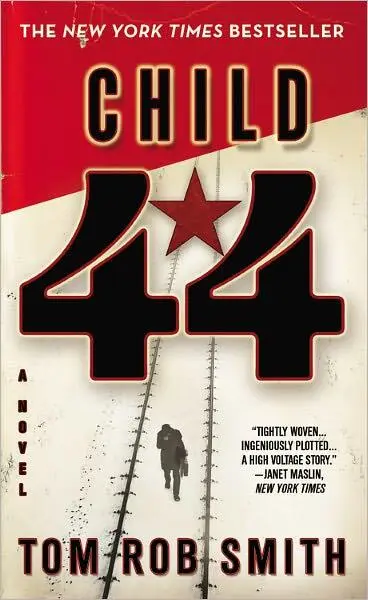
- Название:Child 44
- Автор:
- Издательство:Grand Central Pub
- Жанр:
- Год:2008
- ISBN:9780446402385
- Рейтинг книги:3 / 5. Голосов: 1
-
Избранное:Добавить в избранное
- Отзывы:
-
Ваша оценка:
Child 44: краткое содержание, описание и аннотация
Предлагаем к чтению аннотацию, описание, краткое содержание или предисловие (зависит от того, что написал сам автор книги «Child 44»). Если вы не нашли необходимую информацию о книге — напишите в комментариях, мы постараемся отыскать её.
The novel is based on real Russian serial killer Andrei Chikatilo, also known as the Rostov Ripper, who was responsible for 52 murders in communist Russia. In addition to highlighting the problem of Soviet-era criminality in a state where "there is no crime," the novel also explores the paranoia of the age, the education system, the secret police apparatus, orphanages, Homosexuality in the USSR and mental hospitals.
The book is the first part of a trilogy. The second part is called The Secret Speech and also features the character of Leo Demidov and his wife, Raisa.
Child 44 was longlisted for the Man Booker Prize in 2008 and won the Waverton Good Read Award in 2009.
Child 44 — читать онлайн бесплатно полную книгу (весь текст) целиком
Ниже представлен текст книги, разбитый по страницам. Система сохранения места последней прочитанной страницы, позволяет с удобством читать онлайн бесплатно книгу «Child 44», без необходимости каждый раз заново искать на чём Вы остановились. Поставьте закладку, и сможете в любой момент перейти на страницу, на которой закончили чтение.
Интервал:
Закладка:
Same Day
The two incidents had nothing to do with each other, the death of Fyodor’s young boy and the murder of this young girl — it was impossible. They’d taken place hundreds of kilometres apart. This was a vicious irony, nothing more. But Leo had been wrong to dismiss Fyodor’s allegations. Here was a child murdered as Fyodor had described. Such a thing was possible. There was now no way of knowing what had really happened to Fyodor’s son, Arkady, because Leo had never bothered to examine the boy’s body for himself. Perhaps that death had been an accident. Or perhaps the matter had been hushed up. If the latter was true then Leo had been instrumental in orchestrating a cover-up. He’d done so unquestioningly — ridiculing, bullying and finally threatening a grieving family.
General Nesterov was frank about the details of this murder, calling it by no other name— murder —and giving no indication of wanting to portray it as anything other than a brutal and horrific crime. His frankness worried Leo. How could he be so cool? The yearly statistics for his department were supposed to conform to predetermined patterns: decreasing crime rates, increasing social harmony. Although the town had undergone a vast increase in population, an influx of eighty thousand uprooted workers, crime should have declined since the theory dictated that there was more work, more fairness, less exploitation.
The victim’s name was Larisa Petrova; she’d been found four days ago, in the forest, not far from the train station. The details regarding the discovery of the body were vague and when Leo had pressed the issue Nesterov had seemed eager to brush the point aside. All Leo could gather was that the body had been discovered by a couple who’d drunk too much and had retreated into the forest to fornicate. They’d stumbled across the little girl, who’d been lying in the snow for several months, her body perfectly preserved in the freezing cold. She was a schoolchild, fourteen years old. The militia knew her. She had a reputation for having a disorderly sex life not just with boys of her own age but with older men; she could be bought for a litre bottle of vodka. Larisa had argued with her mother on the day she went missing. Larisa’s absence had been dismissed; she’d threatened to run away and it seemed she’d followed through on her word. No one had looked for her. According to Nesterov her parents were respected members of the community. Her father was an accountant at the assembly plant. They were ashamed of their daughter and wanted nothing to do with the investigation, which was to be kept secret; not covered up, but not publicized either. The parents agreed not to have a funeral for their child and were prepared to pretend that she was merely missing. There was no need for the community at large to know. Only a handful of people outside the militia were aware of the murder. Those people, including the couple who’d found the body, had been made clear of the consequences of talking. The matter would be concluded swiftly because they already had a man in custody.
Leo was aware that the militia could only investigate after a criminal case had been opened and that a criminal case was only opened if it was certain it would be concluded successfully. Failure to convict a suspect was unacceptable and the consequences severe. Bringing a case to court was supposed to mean one thing: that the suspect was guilty. If a case was difficult, complex, ambiguous, it simply wouldn’t be opened. For Nesterov and his subordinates to be this calm could only mean that they were convinced they had their man. Their job was done. The brainwork of investigations, the presentation of evidence, interrogations and ultimately the prosecution itself were the duties of the State’s investigative team, the procurator’s office and their team of sledovatyel , lawyers. Leo wasn’t being asked to assist: he was being given a tour, expected to marvel at their efficiency.
The cell was small with none of the ingenious modifications typical of those in the Lubyanka. There were concrete walls, a concrete floor. The suspect was seated, his hands cuffed behind his back. He was young, perhaps no more than sixteen or seventeen, with an adult’s muscular frame but a child’s face. His eyes seemed to roam with no particular sense of purpose. He didn’t seem afraid. He was calm although not in an intelligent way and showed no signs of physical abuse. Of course there were ways of inflicting injuries so the marks didn’t show but Leo’s gut reaction was that the boy hadn’t been harmed. Nesterov pointed at the suspect.
— This is Varlam Babinich.
At the sound of his name, the young man stared at Nesterov as a dog might stare at its owner. Nesterov continued:
— We found him in possession of a lock of Larisa’s hair. He has a history of stalking Larisa — lingering outside her house, propositioning her in the street. Larisa’s mother remembers seeing him on numerous occasions. She remembers her daughter complaining about him. He used to try and touch her hair.
Nesterov turned to the suspect, speaking slowly.
— Varlam, tell us what happened, tell us how you had a lock of her hair in your possession.
— I cut her. It was my fault.
— Tell this officer why you killed her.
— I liked her hair. I wanted it. I have a yellow book, a yellow shirt, a yellow tin and some yellow hair. This is why I cut her. I’m sorry. I shouldn’t have done that. When can I have the blanket?
— Let’s talk about that later.
Leo interrupted:
— What blanket?
— Two days ago he kidnapped a baby. It was wrapped in a yellow blanket. He has an obsession with the colour yellow. Fortunately the baby was unhurt. However, he has no sense of right or wrong. He does whatever he feels like without regard for consequence.
Nesterov moved closer to the suspect.
— When I found Larisa’s hair in your book, why did you think you’d be in trouble? Tell this man what you told me.
— She never liked me, she kept telling me to go away but I wanted her hair. I wanted it so bad. And when I cut her hair she didn’t say anything at all.
Nesterov turned to Leo, offering the questioning to him.
— Do you have any questions?
What was expected of him? Leo thought for a moment before asking:
— Why did you stuff her mouth with soil?
Varlam didn’t answer immediately. He seemed confused.
— Yes, there was something in her mouth. I remember that now. Don’t hit me.
Nesterov answered:
— No one is going to hit you, answer the question.
— I don’t know. I forget things. There was dirt in her mouth, yes.
Leo continued:
— Explain what happened when you killed her.
— I cut her.
— You cut her or you cut her hair?
— I’m sorry, I cut her.
— Listen to me carefully. Did you cut her body or did you cut her hair?
— I found her and I cut her. I should have said to somebody but I was worried. I didn’t want to get in trouble.
Varlam began to cry.
— I’m in so much trouble. I’m sorry. I just wanted her hair.
Nesterov stepped forward.
— That’s enough for the moment.
With those words of reassurance, Varlam stopped crying. He was calm again. It was impossible to tell from his face that this was a man in the frame for murder.
Leo and Nesterov stepped outside. Nesterov shut the door to the cell:
— We have evidence that he was at the crime scene. Snow prints match his boots exactly. You understand that he’s from the internat ? He’s a simpleton.
Читать дальшеИнтервал:
Закладка:
Похожие книги на «Child 44»
Представляем Вашему вниманию похожие книги на «Child 44» списком для выбора. Мы отобрали схожую по названию и смыслу литературу в надежде предоставить читателям больше вариантов отыскать новые, интересные, ещё непрочитанные произведения.










Обсуждение, отзывы о книге «Child 44» и просто собственные мнения читателей. Оставьте ваши комментарии, напишите, что Вы думаете о произведении, его смысле или главных героях. Укажите что конкретно понравилось, а что нет, и почему Вы так считаете.