Tom Smith - Child 44
Здесь есть возможность читать онлайн «Tom Smith - Child 44» весь текст электронной книги совершенно бесплатно (целиком полную версию без сокращений). В некоторых случаях можно слушать аудио, скачать через торрент в формате fb2 и присутствует краткое содержание. Год выпуска: 2008, ISBN: 2008, Издательство: Grand Central Pub, Жанр: Триллер, на английском языке. Описание произведения, (предисловие) а так же отзывы посетителей доступны на портале библиотеки ЛибКат.
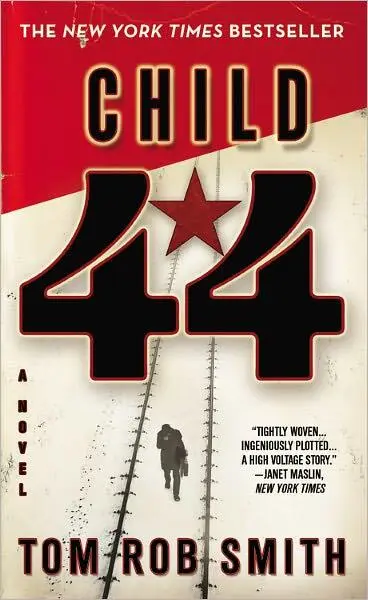
- Название:Child 44
- Автор:
- Издательство:Grand Central Pub
- Жанр:
- Год:2008
- ISBN:9780446402385
- Рейтинг книги:3 / 5. Голосов: 1
-
Избранное:Добавить в избранное
- Отзывы:
-
Ваша оценка:
Child 44: краткое содержание, описание и аннотация
Предлагаем к чтению аннотацию, описание, краткое содержание или предисловие (зависит от того, что написал сам автор книги «Child 44»). Если вы не нашли необходимую информацию о книге — напишите в комментариях, мы постараемся отыскать её.
The novel is based on real Russian serial killer Andrei Chikatilo, also known as the Rostov Ripper, who was responsible for 52 murders in communist Russia. In addition to highlighting the problem of Soviet-era criminality in a state where "there is no crime," the novel also explores the paranoia of the age, the education system, the secret police apparatus, orphanages, Homosexuality in the USSR and mental hospitals.
The book is the first part of a trilogy. The second part is called The Secret Speech and also features the character of Leo Demidov and his wife, Raisa.
Child 44 was longlisted for the Man Booker Prize in 2008 and won the Waverton Good Read Award in 2009.
Child 44 — читать онлайн бесплатно полную книгу (весь текст) целиком
Ниже представлен текст книги, разбитый по страницам. Система сохранения места последней прочитанной страницы, позволяет с удобством читать онлайн бесплатно книгу «Child 44», без необходимости каждый раз заново искать на чём Вы остановились. Поставьте закладку, и сможете в любой момент перейти на страницу, на которой закончили чтение.
Интервал:
Закладка:
Leo now understood Nesterov’s bravery in addressing this murder head on. They had a suspect who suffered from a mental disorder. Varlam was outside Soviet society, outside Communism, politics — he was explainable. His actions didn’t reflect on the Party, they didn’t alter the truism about crime because the suspect was not a real Soviet. He was an anomaly. Nesterov added:
— That shouldn’t lull you into thinking he’s incapable of violence. He’s admitted killing her. He has a motive, an irrational one, but a motive. He wanted something he couldn’t have — her blonde hair. He has a history of committing crimes when he can’t get what he wants: theft, kidnapping. Now he’s turned to murder. To him, killing Larissa was no different from stealing a baby. His morality is undeveloped. It’s sad. He should have been locked up a long time ago. This is a matter for the sledovatyel now.
Leo understood. The investigation was over. This young man was going to die.
Same Day
The bedroom was empty. Leo dropped to his knees, putting his head to the floorboards. Her case was missing. He stood up, ran out of the room, down the stairs and into the restaurant kitchen. Basarov was cutting fatty strips off an unidentifiable joint of yellow meat.
— Where’s my wife?
— Pay for the bottle and I’ll tell you.
He pointed to an empty bottle, the bottle of cheap vodka Leo had finished in the early hours of the morning, adding:
— I don’t care if it was you or your wife who drank it.
— Please, just tell me where she is.
— Pay for the bottle.
Leo didn’t have any money. He was still wearing his militia uniform. He’d left everything in the locker room.
— I’ll pay you later. However much you want.
— Later, sure, later you’ll pay me a million roubles.
Basarov continued cutting the meat, signalling his refusal to budge.
Leo ran back upstairs, rifling through his case, throwing everything out. In the back of the Book of Propagandists he had twenty-five-rouble notes, four of them, an emergency stash. He got to his feet, ran out, back down the stairs to the restaurant, pushing one of the notes into the man’s hand, considerably more than a single bottle was worth.
— Where is she?
— She left a couple of hours ago. She was carrying her case.
— Where was she going?
— She didn’t speak to me. I didn’t speak to her.
— How long ago, exactly how long ago?
— Two or three hours…
Three hours — that meant she was gone, not just out of the restaurant but quite possibly out of the town. Leo couldn’t guess where she might be heading or which direction she’d be travelling.
Feeling generous after his substantial reward, Basarov volunteered a little extra information.
— It’s unlikely she made it in time for the late afternoon train. As far as I remember there isn’t another train till right about now.
— What time?
— Seven thirty…
Leo had ten minutes.
Ignoring his tiredness, he ran as fast as he could. But desperation choked him. Short of breath, he had only the roughest idea where the station was. He was running blindly, trying to recall the route the car had driven. His uniform was soaked with spray from the icy slush on the street, the cheap material getting heavier and heavier. His blisters rubbed and burst, his toes were bleeding again, his shoes filling with blood. Each step sent a searing pain through his legs.
He turned the corner only to be confronted by a dead end — a line of wooden houses. He was lost. It was too late. His wife was gone; there was nothing he could do. Hunched over, trying to catch his breath, he remembered these ramshackle timber houses, the stench of human effluent. He was close to the station; he was sure of it. Rather than retrace his steps he ran forward, entering the back of one of the huts, stepping into a family seated on the floor, in the middle of a meal. Huddled around a stove, they stared up at him, silent, afraid at the sight of his uniform. Without saying a word he stepped over the children and ran out, entering onto the main street; the street they’d driven down on their arrival. The station was within sight. He tried to run faster but he was slowing. Adrenaline could no longer compensate for exhaustion. He had nothing in reserve.
He barged into the station doors, knocking them open with his shoulder. The clock showed it was seven forty-five. He was fifteen minutes too late. The realization that she was gone, probably forever, began to crash across his mind. Leo clung to the groundless hope that somehow she’d be on the platform, somehow she hadn’t got on the train. He stepped out: looking right and left. He couldn’t see his wife, he couldn’t see the train. He felt weak. He leant forward, his hands on his knees, sweat running down the side of his face. Out of the corner of his eye he saw a man sitting on a bench. Why would a man still be on the platform? Was he waiting for a train? Leo straightened up.
Raisa was at the far end of the platform, hidden in the gloom. It took an enormous effort not to run and grab her hands. Catching his breath, he was trying to think of what to say. He glanced at himself — he was a mess, sweating, filthy. But she wasn’t even looking at him: she was looking over his shoulder. Leo turned around. Thick bursts of smoke were rising over the tree tops. The delayed train was approaching.
Leo had imagined taking time over his apology, finding the correct words, being eloquent. However, right now he had a matter of seconds to convince her. His words stumbled out.
— I’m sorry, I wasn’t thinking. I grabbed you but that wasn’t me — or it wasn’t the person I want to be.
Hopeless — he had to do better. Slow down, concentrate — he’d get one shot at this.
— Raisa, you want to leave me. You’re right to want to leave me. I could tell you how difficult it would be on your own. How you might get stopped, questioned, arrested. How you don’t have the right paperwork. You’d be a vagrant. But that’s not a reason to stay with me. I know that you’d rather take your chances.
— Paperwork can be faked, Leo. I’d rather fake that than this marriage.
There it was. The marriage was a sham. All Leo’s words dried up. The train came to a halt alongside them. Raisa’s face was impassive. Leo stepped out of her way. She moved towards the carriage. Could he let her go? Over the sound of grinding brakes, Leo raised his voice:
— The reason I didn’t denounce you wasn’t because I believed you were pregnant and it had nothing to do with me being a good person. I did it because my family is the only part of my life that I’m not ashamed of.
To Leo’s surprise Raisa turned around.
— Where does it come from, this overnight enlightenment? It feels cheap. Having been stripped of your uniform, your office, your power, you now have to make do with me. Is that it? Something which was never very important to you before — us — becomes important because you find yourself with nothing else?
— You don’t love me, I know that. But there was a reason we got married, there was something between us, some connection. We’ve lost that. I’ve lost that. We can find it again.
Carriage doors were opening, a handful of passengers were disembarking. Time was running out. Raisa looked at the carriage, weighing up her choices. They were pitiful. She had no friends to run to, no family who could shelter her, no money and no means of supporting herself. She didn’t even have a ticket. Leo was right in his analysis. If she left, she’d probably get picked up by the authorities. She felt exhausted at the thought of it. She looked at her husband. They had nothing except each other, whether they liked each other or not.
Читать дальшеИнтервал:
Закладка:
Похожие книги на «Child 44»
Представляем Вашему вниманию похожие книги на «Child 44» списком для выбора. Мы отобрали схожую по названию и смыслу литературу в надежде предоставить читателям больше вариантов отыскать новые, интересные, ещё непрочитанные произведения.











Обсуждение, отзывы о книге «Child 44» и просто собственные мнения читателей. Оставьте ваши комментарии, напишите, что Вы думаете о произведении, его смысле или главных героях. Укажите что конкретно понравилось, а что нет, и почему Вы так считаете.