Alan Jacobson - False accusations
Здесь есть возможность читать онлайн «Alan Jacobson - False accusations» весь текст электронной книги совершенно бесплатно (целиком полную версию без сокращений). В некоторых случаях можно слушать аудио, скачать через торрент в формате fb2 и присутствует краткое содержание. Жанр: Триллер, на английском языке. Описание произведения, (предисловие) а так же отзывы посетителей доступны на портале библиотеки ЛибКат.
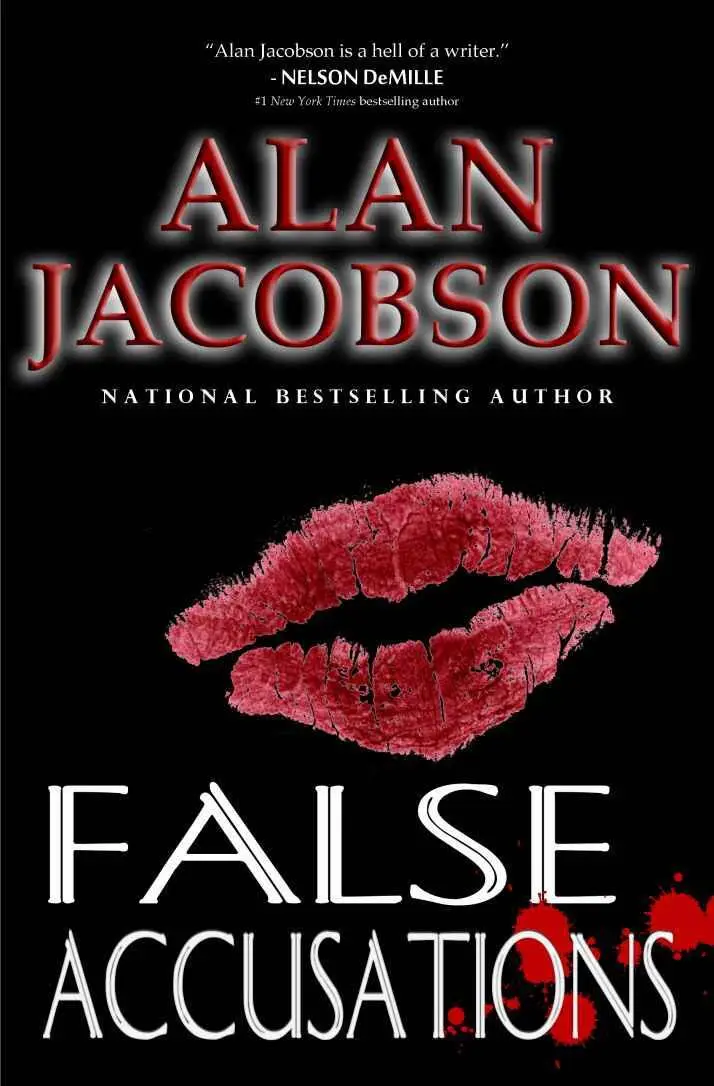
- Название:False accusations
- Автор:
- Жанр:
- Год:неизвестен
- ISBN:нет данных
- Рейтинг книги:4 / 5. Голосов: 1
-
Избранное:Добавить в избранное
- Отзывы:
-
Ваша оценка:
False accusations: краткое содержание, описание и аннотация
Предлагаем к чтению аннотацию, описание, краткое содержание или предисловие (зависит от того, что написал сам автор книги «False accusations»). Если вы не нашли необходимую информацию о книге — напишите в комментариях, мы постараемся отыскать её.
False accusations — читать онлайн бесплатно полную книгу (весь текст) целиком
Ниже представлен текст книги, разбитый по страницам. Система сохранения места последней прочитанной страницы, позволяет с удобством читать онлайн бесплатно книгу «False accusations», без необходимости каждый раз заново искать на чём Вы остановились. Поставьте закладку, и сможете в любой момент перейти на страницу, на которой закончили чтение.
Интервал:
Закладка:
Denton raised his glass. “To a smooth conclusion.”
“A smooth conclusion,” Hellman said.
CHAPTER 68
In an effort to score a few quick and final points to neutralize some of the damage done by Madison, Warwick concluded his case by calling two witnesses: one was an expert on rape who testified that many women do not come forward immediately following the assault because of the embarrassment and grilling they would have to face at trial. It was therefore perfectly understandable, the expert psychologist testified, that Harding did not go to the police earlier. In fact, she pointed out, look what happened when she did decide to file a complaint-no charges were brought and no arrest was made.
On cross-examination, Denton elicited her concession that the reason no charges were filed was not that she came forward as a rape victim, and not that the police did not believe her, but that there was no definitive evidence to support a successful prosecution.
Denton leaned toward the psychologist. “In fact, her quest for money overshadowed her concern for finding justice, didn’t it?”
“I don’t follow you.”
“She hired an attorney to bring a civil case. And once her monetary demands were met, she withdrew the criminal complaint before the police even had the chance to complete their investigation.”
“Objection.”
“Withdrawn,” Denton said, smirking as he walked back to his seat. “Nothing further.” Although the comment had been withdrawn from the record, his point had been cemented in the minds of the jury. He viewed this exchange with the psychologist as a victory, but could not help but wonder what the female members of the panel would be thinking relative to Harding’s being portrayed as a rape victim. Sympathy to any degree could be deadly when dealing with reasonable doubt.
Warwick’s other expert, hastily arranged, testified as to the shortfalls of DNA testing. As soon as Warwick inquired about the weaknesses of PCR analysis, before the researcher could render an opinion, Denton requested a sidebar. He warned that if Warwick persisted in this line of questioning, he would request permission to reopen the prosecution’s case, as he expected to have the results of the RFLP testing within a day or two. He was confident of the outcome and would use the findings as rebuttal testimony.
Calvino asked Warwick if he was the gambling type. “Make the perceived weakness of PCR analysis the cornerstone of your case, counselor, and it could be blown clear out of the water should the RFLP test results corroborate the results of the PCR testing.”
Warwick chose to abandon his line of questioning, requesting the right to recall the witness should the RFLP test results support the defense’s position. The expert’s testimony was essentially reduced to harmless rubble and a few impromptu and pointless questions about the dangers of contamination and degradation. Denton promptly fired back the same questions he had asked his own expert, Dr. Ross, about how contamination or degradation could cause the results to match Harding’s DNA pattern. The answer was that it could not, and the witness was disposed of harmlessly.
Thus far, much to Denton’s satisfaction, there were no surprises during trial. He only hoped that the jury was seeing the events and circumstances as clearly as he viewed them. Although Warwick elected not to put Harding on the stand, a wise move considering her unpredictable and socially abrasive nature, the jury had been force-fed a dose of what she was truly like by the prosecution’s witnesses: from delusional nuisance to plotting extortionist to vengeful murderer.
The judge, having gestured to the court recorder, cleared his throat. “Mr. Denton.”
Denton remained seated, as was his custom when beginning his closing argument. “This was a gruesome murder of two innocent people, ladies and gentlemen. No one in this courtroom will dispute that. What will be debated, and what has been the subject of this trial, is who did it. Well, we feel that we know who did it. And we’ve presented evidence to you these past couple of weeks showing you who, how-and why. We’ve shown you the character of the person who stands accused over there,” he said, throwing out his finger and pointing at Harding, “and we’ve shown you the events which led up to her eventual action that resulted in the deaths of the two innocent victims. These people didn’t die because anyone had anything against them. No, they were true victims in the sense that they had nothing to do with what precipitated the anger that built beyond proportion-and beyond control-in Brittany Harding’s mind.
“The aggression in this case was focused against Dr. Phillip Madison, a well-respected surgeon in this community. And what did he do to deserve this aggression? Well, nothing, any reasonable person would conclude. But the defendant took exception to having lost her job due to her own inadequacies, and held it against Dr. Madison. While most of us would simply have gotten angry, maybe yelled a bit, written a nasty letter…the defendant sought revenge. She came forward with a bogus rape complaint-you heard the lack of evidence-and when she tried to extort money from him, an attempt which ultimately failed, she cranked up the stakes of revenge a bit more. She tried to turn his wife against him.
“But she didn’t stop there. She stole his car and went to the streets of our community in an attempt to commit murder, all the while setting the situation up as if Dr. Madison had done it in a drunken stupor. But she didn’t figure on one thing: the fact that our investigative process is largely assisted nowadays by science: in this case, DNA, saliva, and lip print analysis. She didn’t know that we would be able to extract her saliva and genetic code-a fingerprint, if you will, off the beer cans she planted in his car in an attempt to implicate him.
“She tried to fool the police. She tried to fool me. She tried to fool you, ladies and gentlemen. But it didn’t work, did it? No, we saw her for who she is, and what she’s about.
“I ask you to look carefully at the evidence, at the defendant’s state of mind, at her character, at the witnesses who have testified before you under oath. You have to ask yourself: did the defendant have the ability to commit this heinous crime? Let’s look at it first from a physical perspective. This crime did not require any unusual amount of strength-just an unusual amount of gall. Leeza Madison noticed that her keys to her husband’s car and garage were missing shortly after the defendant was in their home. Dr. Madison testified that he’d fallen asleep watching the evening news-the same statement he’d made to the police when they first began their investigation-so he never did get to arm his house alarm. So I ask you, was it possible for Brittany Harding to walk up to the garage, a separate structure that was on the opposite side of the three-story house from Dr. Madison’s bedroom, unlock the door with the key, start his car, and drive off? I believe the answer is obvious. Did she take a chance that the alarm was already set? Most definitely. But did she even know that there was an alarm?
“There was no way for the defendant to know. At the very least, she was taking a chance. But that requires levelheaded, prudent, objective thought processes, and I remind you that as the psychiatrist, Dr. Hall, testified, revenge is an act of desperation, and involves obsessive behavior. She was fixated on one goal: revenge against Dr. Madison. So in this instance, it was not just a matter of whether or not she was able to kill these two people, it was whether or not the defendant exercised prudence in weighing the reward of revenge against the consequences of getting caught. Clearly, as Dr. Madison and Mark Stanton, her former employer, testified, she has established a pattern of seeking the reward of revenge over the risk of retribution.
Читать дальшеИнтервал:
Закладка:
Похожие книги на «False accusations»
Представляем Вашему вниманию похожие книги на «False accusations» списком для выбора. Мы отобрали схожую по названию и смыслу литературу в надежде предоставить читателям больше вариантов отыскать новые, интересные, ещё непрочитанные произведения.









Обсуждение, отзывы о книге «False accusations» и просто собственные мнения читателей. Оставьте ваши комментарии, напишите, что Вы думаете о произведении, его смысле или главных героях. Укажите что конкретно понравилось, а что нет, и почему Вы так считаете.