Jenn Ashworth - Cold Light
Здесь есть возможность читать онлайн «Jenn Ashworth - Cold Light» весь текст электронной книги совершенно бесплатно (целиком полную версию без сокращений). В некоторых случаях можно слушать аудио, скачать через торрент в формате fb2 и присутствует краткое содержание. Город: New York, Год выпуска: 2012, ISBN: 2012, Издательство: William Morrow, Жанр: Триллер, ya, на английском языке. Описание произведения, (предисловие) а так же отзывы посетителей доступны на портале библиотеки ЛибКат.
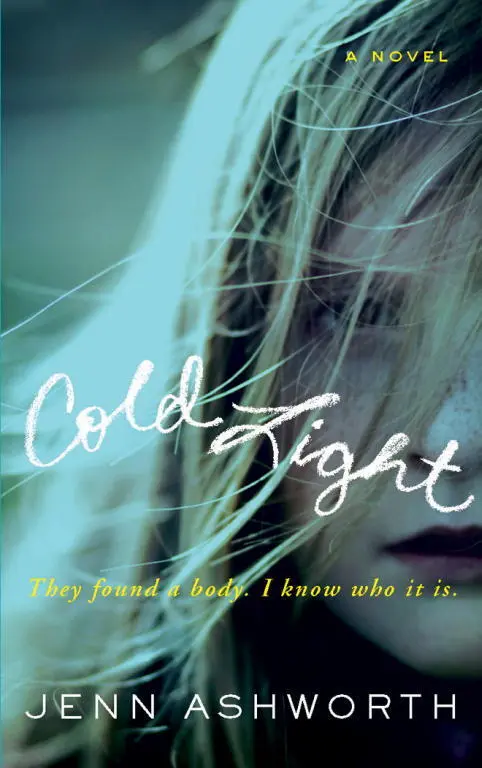
- Название:Cold Light
- Автор:
- Издательство:William Morrow
- Жанр:
- Год:2012
- Город:New York
- ISBN:978-0-06-207603-8
- Рейтинг книги:4 / 5. Голосов: 1
-
Избранное:Добавить в избранное
- Отзывы:
-
Ваша оценка:
Cold Light: краткое содержание, описание и аннотация
Предлагаем к чтению аннотацию, описание, краткое содержание или предисловие (зависит от того, что написал сам автор книги «Cold Light»). Если вы не нашли необходимую информацию о книге — напишите в комментариях, мы постараемся отыскать её.
Blackly funny and with a surreal edge to its portrait of a northern English town, Jenn Ashworth’s gripping novel captures the intensity of girls’ friendships and the dangers they face in a predatory adult world they think they can handle. And it shows just how far that world is willing to let sentiment get in the way of the truth.
An unforgettable tale of friendship and memory – and the shattering truth behind a forgotten dead body newly unearthed –
is a most welcome addition to the crime fiction and thriller ranks.
Cold Light Ashworth already has created great buzz in the U.K. thanks to her stunning debut novel,
, winner of the prestigious Betty Trask Award, and now
places her in elite literary company—alongside Laura Lippman, Kate Atkinson, and other acclaimed masters of intelligent, emotionally powerful mystery and suspense.
http://www.youtube.com/watch?v=3uhjpJWklNw Review
“Hugely readable debut novel […] about the inability to know others and ourselves.” —
“Extremely intense and powerfully intriguing.”
—
“Ashworth has the rare gift of being able to make her reader feel perverse and voyeuristic, implicated somehow in the tragedy laid out on the pages.”
—
(London) “A grimly atmospheric mystery.”
—
(London) “A psychological thriller of the first order.”
—
(Australia) “Another cleverly skewed tale told from the self-conscious perspective of an outsider… arrestingly observant… Ashworth’s second book confirms that the first was no one-off… her talent could take her a long way.”
—
A wonderful tale, beautifully told.
—
A chilling, blackly funny novel with a surreal edge about the intensity of teenage friendship.
—
“[Ashworth] Evokes a damaged mind with the empathy and confidence of Ruth Rendell.”
—
(London)
Cold Light — читать онлайн бесплатно полную книгу (весь текст) целиком
Ниже представлен текст книги, разбитый по страницам. Система сохранения места последней прочитанной страницы, позволяет с удобством читать онлайн бесплатно книгу «Cold Light», без необходимости каждый раз заново искать на чём Вы остановились. Поставьте закладку, и сможете в любой момент перейти на страницу, на которой закончили чтение.
Интервал:
Закладка:
His dreams of being called an inventor and winning his place on the Sea Eye must have seemed so close to being fulfilled they were almost inevitable. Donald didn’t know, while he was making this list and scrawling draft after draft of his submission to the National Geographic , that the reward was already behind him – somewhere in the grey sucking mud of Morecambe Bay. That was the place the ideas had started coming, the place where he’d first imagined allotments filled with rows of lettuce glowing faintly blue whenever they needed water.
He’d been researching the idea from several different angles at once: there were notes about fireflies; lists of glowing fungus; paragraphs on the luminous solution of frightened squid; and a pencil diagram of an angler fish’s lure. How to show them that he was serious – that he meant business? Business meant business and that meant money – he knew that much about the world and so the commercial applications were not the cake, but the icing on it – meant to sweeten the pill of what he really wanted to do, although when these ideas finally came to him, they’d come in a rush.
He wrote about flashing pet mice for fairground prizes. Electricity-free glowing Christmas trees to save the planet, yoghurt that glowed in the fridge – either as a warning that it had spoiled, or to replace the traditional fridge light and so save energy. Saplings planted along the side of motorways that would also become street lights when the night fell and their cold, ghostly light became visible. Specially adapted clothing for potholers, search and rescue teams, and miners. Finally, he came to it – tried to smuggle his real idea in amongst the others.
The painless tagging of men who wait in dark places and are apt to rape.
This last was underlined, and cushioned between rustling newspaper clippings from the Evening Post counting and detailing the twelve occasions when the flasher had made himself known in the City that autumn and winter. In this part of his scrapbook the writing is erratic and tilted. He never asked me, but I would have had a hard time typing it up for him. In places his biro had run out of ink and he’d carried on anyway – not looking at the page, or not caring – just scratching the words into the paper with the dry metal nib of the pen.
He thought he could protect women by making their predators glow in the dark. Barbara would never have let him join the vigilante group even if the other men would have welcomed him, which they wouldn’t. He was impotent, but in his own way, he was thinking of me.
I let the scrapbook fall onto the floor.
Barbara was right. He’d been doing all this for me.
Because of me.
You can kill a person without touching them.
I sat there for a long time. Thinking about the way I had behaved – about how obsessed I had been with Chloe and then with Wilson – never realising the more serious things that were happening both at home and out in the world, the things that had been keeping Donald awake at night, and had finally propelled him out onto the water in a boat he didn’t know how to operate.
There wasn’t a way to fix this, I realised. No going back, nothing as easy as returning a bottle of perfume and writing a contrite letter to the man in charge. I should have acted earlier. Should have sorted the problem out for myself instead of waiting in the house for someone – Chloe – to step in and do it for me. I was nearly fifteen, and it was time enough for me to be looking after myself. My mind travelled to that frozen pond and the football trapped in its surface like a flag – pointing out Wilson to anyone who might walk past and remember the CCTV image of him carrying it across the garage forecourt and put two and two together.
I could, if I had the guts, go there right now and get rid of it. It wouldn’t be perfect, but it would be something.
Even then, with the decision made, I didn’t act right away – but sat in Donald’s chair for longer, thinking over my plan and wondering how it had got to this. Eventually, I reached into the open drawer next to me, and rooted around at the back between the old gloves and my worn-out baby clothes. All his precious things.
My limbs felt heavy – as if I was swimming through sand. Everything was slow and damp and cold. The air had thickened. The back of the drawer felt as if it was miles away, the wood dry and splintery under my scrabbling fingertips. Barbara hadn‘t found the margarine tub yet. I pulled it out, opened it and pocketed all the money that was in there. Didn’t count it, but there must have been close to four hundred pounds. Enough to get away quickly if I couldn’t manage to get rid of the football.
I heard Barbara moving around downstairs, and an hour later, come past Donald’s den and go into her bedroom. I waited until the light under her door went out, holding the money in my hand and staring at the torn pictures on Donald’s walls and the cardboard boxes full of rubbish that Barbara had been sorting through. When I was sure she was asleep, I went downstairs, drank what was left in the bottle she’d abandoned on the coffee table, and grabbed my coat from the peg in the kitchen.
I half turned towards the river and up the hill to go to Chloe’s house, but then I remembered it couldn’t be her anymore – that we weren’t friends in the way that we used to be. I was half drunk and knew only vaguely where Emma lived. In a house whose back garden backed steeply down onto the canal, and I only knew that because of the time she’d told me and Chloe about her brothers going out on a boat to fish out a large handbag they were sure was full of money, but actually contained a dead bloody cat and seven hairless slimy kittens.
Boats. I had to walk fast, in any direction – just to tear my mind away from boats. I started running then, sloppily – banging into parked cars and hedges, until I came to the taxi rank. I jumped into a black cab and asked the driver to take me to Cuerden Valley Park.
‘What do you want to go there for at this time of night? And on your own?’
That’s the thing about being young. People always think they can ask about things that are none of their business.
‘I’m meeting someone there,’ I said. ‘My older brother’s picking me up. It’s all right.’
‘You got money?’
I pulled the roll of notes I’d taken from Donald’s margarine tub and showed them to him. ‘I can pay,’ I said.
‘Where did you get all that from?’ he said. I didn’t exhale, didn’t want him to smell the booze on me in case he got worried about me throwing up and made me get back out in the cold.
‘My dad gave it me,’ I said, and jutted my chin at him. Go on then, bloody ask me. Ask me, and I’ll tell you.
The driver shrugged, started the engine and turned up the radio. Terry again – talking about a tree branch that had blown onto a primary school roof and destroyed the nesting site of a family of rare birds.
‘They’re going to put a curfew on for you young girls,’ he said, ‘keep you in at night.’
‘Really,’ I said.
‘Yes. In with your mums and dads – tucked up early. None of this White Lightning and Blue Bols on a park bench. No boyfriends,’ he laughed. ‘If you ask me, they should do it for the lads too. Everyone under eighteen can stay in after 8 p.m. whether they catch this nonce, or not.’
I couldn’t see out of the windows because the driver had left the interior light on, all the better to stare at me in his rearview mirror. I felt drunk then, and tried to sit up straight and not breathe out of my mouth.
Nonce. Not of normal criminal experience. Out of the ordinary. He was special, see, this flasher of ours. Like Terry’s bird family – a rare breed.
Читать дальшеИнтервал:
Закладка:
Похожие книги на «Cold Light»
Представляем Вашему вниманию похожие книги на «Cold Light» списком для выбора. Мы отобрали схожую по названию и смыслу литературу в надежде предоставить читателям больше вариантов отыскать новые, интересные, ещё непрочитанные произведения.



Обсуждение, отзывы о книге «Cold Light» и просто собственные мнения читателей. Оставьте ваши комментарии, напишите, что Вы думаете о произведении, его смысле или главных героях. Укажите что конкретно понравилось, а что нет, и почему Вы так считаете.