Jenn Ashworth - Cold Light
Здесь есть возможность читать онлайн «Jenn Ashworth - Cold Light» весь текст электронной книги совершенно бесплатно (целиком полную версию без сокращений). В некоторых случаях можно слушать аудио, скачать через торрент в формате fb2 и присутствует краткое содержание. Город: New York, Год выпуска: 2012, ISBN: 2012, Издательство: William Morrow, Жанр: Триллер, ya, на английском языке. Описание произведения, (предисловие) а так же отзывы посетителей доступны на портале библиотеки ЛибКат.
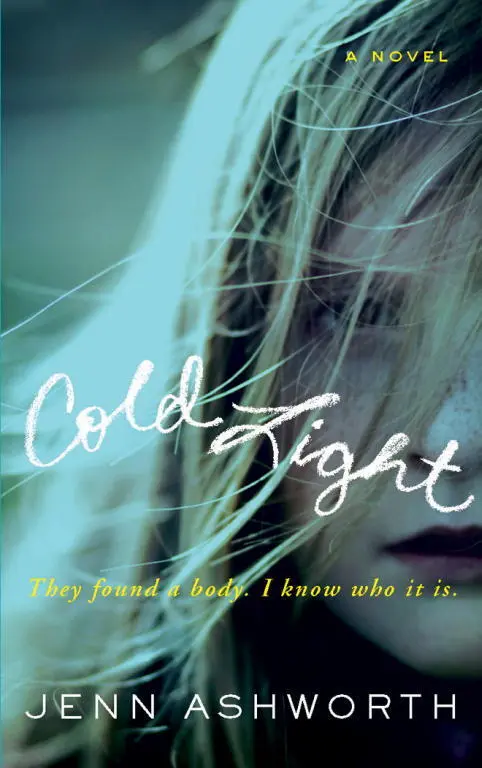
- Название:Cold Light
- Автор:
- Издательство:William Morrow
- Жанр:
- Год:2012
- Город:New York
- ISBN:978-0-06-207603-8
- Рейтинг книги:4 / 5. Голосов: 1
-
Избранное:Добавить в избранное
- Отзывы:
-
Ваша оценка:
Cold Light: краткое содержание, описание и аннотация
Предлагаем к чтению аннотацию, описание, краткое содержание или предисловие (зависит от того, что написал сам автор книги «Cold Light»). Если вы не нашли необходимую информацию о книге — напишите в комментариях, мы постараемся отыскать её.
Blackly funny and with a surreal edge to its portrait of a northern English town, Jenn Ashworth’s gripping novel captures the intensity of girls’ friendships and the dangers they face in a predatory adult world they think they can handle. And it shows just how far that world is willing to let sentiment get in the way of the truth.
An unforgettable tale of friendship and memory – and the shattering truth behind a forgotten dead body newly unearthed –
is a most welcome addition to the crime fiction and thriller ranks.
Cold Light Ashworth already has created great buzz in the U.K. thanks to her stunning debut novel,
, winner of the prestigious Betty Trask Award, and now
places her in elite literary company—alongside Laura Lippman, Kate Atkinson, and other acclaimed masters of intelligent, emotionally powerful mystery and suspense.
http://www.youtube.com/watch?v=3uhjpJWklNw Review
“Hugely readable debut novel […] about the inability to know others and ourselves.” —
“Extremely intense and powerfully intriguing.”
—
“Ashworth has the rare gift of being able to make her reader feel perverse and voyeuristic, implicated somehow in the tragedy laid out on the pages.”
—
(London) “A grimly atmospheric mystery.”
—
(London) “A psychological thriller of the first order.”
—
(Australia) “Another cleverly skewed tale told from the self-conscious perspective of an outsider… arrestingly observant… Ashworth’s second book confirms that the first was no one-off… her talent could take her a long way.”
—
A wonderful tale, beautifully told.
—
A chilling, blackly funny novel with a surreal edge about the intensity of teenage friendship.
—
“[Ashworth] Evokes a damaged mind with the empathy and confidence of Ruth Rendell.”
—
(London)
Cold Light — читать онлайн бесплатно полную книгу (весь текст) целиком
Ниже представлен текст книги, разбитый по страницам. Система сохранения места последней прочитанной страницы, позволяет с удобством читать онлайн бесплатно книгу «Cold Light», без необходимости каждый раз заново искать на чём Вы остановились. Поставьте закладку, и сможете в любой момент перейти на страницу, на которой закончили чтение.
Интервал:
Закладка:
Donald, who often wandered about on the landing at odd hours, heard me when I woke and sat on my bed once or twice to tell me about the snow that falls under the sea. He made it sound beautiful. I imagined standing on the sea bed watching it flutter; coloured flakes drifting downwards for miles and resting on the top of my head. Stroking the sides of the fish and collecting on the black backs of huge, slow-moving whales.
Some things I can’t think about too much. Like the voices I’d heard on the landing one night – a deep, rumbling sobbing noise coming from Donald, and my mother’s voice travelling quite clearly from Donald’s room into my own.
It must have woken me. That, or another nightmare. I remember hugging my knees in the dark, smelling the washing powder on the duvet.
‘Drink your Lemsip,’ she was saying, in a low, expressionless voice. ‘Sit in your chair and have this blanket. Here.’
Barbara thought Lemsip cured everything from anxiety to measles, and she often used to tuck a sachet into my school bag when I wasn’t looking, just in case.
‘Did I make a mistake?’ I heard drawers being opened – paper being shuffled. Not a burglary. Donald was looking for something.
‘It’ll come out all right,’ Barbara soothed. ‘Back in your chair. Here, I’ve got this Lemsip for you. Take it now, the mug’s burning my hand.’
‘I didn’t make it up, did I, Barbara?’
I felt bad for listening, but my door was ajar. If I got up to close it she’d have heard me and at that moment I would rather have thrown a brick through a stained glass window than draw attention to my presence in the house.
‘Sleep now,’ she said. ‘You didn’t dream it. It’s the best application they’re going to get.’
There were low, protesting sounds from Donald – but halfhearted. The crisis had passed. Different sounds now – the cupboard on the landing where we kept the towels and sheets being opened, and something being dragged out. I held my breath and tried not to move.
‘Sleep now,’ she said. ‘Sit in your chair and sleep for a while. I’ll stay in here with you tonight. Sleep in with you. Look, I’ve got the camp-bed. Drink your Lemsip. Close your eyes.’
She was more his mother than mine. Always, always and especially when I needed her the most. I haven’t thought about this for a long time. Tenderness so raw it hurts to bring it back, I think – and something passing between my parents – Donald understanding, only for a moment, that there was no such thing as the Sea Eye , that he’d mistaken his wishes for facts, and coming undone about it. I heard Barbara tucking it all back in, so privately that words wouldn’t touch it.
Chapter 22
I heard Barbara coming unsteadily down the stairs, turned off the television, and waited. For a moment there was no sound but her slippers dragging on the stair treads and the fizz of the static escaping from the curved blank screen in the dark room. A shaft of light from the kitchen fell over the carpet and stopped at my feet. I could smell the booze on her before she got near me.
‘Mum?’
She threw the pages at me from the doorway. They fluttered. Twice that week someone had thrown a bunch of paper at me. You flinch, even though you know it can’t hurt you, and it’s humiliating. I sat still and the sound of the pages fluttering and settling quickly died away. It reminded me of two things. One, the time Donald and I had been playing Crazy Eights in front of the news, and he’d tried to speak to me about Chloe, and I’d dropped the cards. Two, the final stage in The Crystal Maze , where the contestants have to dive about catching gold and silver pieces of paper as they blow about in the air under a giant plastic dome. They do it for prizes.
‘I told you not to encourage him,’ she said. Her voice was hoarse and each word melted into the next, like a bad VHS or a dream: she was drunk.
‘I didn’t,’ I said.
She knelt on the carpet and started gathering the papers – the typed sheets and the pages torn from scrapbooks. She was clumsy, knocked the occasional table with her elbow and swore as the remote controls rained down on her.
‘He didn’t type all this up himself. You did it all. You took it away from him, typed it up, brought it back – told him he was in with a chance, how clever he was, how impressed those bloody biologists were going to be with him.’ She stumbled and lisped over ‘biologists’ and I didn’t laugh.
One of the papers had landed face-up near my foot. She scrabbled for it. A perfect pencil and ink drawing of a bathyscaphe in cross-section. Copied from a Dorling Kindersley book I’d found in a charity shop and brought back for him.
‘I didn’t do—’
‘I don’t want to hear it, Laura. What did he promise you? Did he give you money? Tell you he’d put your name in the front of his first article? Mention you to the New Scientist ?’
She looked up at me. She wasn’t crying. Without mascara, her eyes looked bald and strange.
‘Half of this I’ve never even seen before –’
‘Don’t talk to me. Don’t say anything to me.’ She was kneeling on the carpet, her nightdress bunched against the back of her knees. ‘I know you. Mooning about in the bathroom. Staring into mirrors. You thought if he won, you’d get your face on the front of a magazine, didn’t you?’
The light from the kitchen fell on her calves and I could see the blue and purple lumps of veins there and the discoloured skin she hid with American Tan popsocks and massaged with sunflower oil in the bath. She was lining up the remote controls on Donald’s side table, putting them in order and fitting them into the shapes they’d left in the dust.
‘I’ll help you,’ I said, and stood up.
‘Just get out of my sight.’
I went up to Donald’s room slowly because I didn’t want to be on my own. Didn’t want to go to sleep. We’d both been having dreams, but Barbara was allowed to hose them down with a bottle of Gordon’s, and I wasn’t.
The stairwell was dark. The door to his den didn’t creak ominously. There was no special atmosphere. No comforting sense of presence, or sudden rush of happy memories. It was an empty, half-cleared junk room that belonged to a dead person. The table was empty, the debris swept away into three cardboard boxes on the floor in front of it. The drawers were all open, and the contents stirred and disturbed. She’d taken away his blanket and started to pull down the pictures from the wall. The room stank of fags and her perfume. There was a stack of books and papers on the floor in front of the chair. She’d been sitting in it and reading them. I sat too, and picked up the top scrapbook from the pile.
A lot of it was pasted-in printouts of papers I had typed up for him. Drafts of his application for the Sea Eye programme. Experiments he could do if only he had the money for the equipment. Long, digressive arguments for funding, for assistance, for advice. Theories about lights under the sea that were somehow connected to the nuclear power plant at Heysham Port.
I turned the pages, stiff and sweet-smelling with flour and water paste, and carried on reading. I started to understand.
He’d had an idea. According to one of the journals it had come to him while walking on Morecambe beach: either he’d seen something out there in the shallow grey water that had sparked the train of thought, or the boredom of pacing across the featureless, muddy sands had encouraged him to daydream. It was all there, scratched out in an erratic handwriting that was almost too familiar to read. Bioluminescence, and the commercial applications of engineering it into living things that didn’t have it naturally. Like privet bushes, or yoghurt, or teenage girls. So that’s where he went on those long afternoons when Barbara couldn’t find him. We’d never have believed he could have managed the trains.
Читать дальшеИнтервал:
Закладка:
Похожие книги на «Cold Light»
Представляем Вашему вниманию похожие книги на «Cold Light» списком для выбора. Мы отобрали схожую по названию и смыслу литературу в надежде предоставить читателям больше вариантов отыскать новые, интересные, ещё непрочитанные произведения.




Обсуждение, отзывы о книге «Cold Light» и просто собственные мнения читателей. Оставьте ваши комментарии, напишите, что Вы думаете о произведении, его смысле или главных героях. Укажите что конкретно понравилось, а что нет, и почему Вы так считаете.