Jenn Ashworth - Cold Light
Здесь есть возможность читать онлайн «Jenn Ashworth - Cold Light» весь текст электронной книги совершенно бесплатно (целиком полную версию без сокращений). В некоторых случаях можно слушать аудио, скачать через торрент в формате fb2 и присутствует краткое содержание. Город: New York, Год выпуска: 2012, ISBN: 2012, Издательство: William Morrow, Жанр: Триллер, ya, на английском языке. Описание произведения, (предисловие) а так же отзывы посетителей доступны на портале библиотеки ЛибКат.
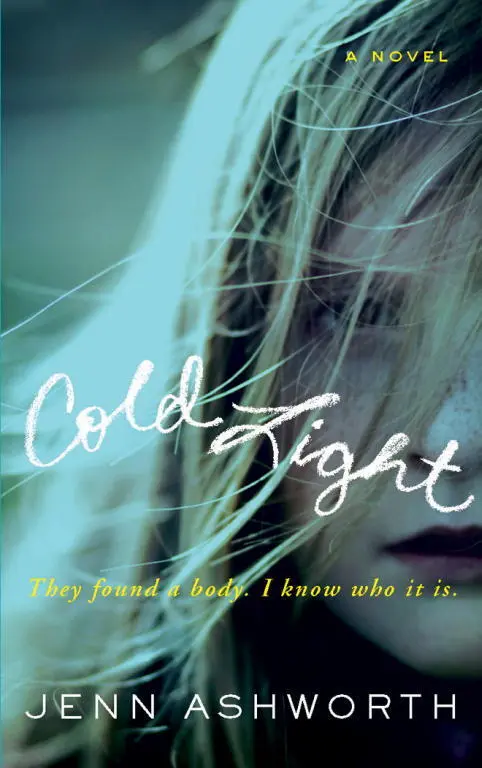
- Название:Cold Light
- Автор:
- Издательство:William Morrow
- Жанр:
- Год:2012
- Город:New York
- ISBN:978-0-06-207603-8
- Рейтинг книги:4 / 5. Голосов: 1
-
Избранное:Добавить в избранное
- Отзывы:
-
Ваша оценка:
Cold Light: краткое содержание, описание и аннотация
Предлагаем к чтению аннотацию, описание, краткое содержание или предисловие (зависит от того, что написал сам автор книги «Cold Light»). Если вы не нашли необходимую информацию о книге — напишите в комментариях, мы постараемся отыскать её.
Blackly funny and with a surreal edge to its portrait of a northern English town, Jenn Ashworth’s gripping novel captures the intensity of girls’ friendships and the dangers they face in a predatory adult world they think they can handle. And it shows just how far that world is willing to let sentiment get in the way of the truth.
An unforgettable tale of friendship and memory – and the shattering truth behind a forgotten dead body newly unearthed –
is a most welcome addition to the crime fiction and thriller ranks.
Cold Light Ashworth already has created great buzz in the U.K. thanks to her stunning debut novel,
, winner of the prestigious Betty Trask Award, and now
places her in elite literary company—alongside Laura Lippman, Kate Atkinson, and other acclaimed masters of intelligent, emotionally powerful mystery and suspense.
http://www.youtube.com/watch?v=3uhjpJWklNw Review
“Hugely readable debut novel […] about the inability to know others and ourselves.” —
“Extremely intense and powerfully intriguing.”
—
“Ashworth has the rare gift of being able to make her reader feel perverse and voyeuristic, implicated somehow in the tragedy laid out on the pages.”
—
(London) “A grimly atmospheric mystery.”
—
(London) “A psychological thriller of the first order.”
—
(Australia) “Another cleverly skewed tale told from the self-conscious perspective of an outsider… arrestingly observant… Ashworth’s second book confirms that the first was no one-off… her talent could take her a long way.”
—
A wonderful tale, beautifully told.
—
A chilling, blackly funny novel with a surreal edge about the intensity of teenage friendship.
—
“[Ashworth] Evokes a damaged mind with the empathy and confidence of Ruth Rendell.”
—
(London)
Cold Light — читать онлайн бесплатно полную книгу (весь текст) целиком
Ниже представлен текст книги, разбитый по страницам. Система сохранения места последней прочитанной страницы, позволяет с удобством читать онлайн бесплатно книгу «Cold Light», без необходимости каждый раз заново искать на чём Вы остановились. Поставьте закладку, и сможете в любой момент перейти на страницу, на которой закончили чтение.
Интервал:
Закладка:
Chapter 18
Donald and I had been watching videos. Piles of matches and cards from an abandoned game of Crazy Eights littered the coffee table. Barbara was somewhere else – out in her coat and headscarf hacking at the garden, or upstairs beating bed linen into submission. My heart wasn’t in the game that night.
Donald and me had a routine, after school. Watch his Blockbusters videos in the afternoons, play cards. Drink Lemsips in front of the news and wait for our tea to be ready. I was late because I’d stopped at Chloe’s house first, and then had to wash my face in cold water so he wouldn’t see that I’d been crying on the way home. Even Crazy Eights, which was a card game I enjoyed and regularly beat Donald at, hadn’t held my attention for long.
‘Turn it off now, Lola, the news will be on.’
‘Dad? Why don’t we just carry on with this?’
‘Lola, come on.’ He poked at the remote control before giving up and tossing it into my lap, ‘you know I can’t figure these things out.’
I didn’t want to watch the news – knowing that it would probably be about Wilson. But Donald wouldn’t hear of it. The news was routine for him – when it was finished he knew that it was time for us to decamp into the kitchen for our tea. He liked knowing the names of all the members of the cabinet and tested his memory by making lists of the countries which were at war. He often quizzed me and Barbara on current affairs, tutting when we always got the answers wrong. I knelt in front of the video player and pressed the eject button. The tape slid out into my hands and the news flashed onto the screen.
‘Dad?’ My voice sounded thin and trembly.
Donald shushed me. ‘He’s made the reconstruction,’ he said, appreciatively. ‘He said he was going to.’
‘Not the police?’
Donald shook his head. ‘Too slow,’ he said, ‘Terry wanted to take matters into his own hands. Get things sorted. Look.’
Terry introduced the latest, which was, as Donald had anticipated, a reconstruction of Wilson’s last movements. The posters had worked and the police had found two girls who’d spoken to Wilson on Boxing Day and they’d got together with a cameraman and a few extras and made a film with them in it.
Melanie and Dawn were the same age as me and Chloe but at a different school. They’d gone to the park in the morning and they’d seen Wilson. Perhaps Terry had found an outlet for his frustration over not getting any of the flasher’s victims on his programme. Melanie and Dawn weren’t real victims of anything, but they were girls, and fairly photogenic so they’d do until he could get hold of the real thing. He had them in the studio with him, watching themselves star in the short film. They were in their school uniforms: cherry-coloured pullovers, navy blue skirts and solemn, made-up faces. Terry praised them lavishly, Fiona scowled and the two girls squirmed.
It should have been a relief. According to Terry and from then on everyone else, these two girls were the last to see Wilson and not us. They’d been drunk on a bottle of stolen Advocaat they’d smuggled out to drink on one of the wooden benches near the fountain.
But it wasn’t a relief because it wasn’t true. They’d seen Wilson in the late morning, when they’d been in Avenham Park. We hadn’t seen him until the afternoon and across the town in the car park of Cuerden Valley nature reserve.
‘I’ve seen the posters about him,’ Donald said, ‘they’ve got them pasted up in the shopping centre.’
‘Yes,’ I said, ‘they’re everywhere. The council takes them down at night and his mum and dad put them back up in the morning.’
‘That must be a full-time job.’
‘They want him to come home.’
I recognised the man who they’d hired to be Wilson as the owner of the video shop near our school. He had the same fine brown hair thinning into wisps at the temples and he was the same height as Wilson. I watched as the man shambled around the park and walked aimlessly around the fountain throwing twigs and dried out conker cases onto the frozen cap on the water.
It wasn’t working. It should have worked. The details were right. The North Face jacket was ostentatiously identical to the one Wilson had worn: the camera’s eye hovered over the cuffs and collar while Terry provided a voiceover that called our attention to the distinctive white stitching of the design. The video man was doing his best to look like Wilson by letting the skin around his eyes and jowls go slack and pretending to be baffled by a litter bin. He tried to limp, as if this would be shorthand or code for Wilson’s disability. He was all wrong. He wasn’t Wilson and he wasn’t a professional actor, so he was still himself and carrying with him the associations everyone who knew about him would have.
He was a leering, lecherous, nasty little man. He was oily and his whole shop smelled like Dettol and curry and when we walked home from school we’d see him through the window, sitting behind the counter on a ripped and taped-up and ripped again bar-stool, the stuffing coming out behind him and dangling like droppings. He’d perch, and drink hundreds of tins of pop, and spend all day reading the plot summaries on the back of the porn videos and looking up the names of the actresses in a film encyclopaedia.
There were rumours. He had a ball missing from a childhood accident, couldn’t get a girlfriend, and lived with a blow-up doll he’d speak to and eat with, as well as everything else. He had snuff films in his back room of cows getting shot in abattoirs and swans being stolen from the canal and tortured. You had to have a fiver and you had to put the fiver on the counter in a certain way, something to do with the Queen’s head, and he’d give one of them to you.
It was probably rubbish. All of it. He never did anything to us but we thought, all of us, that he was weird and bad and sinister. The police knew that too. They knew his reputation. Knew that he scared us. I watched him leer as he caught sight of Melanie and Dawn and I realised that while Terry had chosen him because he had a passing physical resemblance to Wilson, the greatest similarity between them was in how they made us feel.
‘While the police continue to go through the motions of investigating the missing man’s sudden disappearance,’ Terry said solemnly, ‘they’ve also been tasked with countering rumours that there’s a connection between Daniel Wilson and the several recent incidents of indecent exposure that have taken place in the City’s parks and green spaces. But while it is true that the police are looking for a man of medium height and build in connection with the offences and there is, apparently , no evidence to connect the missing man to them, the offences seem to have stopped abruptly around the time Wilson was last seen.’
Donald moved the mug around, warming his hands. I looked at him but his expression was unreadable. Barbara came into the room, a corner of a tea-towel tucked into each pocket of her trousers – a make-shift apron.
‘Anything new?’ she asked.
‘Nothing,’ Donald said. ‘Speculation and misdirection, as always.’
She clipped his shoulder gently, as if to say, ‘What are you like?’
But Donald was right. This , I thought, was what the world was really like. We weren’t supposed to forget. Terry wasn’t trying to help Wilson and his parents at all. If he had been, he wouldn’t have chosen Video Man, who was bound to make us feel bad and remind us of why we really didn’t want Wilson to be found.
‘What kind of man approaches young girls in the park anyway, that’s what I want to know,’ Barbara said. ‘I hope they catch him soon. No wonder he’s left home and gone into hiding.’
Читать дальшеИнтервал:
Закладка:
Похожие книги на «Cold Light»
Представляем Вашему вниманию похожие книги на «Cold Light» списком для выбора. Мы отобрали схожую по названию и смыслу литературу в надежде предоставить читателям больше вариантов отыскать новые, интересные, ещё непрочитанные произведения.



Обсуждение, отзывы о книге «Cold Light» и просто собственные мнения читателей. Оставьте ваши комментарии, напишите, что Вы думаете о произведении, его смысле или главных героях. Укажите что конкретно понравилось, а что нет, и почему Вы так считаете.