Michael Ledwidge - Alert
Здесь есть возможность читать онлайн «Michael Ledwidge - Alert» весь текст электронной книги совершенно бесплатно (целиком полную версию без сокращений). В некоторых случаях можно слушать аудио, скачать через торрент в формате fb2 и присутствует краткое содержание. Город: London, Год выпуска: 2015, ISBN: 2015, Издательство: Century, Random House, Жанр: Триллер, на английском языке. Описание произведения, (предисловие) а так же отзывы посетителей доступны на портале библиотеки ЛибКат.
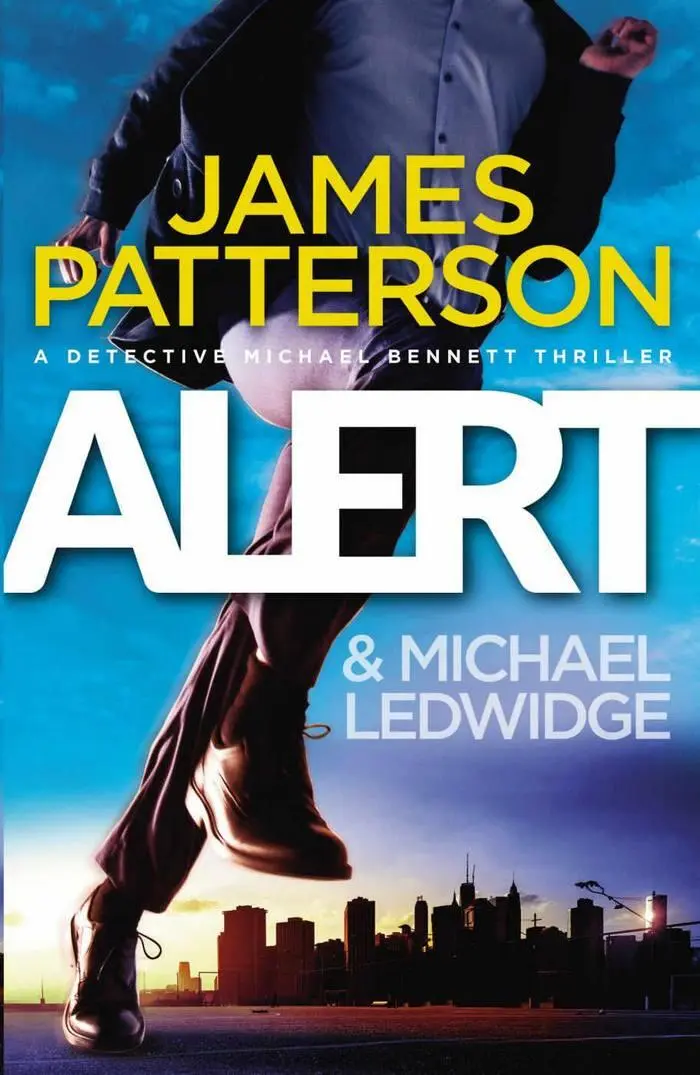
- Название:Alert
- Автор:
- Издательство:Century, Random House
- Жанр:
- Год:2015
- Город:London
- ISBN:978-1-78089-270-2
- Рейтинг книги:4 / 5. Голосов: 1
-
Избранное:Добавить в избранное
- Отзывы:
-
Ваша оценка:
Alert: краткое содержание, описание и аннотация
Предлагаем к чтению аннотацию, описание, краткое содержание или предисловие (зависит от того, что написал сам автор книги «Alert»). Если вы не нашли необходимую информацию о книге — напишите в комментариях, мы постараемся отыскать её.
Detective Michael Bennett is assigned to the case and given the near impossible task of hunting down the shadowy terror group responsible. With troubles at home to contend with, Bennett has never been more at risk, or more alone, fighting the chaos all around him. Then a shocking assassination makes it clear that these inexplicable events are just the prelude to the biggest threat of all.
Now Bennett is racing against the clock to save his beloved city — before the most destructive force he has ever faced tears it apart.
Alert — читать онлайн бесплатно полную книгу (весь текст) целиком
Ниже представлен текст книги, разбитый по страницам. Система сохранения места последней прочитанной страницы, позволяет с удобством читать онлайн бесплатно книгу «Alert», без необходимости каждый раз заново искать на чём Вы остановились. Поставьте закладку, и сможете в любой момент перейти на страницу, на которой закончили чтение.
Интервал:
Закладка:
Chapter 74
I thought about what Dmitri had said as I came out of the interview room into the bull pen. Some of it actually made sense. Anyone who blew up 26 Fed with robots and all the rest of it could easily have framed this guy. A thought that was pissing me off. Were we being played again? Was this loser actually being framed?
I turned to see Emily Parker coming up the precinct-house stairs.
“I just heard, Mike. You have these guys in custody? Do you think it’s them?”
“Maybe, Emily,” I said as Brooklyn and Doyle came out from questioning Anatoly Gavrilov.
“He’s not talking, Mike,” Brooklyn said. “At least not in English, except when he demands a lawyer.”
“What about your guy, Mike?” Doyle said.
“Same,” I said.
“What now?” Doyle said.
“There’s no way we’re letting them go anywhere until we can confirm their whereabouts in the last few weeks. And months and years,” I said. “We need a full background on these guys. Immigration records, educational background, political affiliations, finances, any recent upheavals in their life that might have set them off.”
That’s when my cell phone rang.
“Mike, what the hell is going on? I thought your team grabbed these guys,” Fabretti said when I picked up.
“So did I. What’s up?”
“The bastards just made contact again five minutes ago.”
I closed my eyes. Shit. Not again.
So the Russians we had weren’t involved? What the hell was this?
“They’ve listed their demands, Bennett. I can’t talk about it over the phone. You need to get back to City Hall now.”
Chapter 75
We were coming over the Macombs Dam Bridge near Yankee Stadium when a lot of frenzied chatter started up on the NYPD-band radio.
I turned it up. They were shifting roadblocks, apparently, and rerouting traffic in midtown. Traffic crews were being mobilized in various precincts and, for some unknown reason, they seemed to be shifting all traffic flow to the north.
“I just got a text from my brother-in-law, who works at Midtown South,” said Doyle from the backseat. “You gotta be kidding me! They’re calling in everyone. And I mean everyone. Every Tom, Dick, and Sally in the NYPD is being told to get their ass in to work!”
I looked at Emily anxiously. The only time I’d ever heard of that happening before was on 9/11.
The first thing the Unabomber had said to us rang in my head.
They’re going to destroy New York City — you know that, right?
“Something must be up,” said Arturo, shaking his head in the seat next to Doyle.
“Ya think, Lopez?” Doyle said, rolling his eyes.
We were thrown another curve as we were coming up on City Hall on lower Broadway twenty minutes later. Fabretti called and told us that they’d moved the mayor six blocks northwest, to the Office of Emergency Management’s new crisis center, at the western end of Chambers Street.
It was a crisis, all right. By the time we got to the new twelve-story glass building on the shore of the Hudson, they’d cordoned off the entire block. Past the roadblock, there was pandemonium on the street outside the building, where cops and National Guardsmen and techs were moving boxes and equipment in and out of trucks.
When it was finally our turn at the checkpoint, the tall, middle-aged female sergeant told me in no uncertain terms to turn around, as no one was being allowed in. I actually had to call Fabretti three times before he radioed the gate and told the hard-ass lady cop it was okay.
There was a city park beside the facility filled with dozens of cop and fed cars and SUVs parked haphazardly up on the grass. We left the car in front of an idling Office of Emergency Management bus, and as we got out we looked up and watched as an NYPD Bell helicopter landed on a helipad beside the building.
The chopper dumped out a half dozen people who looked like feds and civilian professor types. Beside the helipad, at a dock, an NYPD Harbor Unit boat was unloading more smart-looking folks. One of them had on a blue Windbreaker with yellow letters on the back.
“NHC?” I said to Emily. “What the heck is the NHC?”
“National Hurricane Center?” she said, staring at me wide-eyed.
“What? We’re going to have a hurricane now? These guys can make it rain, too? That can’t be!” Doyle said.
“All hands on deck and batten down the friggin’ hatches,” Arturo said as the Harbor Unit boat sped past in the water with a roar.
Chapter 76
Inside the sleek, low-ceilinged lobby of the building, it was even worse.
Every political staffer and cop we saw rushing to and fro was looking completely freaked. I stepped aside when a tall balding guy grunted, “Out of the way!” as he hustled past with a stack of printouts. I even tried to wave down Lieutenant Bryce Miller, who appeared at the end of the lobby, but he blew right past me with his phone glued to his ear and a bewildered look on his face.
“Well, at least everybody is keeping it together,” Doyle cracked.
As Bryce Miller left, Fabretti popped out of a stairwell door and rushed over to us.
“Bennett, tell me you got something — anything — on these Russians that you just picked up.”
“Not exactly,” I said. “They’re claiming that they were framed. I’m not sure if I believe them, but their alibis look pretty solid so far. But even if they were framed, we’re definitely getting closer now, Chief. Because the real bombers — whoever they are — had to know the Russians in order to frame them. We just have to find the link. What the heck is going on here? Why is all hell breaking loose?”
“Because it is. C’mon,” he said, leading us down the crowded hallway. “These bastards FedExed a video this time. They’re showing it in the press room.”
“A video?” said Arturo.
“Don’t get your hopes up, buddy. I doubt it’s from Netflix,” Doyle said.
The video was rolling on a screen set up on the stage as we came into the crowded press room.
It showed what looked like stock news footage — people running on a beach as waves crashed at their backs.
As the terrified people ran for their lives, the same strange electronic voice from the first phone call started up like a documentary voice-over.
“During the 2004 tsunami in the Indian Ocean, two hundred thirty thousand people died within minutes as a thirty-foot-high wave struck coastal areas of Indonesia, Sri Lanka, India, Thailand, Somalia, and the Maldives. It was caused by a massive undersea megathrust earthquake. But that isn’t the only way tsunamis are created.
“Welcome to an undisclosed location,” said the voice as the image on the screen shifted.
Up-to-date digital film was showing what looked like some type of cave or mine corridor. A beam of light moved along a rough, brownish-grayish rock wall in a descending, low-ceilinged shaft. When the light and camera panned left, a thin braided-steel cable hanging from rock bolts embedded in the wall came into view. Running alongside it was a red plastic-coated cable of some kind — electrical, maybe.
The camera stopped as the red cable suddenly led into a large rectangle of strange white blocks. It looked like explosives — a charge the size of a kitchen cabinet stuck to the rock wall. The camera shifted to the center of the shaft, where the length of cables running down the seemingly endless corridor revealed charge after charge after charge stuck to the wall.
“This is Semtex,” the voice said as a hand clad in a black work glove patted the explosives. “The red cable is detcord, and the steel cable beside it is for spreading the force of the blast nice and even, to maximize shear. It’s not the most elaborate bomb I have ever made, but it is certainly the biggest. After all, there is an elegance in simplicity sometimes.
Читать дальшеИнтервал:
Закладка:
Похожие книги на «Alert»
Представляем Вашему вниманию похожие книги на «Alert» списком для выбора. Мы отобрали схожую по названию и смыслу литературу в надежде предоставить читателям больше вариантов отыскать новые, интересные, ещё непрочитанные произведения.










Обсуждение, отзывы о книге «Alert» и просто собственные мнения читателей. Оставьте ваши комментарии, напишите, что Вы думаете о произведении, его смысле или главных героях. Укажите что конкретно понравилось, а что нет, и почему Вы так считаете.