Peter Heller - Celine
Здесь есть возможность читать онлайн «Peter Heller - Celine» весь текст электронной книги совершенно бесплатно (целиком полную версию без сокращений). В некоторых случаях можно слушать аудио, скачать через торрент в формате fb2 и присутствует краткое содержание. Город: New York, Год выпуска: 2017, ISBN: 2017, Издательство: Alfred A. Knopf, Жанр: Детектив, Современная проза, на английском языке. Описание произведения, (предисловие) а так же отзывы посетителей доступны на портале библиотеки ЛибКат.
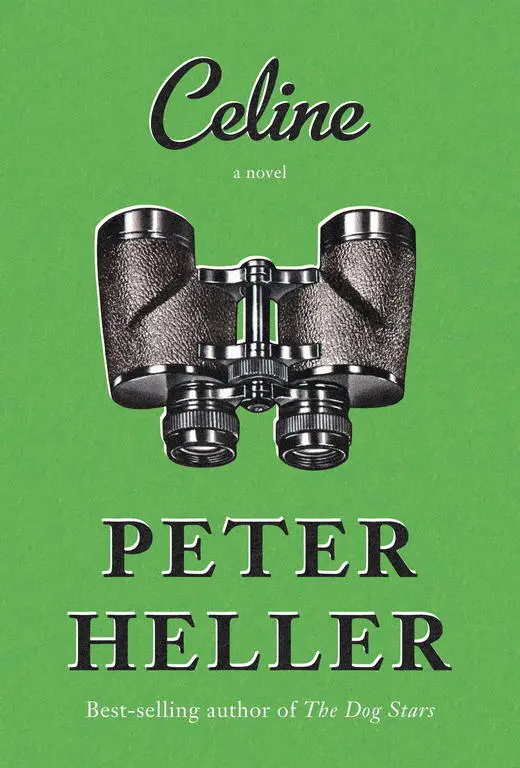
- Название:Celine
- Автор:
- Издательство:Alfred A. Knopf
- Жанр:
- Год:2017
- Город:New York
- ISBN:978-0-451-49389-7
- Рейтинг книги:4 / 5. Голосов: 1
-
Избранное:Добавить в избранное
- Отзывы:
-
Ваша оценка:
Celine: краткое содержание, описание и аннотация
Предлагаем к чтению аннотацию, описание, краткое содержание или предисловие (зависит от того, что написал сам автор книги «Celine»). Если вы не нашли необходимую информацию о книге — напишите в комментариях, мы постараемся отыскать её.
and
, a luminous, masterful novel of suspense—the story of Celine, an elegant, aristocratic private eye who specializes in reuniting families, trying to make amends for a loss in her own past. Working out of her jewel box of an apartment at the base of the Brooklyn Bridge, Celine has made a career of tracking down missing persons, and she has a better record at it than the FBI. But when a young woman, Gabriela, asks for her help, a world of mystery and sorrow opens up. Gabriela’s father was a photographer who went missing on the border of Montana and Wyoming. He was assumed to have died from a grizzly mauling, but his body was never found. Now, as Celine and her partner head to Yellowstone National Park, investigating a trail gone cold, it becomes clear that they are being followed—that this is a case someone desperately wants to keep closed.
Inspired by the life of Heller’s own remarkable mother, a chic and iconoclastic private eye,
is a deeply personal novel, a wildly engrossing story of family, privilege, and childhood loss. Combining the exquisite plotting and gorgeous evocation of nature that have become his hallmarks, Peter Heller gives us his finest work to date.
Celine — читать онлайн бесплатно полную книгу (весь текст) целиком
Ниже представлен текст книги, разбитый по страницам. Система сохранения места последней прочитанной страницы, позволяет с удобством читать онлайн бесплатно книгу «Celine», без необходимости каждый раз заново искать на чём Вы остановились. Поставьте закладку, и сможете в любой момент перейти на страницу, на которой закончили чтение.
Интервал:
Закладка:
Just three more latitudes north made a difference, here, at the end of September. The air pouring through the window was chilly with fall, and she could smell woodsmoke. The aspen were already turning on the higher ridges, slashing the shoulders of the mountains with ocher and gold. Glorious. This time of year. It was good to be out of the city now, good to be rolling, traveling, letting her losses toss in her wake. The cold currents would bring them around again, surely; probably tonight as she slept. And if she woke up to the strange silences of a new town and lay in the dark listening, she would welcome them home, and taste without bitterness the oddly sweet grief of missing those one loves. But now it was wonderful to forget for a few hours, to be traveling, to hear tires hum and thwop on cracks in the pavement, to come to a T in the road above a creek whose meadow was dotted with horses, roans and appaloosas, and smell smoke from the wood of trees that didn’t even grow in the East.
Celine didn’t feel like cooking. Pa offered but she waved him off.
“Let’s have ribs,” she said. “Isn’t that what they eat in Wyoming? And then let’s go find a pullout somewhere to make our new home. I feel a little like a hermit crab.”
“Carrying his house on his back?”
“We had one as a pet, you know. Mimi brought it home from Simmons Point one day in her glasses case. Mummy had a fit.”
“You were all suckers for a stray.”
“He was not at all a stray. I’m sure she plucked him from a very fine family where he’d been quite happy. It made me mad. Kind of a lesson for me in not offering help where it isn’t needed.”
“Did you make her put him back?”
“No. She was irrationally attached. At the end of the summer I abducted him and put him right back in the little tidal pool where she’d found him. I’d been with her that day. Anyway, over the summer he’d been quite spoiled. She dropped all manner of food into the pickle jar. One Friday night she brought him to the movies. She swore to me that he crawled to the edge of the jar and came half out of his shell and watched. Ginger Rogers. She swore on the Bible that he moved all his little legs like he wanted to dance. She said he was an Almond and wasn’t allowed to dance. I finally figured out that she meant Amish. I had learned about them from our nanny and I’d been telling her about how they don’t have zippers, which she thought was hysterical. She changed Bennie’s saltwater twice a day. When it was clear that he was actually growing she found several empty snail shells and dropped them in. He inspected them and found them lacking. I told her that probably they couldn’t have holes. She thought he’d like to have windows in his new house. Finally she found a beautiful glossy symmetrical shell all covered in irregular black spots like a paint pony and with no pinholes. Bennie took one look and moved right in. Years and years later, as an adult, she told me she thought of that as one of her proudest moments. Isn’t that odd?”
Pete half smiled. It was his way of giving vigorous applause. Finally he said, “I always thought of ribs as a Texas specialty. Or Louisiana. Though, come to think of it, Uncle Norwood could barbecue a wicked batch.”
“Were you even listening? Of course you were.”
“His son, Norwood Jr., kept a pet lobster one summer. That one didn’t end so well.”
“Ha!” How could she have doubted him? Of all the things Pete Beveridge was very good at, listening was perhaps the best. “Maine ribs?” she said. “You know, Pete, I’ve been cutting you slack all afternoon.”
“I’m supremely aware.”
This was how they sparred. It was a call and response, a little like the cries red-tailed hawks screed across a valley to their mates: Are you there? Yes, I am here.
They passed the Pronghorn Lodge and came down the hill onto Main Street, a straight mile-long prospect of mostly late nineteenth-century brick buildings with tall front windows and ornate front doors. They passed the Lander Grill and the Noble Hotel and two outdoor sport shops with tents and fleeced-up mannequins in the windows. They passed a Loaf ’N Jug and the Safeway and a gas station turned burger joint and two stores featuring Native American crafts. It was that time of day, or night, that happens only a few weeks a year at a certain hour in certain parts of the American West. The sun sets behind mountains but the cloudless sky that is more than cloudless, it is lens clear—clear as the clearest water—holds the light entirely, holds it in a bowl of pale blue as if reluctant to let it go. The light refines the edges of the ridges to something honed, and the muted colors of the pines on the slopes, the sage-roughened fields, the houses in the valley—the colors pulse with the pleasure of release, as if they know that within the hour they too will rest.
Maybe Celine thought this way because she was exhausted. She was. It had been a long time since she had driven that far in a day. Main Street curved to the right and they passed the Double Ought Motel—which made them laugh as there were probably patrons doing things there they doubly ought not to do—and Celine abruptly threw the wheel over and executed a U-turn that startled Pa and squealed the tires.
“Practice,” she smiled. “Twenty-seven miles per hour. Pretty good. Didn’t even think about rolling.” She grinned. “Never know when we might need one of those. I was thinking we ought to head back to the Lander Grill. They might not have ribs but I bet they serve a mean steak.”

The summer of Bennie the hermit crab was their first full summer at Fishers Island. It was also the summer Celine discovered that fathers don’t always behave like fathers—that they might actually choose to be far away from their daughters.
When she first came to this country she was seven. It was mid-May 1940. The Nazis were steadily marching toward Paris, and the season at Fishers Island would begin in a few weeks, and Baboo’s mother, Gaga, said yes, of course they could come early. Baboo and the girls’ father, Harry, were still very much together, and the plan was that he would hold down the bank’s office in Paris until things got very bad, and then he would come over and join them. If Baboo were to have planned their middle-of-the-night flight from Marseilles she could not have picked a better time. Over the course of their seven-year sojourn in France, they had been back to Baboo’s parents’ villa on Fishers Island twice, both times when Celine was too young to remember. Maybe she did remember. She had been four the last time, and she could, when she closed her eyes, recollect the sounds of seagulls, the rising laughter. She thought she could remember a smell of drying seaweed and ocean and the cold onslaught of waves. A wood balcony with a view of treetops and blue water. Her grandmother Gaga speaking to her in an accent she would later find out was touched with Spanish. That was all. The memories were somehow delicious. Somewhere in the background of all of it was her mother’s laughter, her grandmother’s delight chiming in just after, the two overlapping like waves. Now they were refugees, sort of, and they were returning home for good.
What was perfect about the timing was that the three sisters spoke only French. Mimi was five and precocious, rattling away in a constant soft-spoken soliloquy on the world around her, Bobby was eleven and already willowy and tall for her age and terribly practical—and perhaps a better judge of adult character than even Celine would be—and Celine was Celine; at seven she was quiet and shy and kept her many impressions mostly to herself, humming as she drew figures of birds and horses, and usually only voluble when it came to the subject of animals. Silent Celine would turn into a nonstop, exuberant commentator, for instance, at the Paris Zoo. But. They only spoke French. And so having a summer with Gaga and Grandfather at Fishers would be the perfect acclimatization.
Читать дальшеИнтервал:
Закладка:
Похожие книги на «Celine»
Представляем Вашему вниманию похожие книги на «Celine» списком для выбора. Мы отобрали схожую по названию и смыслу литературу в надежде предоставить читателям больше вариантов отыскать новые, интересные, ещё непрочитанные произведения.












Обсуждение, отзывы о книге «Celine» и просто собственные мнения читателей. Оставьте ваши комментарии, напишите, что Вы думаете о произведении, его смысле или главных героях. Укажите что конкретно понравилось, а что нет, и почему Вы так считаете.