Brian Freeman - Marathon
Здесь есть возможность читать онлайн «Brian Freeman - Marathon» весь текст электронной книги совершенно бесплатно (целиком полную версию без сокращений). В некоторых случаях можно слушать аудио, скачать через торрент в формате fb2 и присутствует краткое содержание. Город: New York, Год выпуска: 2017, ISBN: 2017, Издательство: Quercus, Жанр: Детектив, на английском языке. Описание произведения, (предисловие) а так же отзывы посетителей доступны на портале библиотеки ЛибКат.
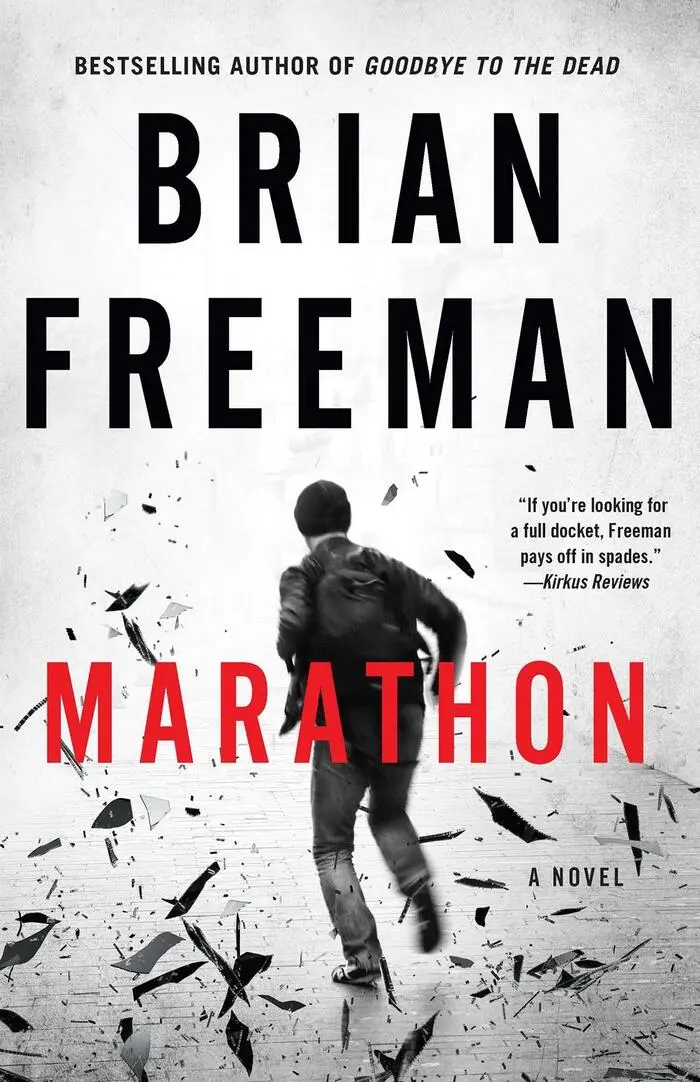
- Название:Marathon
- Автор:
- Издательство:Quercus
- Жанр:
- Год:2017
- Город:New York
- ISBN:978-1-68144-241-9
- Рейтинг книги:4 / 5. Голосов: 1
-
Избранное:Добавить в избранное
- Отзывы:
-
Ваша оценка:
Marathon: краткое содержание, описание и аннотация
Предлагаем к чтению аннотацию, описание, краткое содержание или предисловие (зависит от того, что написал сам автор книги «Marathon»). Если вы не нашли необходимую информацию о книге — напишите в комментариях, мы постараемся отыскать её.
Within minutes, Jonathan Stride, Serena Dial, and Maggie Bei are at work with the FBI to find the terrorists behind the tragedy. As social media feeds a flood of rumors and misinformation, one spectator remembers being jostled by a young man with a backpack not far from the bomb site. He spots a Muslim man in a tourist’s photo of the event and is convinced that this was the man who bumped into him in the crowd — but now the man’s backpack is missing.
When he tweets the photo to the public, the young man, Khan Rashid, becomes the most wanted man in the city. And the manhunt is on.
But are the answers behind the Duluth bombing more complex than anyone realizes? And can Stride, Serena, and Maggie find the truth before more innocent people are killed?
Marathon — читать онлайн бесплатно полную книгу (весь текст) целиком
Ниже представлен текст книги, разбитый по страницам. Система сохранения места последней прочитанной страницы, позволяет с удобством читать онлайн бесплатно книгу «Marathon», без необходимости каждый раз заново искать на чём Вы остановились. Поставьте закладку, и сможете в любой момент перейти на страницу, на которой закончили чтение.
Интервал:
Закладка:
This was his home. He’d grown up here. Gone to school here. Lost his parents here. Lost his first wife, Cindy, here. There was something about loss that bound you to a place forever. Most outsiders saw Duluth only through the lens of its brutal winters, but to Stride, it was also ore boats and icebreakers. It was folk bands at Amazing Grace. It was Bent Paddle ales. It was the Curling Club. It was the famous Christmas lights display at the home of his neighbor Marcia Hales. It was the marathon. He’d seen highs and lows in this city in his fifty years, from recessions to floods, but nothing drove Duluthians away. They were a tough breed.
He made his way to the Duluth Entertainment Convention Center, which the FBI had taken over as a staging ground for evidence collected from Canal Park. The sheer scope of the operation impressed him. If there was one thing the FBI did well, it was to organize and sift through massive amounts of data. He knew he was seeing only the tip of the iceberg here at the convention center. Across the county, hundreds of agents were analyzing photographs, video footage, e-mails, phone records, bank records, call-in tips, website search histories, and social media posts, looking for any kind of connection to the marathon bombing.
Someone had researched how to make a bomb.
Someone had bought the components for a bomb.
Someone had assembled a bomb.
Someone had brought the bomb to the Duluth Outdoor Company and detonated it.
Every one of those steps left electronic footprints, if you knew where to look and how to recognize what you were seeing.
Stride found Special Agent Maloney in an office borrowed from the DECC director, surrounded by laptops and whiteboards. The agent hadn’t slept in twenty-four hours, but he looked none the worse for wear. His suit showed no wrinkles. His tie was perfectly knotted and snug against his neck. Stride was tall, but Maloney was an inch taller, and he was thin to the point of being gaunt.
Maloney wasn’t a friend, but their paths had crossed regularly on investigations over the past twenty years, since Stride had been a young Duluth detective.
“I was just over at the Dawn Basch press conference,” he told Maloney.
“Yes, I saw it on CNN. Don’t worry, I’ve already got Agent Durkin putting to bed this Neighborhood Watch concept.”
“Good,” Stride replied.
“We’re asking people to stay out of the downtown area today. The mayor and governor are talking about whether to ask businesses to close again tomorrow, depending on how the investigation unfolds.”
“Do we have any more details on the device?” Stride asked.
“Some. Sifting through the remains of hundreds of shredded backpacks hasn’t made the process easier, but the team thinks the source backpack was navy blue. We also know that the triggering mechanism was a cell phone. So the detonation could have been done by radio signal at close range, or the bomber could have called it in and watched the thing blow up on TV.”
“In other words, we can’t be sure he was even in Canal Park?” Stride asked.
“Yes, except someone had to be there to place the backpack itself,” Maloney replied. “Durkin asked one of your officers to talk to the owner of the store to see if we can find out more about how and when the placement could have been made.”
“Yes, Serena and I know Drew Olson, who runs the camping store. He’ll help if he can.” Stride added, “About Agent Durkin...”
One of Maloney’s trimmed gray eyebrows twitched, which was his only hint of surprise. “Is there a problem?”
“I already have one bull in my china shop, thanks to Dawn Basch,” Stride said. “I don’t need two.”
“I know that Durkin speaks her mind. She can be difficult. If it makes you feel better, she was complaining about you, too. She wasn’t happy about being excluded from the meeting with your source.”
“It’s a delicate relationship.”
“Understood. You made the right call. Durkin is many things, but delicate isn’t one of them. However, she knows Duluth, and she’s one of my brightest agents, especially when it comes to reading people.”
“She seems to have something to prove on this case,” Stride said.
“Yes, she does. You know what happened to her, and you know I had her out in the cold for a year. This investigation is her way back in, but if she screws it up, she’ll be behind a desk for the rest of her career. She knows the stakes. Candidly, I hope she learns something from you and your team.”
“Just so we’re on the same page,” Stride said.
“We are.”
“What about the name I gave her?” Stride asked. “Malik Noon.”
Maloney smoothed his mustache and plucked a single sheet of paper from the encyclopedia-size pile of materials stacked on the surface of the desk. He knew exactly where everything was. “Noon is twenty-two years old. Engineering student at UMD. Born in Pakistan, parents live in Detroit. Mom is a radiologist; Dad is a thoracic surgeon. Smart kid, and no shortage of money. Has he shown up on your radar screen before now?”
“No.”
“Well, he’s not a fan of Dawn Basch,” Maloney went on. He grabbed another file and laid out three photographs one after another. They’d been taken at No Exceptions rallies in Bayfront Park. “Our boys found him here and here and here ,” he said, jabbing a finger at faces in the photos.
Stride studied the smiling picture of Malik Noon in his university student ID, then shifted his attention to the photos of Noon taken at the Dawn Basch speeches. He saw no smile, no hint of the easygoing, Americanized student attending the University of Minnesota at Duluth. The man at the rallies had an expression twisted darkly into hatred. His mouth was open as he shouted. He carried the same sign in each of the photos.
It read: BREAKING DAWN.
The image on the sign showed a digitally altered photograph of Dawn Basch with blood pouring out of knife and gunshot wounds in her head and body.
“Have you been able to find him?” Stride asked.
“No. In fact, I’d like you to talk to anyone who knew Malik Noon at UMD, and do it fast.”
“Understood.”
“And Stride?” Maloney went on. “This time, take Durkin with you.”
12
Serena watched Drew Olson push his eight-month-old son in a swing tied to a huge oak tree in his backyard. She knew a lot about the baby. His name was Michael, taken from the name of the baby’s grandmother, which was Michaela. He had thick black hair and a big, easy smile that never went away. He had a birthmark on his thigh in the shape of Florida. He’d been born at 4:07 a.m. on October 14 at St. Mary’s, with Jonny and her in the hospital room.
He was Cat’s baby. Drew and Krista Olson had adopted him.
Serena had met Drew almost a year earlier, when she’d gone into the Duluth Outdoor Company store in Canal Park to find out what she needed to begin training for the marathon. She’d liked him immediately. He was thirty years old and the kind of man who found twenty-five hours in every twenty-four-hour day. He and Krista ran. Kayaked. Skied. Volunteered at food shelves. Grew their own rhubarb and tomatoes. And all of that on top of two demanding full-time jobs.
They were busy people who’d wanted to add a child to their busy lives, but none of their efforts to get pregnant had been successful. When they found out about Cat, they’d made a tear-filled pitch to be the ones to adopt her baby. It was Cat’s first decision as a mother, and it had turned out to be a good one.
“This little guy is about the only thing that’s kept me going since yesterday,” Drew told Serena. “When something like this happens, you realize what you need to hold on to.”
Читать дальшеИнтервал:
Закладка:
Похожие книги на «Marathon»
Представляем Вашему вниманию похожие книги на «Marathon» списком для выбора. Мы отобрали схожую по названию и смыслу литературу в надежде предоставить читателям больше вариантов отыскать новые, интересные, ещё непрочитанные произведения.








Обсуждение, отзывы о книге «Marathon» и просто собственные мнения читателей. Оставьте ваши комментарии, напишите, что Вы думаете о произведении, его смысле или главных героях. Укажите что конкретно понравилось, а что нет, и почему Вы так считаете.