Махи Бинбин - Marrakech Noir
Здесь есть возможность читать онлайн «Махи Бинбин - Marrakech Noir» весь текст электронной книги совершенно бесплатно (целиком полную версию без сокращений). В некоторых случаях можно слушать аудио, скачать через торрент в формате fb2 и присутствует краткое содержание. Город: New York, Год выпуска: 2018, ISBN: 2018, Издательство: Akashic Books, Жанр: Детектив, на английском языке. Описание произведения, (предисловие) а так же отзывы посетителей доступны на портале библиотеки ЛибКат.
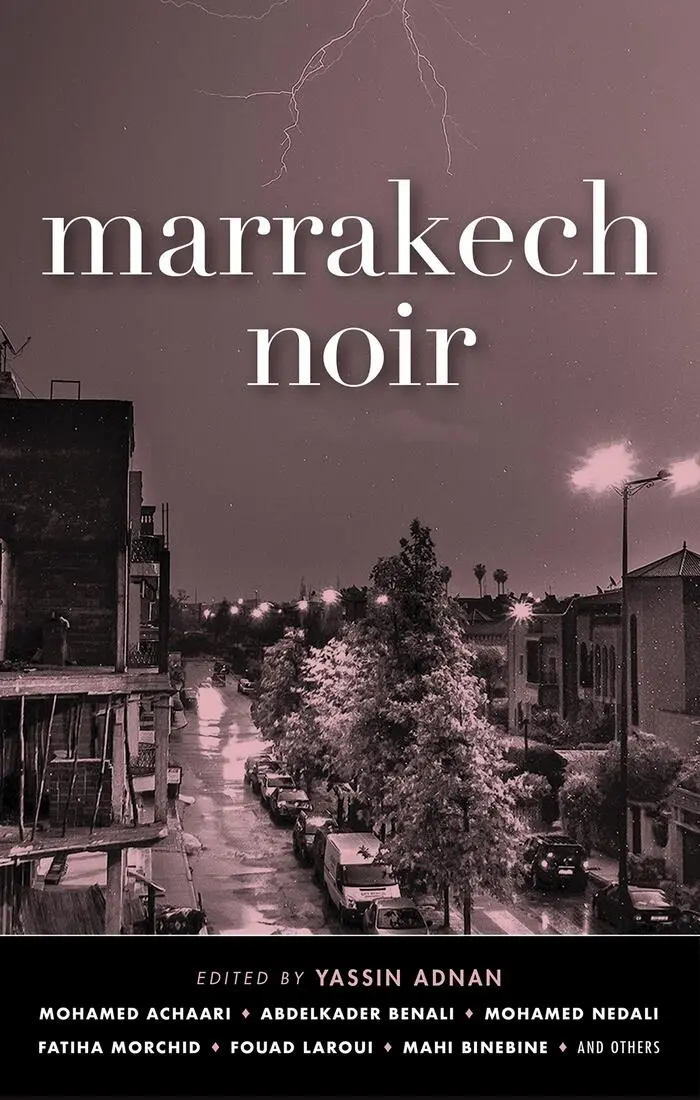
- Название:Marrakech Noir
- Автор:
- Издательство:Akashic Books
- Жанр:
- Год:2018
- Город:New York
- ISBN:978-1-61775-473-9
- Рейтинг книги:5 / 5. Голосов: 1
-
Избранное:Добавить в избранное
- Отзывы:
-
Ваша оценка:
Marrakech Noir: краткое содержание, описание и аннотация
Предлагаем к чтению аннотацию, описание, краткое содержание или предисловие (зависит от того, что написал сам автор книги «Marrakech Noir»). Если вы не нашли необходимую информацию о книге — напишите в комментариях, мы постараемся отыскать её.
Marrakech Noir — читать онлайн бесплатно полную книгу (весь текст) целиком
Ниже представлен текст книги, разбитый по страницам. Система сохранения места последней прочитанной страницы, позволяет с удобством читать онлайн бесплатно книгу «Marrakech Noir», без необходимости каждый раз заново искать на чём Вы остановились. Поставьте закладку, и сможете в любой момент перейти на страницу, на которой закончили чтение.
Интервал:
Закладка:
The pasha was heated with rage like never before, not even on that day when Anais had told him: You’re just a beast. My friend knows better than you!
And what happened had happened.
Passion toppled the warrior from atop his steed and dumped him into a hellish castration from which there was no escape. The pasha was drinking alone, naked in the palace bathhouse, when he spread his huge hand over the wall where the beautiful woman had slept.
People in Jemaa el-Fnaa Square despised spicy food. They listened in confusion to a new storyteller, who used exaggerated gestures to tell the remarkable tale of Ibn Rushd. All the while, they were thinking about the mummy that restorers had removed from the palace bathhouse. Amid its shrouds, the archaeologists had found no trace of the love story that the pasha forgot to bury there.
Translated from Arabic by Roger Allen
Part II
The Red and the Black
A Way to Mecca
by Hanane Derkaoui
Riad Zitoun
It was five a.m. in the old neighborhood of Riad Zitoun, in the ancient city. The first Friday in the month of June. The voice of the muezzin chanted the call to prayer; two young men from the neighborhood were on their way to the mosque, when they encountered Hmad returning late from work. Their neighborhood was small, but Hmad didn’t speak to anyone. All that anyone in the neighborhood knew about him was that he had moved from an Amazigh village close to Ouarzazate, and that he worked as a waiter for a Christian in one of the ritzy neighborhoods in Gueliz.
“Listen, Ali, this serving job of Hmad the Chelh’s is really weird, ’cause every day he comes back at five in the morning.”
“It’s true, Brother Ibrahim, every morning we run into him when we’re on our way to dawn prayer.”
“But we don’t go to the dawn prayer every morning,” Ibrahim said.
“I know, I just mean that we see him whenever we do go to morning prayer.”
The two young men were late for the prayer, so they hurried their steps toward the mosque. Since their vigilance in matters of faith was only recently acquired, they were earnestly trying to project the appearance of being genuine believers who go to the dawn prayer every day, and who sit afterward with the faqih, debating aspects of the hadith with him, and asking innumerable religious questions. After the prayer, they were sitting far from the mosque smoking the only cigarette they had left after going completely broke.
“Why don’t we follow Hmad?” Ali suggested. “We could con him and get some money out of him.”
“Didn’t we say that we’ve repented getting money like that?” Ibrahim replied.
“We’ve been diligent about going to prayer for a month now and nothing has changed; besides, we’ve squandered the last of our money.”
“But we’ve repented, my friend,” Ibrahim repeated. “Stealing is forbidden. The faqih said that God will open the way for us and guide our steps.”
“God guides the steps of those who are educated and who have a university degree, or at the very least those who have a trade. As for us, what will He guide our steps toward?” Ali lamented. “There’s no diploma in picking safes or five-finger discounts... we have no experience except for stealing.”
Back before the tourist police proliferated, Ali and Ibrahim had worked as unlicensed tour guides. The license that allowed you to practice the trade with your head held high was only issued to people who paid a bribe at the new Institute of Tourist Guiding. This option was financially out of reach for them. Undeterred, they had wandered around Jemaa el-Fnaa and other historical monuments ambushing tourists. However, the tourist police kept a close eye out for them, harassing them and their peers. They were each arrested as many as forty times over the course of five years. They ended up abandoning the tourist trade and entering into the world of delinquency through its wide and welcoming door, by working on their burglary skills and organizing a few petty fraud operations.
Two months ago, they had both been overcome by a sudden religious impulse that shook their world. Their life was racked with turmoil, and they wavered in an ambiguous place between following the right path and straying from it. For they truly did want to be sincere, submissive Muslims like the ones the imam described. However, in the moment of temptation itself, they knew only too intimately about the bottomless depths of the city: its licentious underworlds, prostitutes, nightlife, and hashish establishments. But the explosive change came after they had robbed the house of an old lady in Sidi Youssef Ben Ali, and the old woman had said to them: “Take everything in the house and just leave me alive.”
Ali was the first one to be affected by the incident. He tried to talk to his friend about it while they were returning with the day’s loot on the back of a motorcycle: five hundred dirhams and a gold signet ring. When they got back to their room, Ali wanted to talk to his friend about this lady who reminded him of his grandmother. She had raised him in a village called Smimou near Essaouira before he left for Marrakech fifteen years ago. After splitting the loot, Ali had told Ibrahim with pain in his voice: “That lady really broke my heart. I don’t want to do this to old people anymore.”
“But who will we rob if not the old and weak? That’s the nature of the beast. We don’t have a choice,” Ibrahim had reminded him.
“What if we switched professions, turned to God in repentance, and became like other people? What do you think about us going to pray with the congregation?”
“Why not? This might be another way to stay clean and to find some peace of mind,” Ibrahim had replied, having felt the same shame as Ali.
Going to prayer in the mosque was an idea that had never enticed them before this. It was an entirely unexpected proposition. The young men thought that only those who had a lawful profession could enter the mosque, and because of this, they’d always kept away from the kingdom of God and the world of the faithful.
They had learned how to perform the prayer and the ritual ablution during their primary school lessons, and they had not forgotten. Ali and Ibrahim had not learned this at home because their families were poor Amazigh speakers in the Essaouira province who were not proficient in Arabic.
Ibrahim and Ali started to frequent the mosque, warily and curiously at first, but eventually they began to enjoy the Friday sermon and to delight especially in the ambiance of the dawn prayer. However, throughout the rest of the day, they weren’t seriously tempted by the mosque. Dawn prayer with the congregation was sufficient to purify their hearts; they had not committed any burglary or break-in for more than a month now. But what could they do for work? The money had run out and they hadn’t found any respectable employment yet. In truth, they had not looked for any real work. With the onset of faith, an unaccustomed indolence descended upon them. During the nearly two months of visiting the mosque twice a day, they hadn’t much felt the desire for adrenaline that had driven them to their risky way of earning a living. Faith had succeeded in quieting that impulse, but had not eradicated it completely. Now they felt the craving for adrenaline return while they watched Hmad close the window of his room.
“What exactly does he do for work?” Ali wondered.
“Why do you want to know?”
“Maybe we can get some money from him, or from the Christian he works for,” Ali said. “Maybe we can find something to blackmail him with? You know, Christians are easy pickings.”
“That seems complicated,” Ibrahim said. “We can’t even go into stores anymore. We’re complete outcasts in this city. All that’s left to us is old people in remote neighborhoods. We jump them, scare them a little with the knife, and take our share.”
Читать дальшеИнтервал:
Закладка:
Похожие книги на «Marrakech Noir»
Представляем Вашему вниманию похожие книги на «Marrakech Noir» списком для выбора. Мы отобрали схожую по названию и смыслу литературу в надежде предоставить читателям больше вариантов отыскать новые, интересные, ещё непрочитанные произведения.





Обсуждение, отзывы о книге «Marrakech Noir» и просто собственные мнения читателей. Оставьте ваши комментарии, напишите, что Вы думаете о произведении, его смысле или главных героях. Укажите что конкретно понравилось, а что нет, и почему Вы так считаете.