Elizabeth George - Just One Evil Act
Здесь есть возможность читать онлайн «Elizabeth George - Just One Evil Act» весь текст электронной книги совершенно бесплатно (целиком полную версию без сокращений). В некоторых случаях можно слушать аудио, скачать через торрент в формате fb2 и присутствует краткое содержание. Год выпуска: 2013, ISBN: 2013, Издательство: Dutton, Жанр: Детектив, на английском языке. Описание произведения, (предисловие) а так же отзывы посетителей доступны на портале библиотеки ЛибКат.
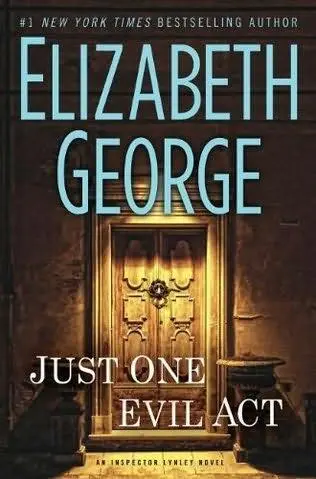
- Название:Just One Evil Act
- Автор:
- Издательство:Dutton
- Жанр:
- Год:2013
- ISBN:978-0-698-13828-5
- Рейтинг книги:5 / 5. Голосов: 1
-
Избранное:Добавить в избранное
- Отзывы:
-
Ваша оценка:
Just One Evil Act: краткое содержание, описание и аннотация
Предлагаем к чтению аннотацию, описание, краткое содержание или предисловие (зависит от того, что написал сам автор книги «Just One Evil Act»). Если вы не нашли необходимую информацию о книге — напишите в комментариях, мы постараемся отыскать её.
bestselling author Elizabeth George offers the latest in her Inspector Lynley series: a gripping child-in-danger story featuring fan favorite Barbara Havers. Detective Sergeant Barbara Havers is at a loss: The daughter of her friend Taymullah Azhar has been taken by her mother, and Barbara can't really help—Azhar had never married Angelina, and his name isn't on Hadiyyah's, their daughter's, birth certificate. He has no legal claim. Azhar and Barbara hire a private detective, but the trail goes cold.
Azhar is just beginning to accept his soul-crushing loss when Angelina reappears with shocking news: Hadiyyah is missing, kidnapped from an Italian marketplace. The Italian police are investigating, and the Yard won't get involved, until Barbara takes matters into her own hands. As she attempts to navigate the complicated waters of doing anything for the case against her superior's orders, her partner, Inspector Thomas Lynley, is dispatched to Italy as the liaison between the Italian police and Hadiyyah's distraught parents.
In time, both Barbara and Lynley discover that the case is far more complex than just a kidnapping, revealing secrets about Angelina; her new lover, Lorenzo; and even Azhar—secrets Barbara may not be willing to accept. With both her job and the life of a little girl on the line, Barbara must decide what matters most and how far she's willing to go to protect it.
Just One Evil Act — читать онлайн бесплатно полную книгу (весь текст) целиком
Ниже представлен текст книги, разбитый по страницам. Система сохранения места последней прочитанной страницы, позволяет с удобством читать онлайн бесплатно книгу «Just One Evil Act», без необходимости каждый раз заново искать на чём Вы остановились. Поставьте закладку, и сможете в любой момент перейти на страницу, на которой закончили чтение.
Интервал:
Закладка:
There was virtually nothing nearby, as they found when they reached the area, just a cluster of houses perhaps two kilometres in advance of the turnoff. At one time long ago these houses would have served the needs of whoever had lived within the great villa. Now they were the shuttered vacation homes of foreigners and of wealthy Italians who came to the mountains from cities like Milano and Bologna, to escape urban bustle and summer heat. It was early in the season yet, so the likelihood of anyone within the houses seeing Roberto Squali pass by several weeks ago with a child in his car was too remote to be considered. Wisdom would have dictated that Squali make his move with the child in midafternoon anyway. At that time of day, no one stirred in a place like this. People moved from pranzo directly to letto for a nap. They would have noticed nothing, even if they’d been at their houses this time of year.
When they reached the lane that led to Villa Rivelli , Salvatore nearly missed it altogether, so sheltered was it by looming oaks and Aleppo pines and so untravelled it appeared. Only a small wooden sign topped with a cross saved him from passing it by altogether. It was carved with V Rivelli upon it, but the letters were worn and the wood was lichenous.
The lane was narrow, cluttered with the woodland debris of a hundred winters. It had never been paved, so they lurched their way down it. They came to a great iron gate that stood open far enough to allow a car’s passage. When he’d eased the car past the ornate wrought iron, he followed the driveway to the left, along a tall hedge from which birds burst, past a few decrepit outbuildings, a huge woodpile, and a ruspa that was more rust than steel.
The silence was complete. As the lane climbed upward, nothing broke into the stillness. So it was with some surprise that Salvatore turned into a car’s-width opening perhaps a kilometre from the road below and saw, beyond the hedge, a great lawn at the other side of which stood the baroque beauty of the Villa Rivelli. Aside from the fact that it was completely abandoned in appearance, it didn’t seem like a dwelling for an order of cloistered nuns. For the front of the building was fashioned with tall niches in which marble statues stood, and a single glance at them told the tale of the identities, which had more to do with Roman gods and goddesses than with saints of the Roman Catholic Church. But these were not what surprised Salvatore. It was the presence of three cars from the carabinieri that caused him to glance at Lynley and to worry that they might be too late.
The arrival of police at a cloistered convent was not a simple matter of knocking on the door and gaining admittance. The women within did not see visitors. Chances were better than good that if the carabinieri were present, it was because the carabinieri had been summoned. It was with this in mind that Salvatore and Lynley approached two armed officers who were gazing at them expressionlessly through very dark glasses.
It was, Salvatore discovered, much as he’d thought. A telephone call from the convent had brought them to this remote villa. Captain Mirenda had been admitted, and she was presumably speaking to whoever had made the call. As for the rest of them . . . ? They were having a look round the grounds. It was a beautiful spot on a beautiful day, eh? Such a pity that the ladies who lived here never got to enjoy what it had to offer. Giardini, fontane, stagni, un bosco . . . The officer shook his head at the waste of such pleasures.
“ Dov’è l’ingresso? ” Salvatore asked him. For it didn’t seem conceivable that access to the convent was gained by merely knocking upon the two great front doors. In this, he was right. The superior officer of the two carabinieri had gone round the side of the building. Salvatore and Lynley did the same. They found yet another officer stationed outside of a plain door set down a few steps. To him, they showed their identification.
The police were notoriously territorial in this part of the world. Because there were so many divisions of them, turf wars were common when it came to an investigation. Often the first branch of polizia on the scene was the branch that wrested control of an investigation, and this was particularly the case when it came to the polizia di stato and the carabinieri. But things were much different on this day, Salvatore found. After examining their identification and gazing at them both as if their faces held secret information for him, the officer stepped away from the door. When it came to entering the convent, they could suit themselves.
They went in through a vast kitchen, which was completely deserted. They climbed a stone stairway, their footsteps echoing between the plastered walls. The stairway took them into a corridor, which was also deserted. This they followed and finally arrived in a chapel, where a candle lit for the Sacrament was the first indication of life in the building since someone from within would have had to light it unless Captain Mirenda had done the honours.
Four separate corridors led from the chapel, each of them at a corner of the room and one of which they’d just travelled. Salvatore was trying to decide which of the remaining three might lead them to a human presence, when he heard the sound of women’s voices, just a quiet murmur in what otherwise would have been a place of silence and contemplation. Footsteps accompanied these voices. Someone said, “ Certo, certo. Non si preoccupi . Ha fatto bene .”
Two women emerged from behind a wooden lattice that served to cover the doorway of the corridor nearest the chapel’s altar. One of them wore the habit of a Dominican nun. The other wore the uniform of a carabinieri captain. The nun halted abruptly, the first of them to catch sight of the two men—both in the clothing of civilians—standing in the convent chapel. She looked behind her for a moment, as if to retreat to safety behind the lattice, and Captain Mirenda spoke sharply.
“ Chi sono? ” This was, she told them, a cloistered convent. How had they gained entrance?
Salvatore identified himself and explained who Lynley was. They were there, he said, on the matter of the English girl who had vanished from Lucca, and he felt confident that Captain Mirenda was aware of that case.
She was, of course. How could she be otherwise since, unlike the nun who’d stepped into the shadows, she did not live in a protected world. But it seemed that she had either been summoned to the convent on another matter entirely, or she had not connected the reason she’d been summoned to anything that had gone before this moment, especially in a mercato in Lucca.
The nun murmured something. In the shadows, her face was hidden.
Salvatore explained that he and his companion were going to have to speak to the Mother Superior. He went on to say that he knew it was irregular for any of the nuns to meet with an outsider—particularly if that outsider was male—but there was an urgent need since a direct relationship existed between a young woman of the name of Domenica Medici and a man who had taken the little girl from Lucca.
Captain Mirenda glanced at the other woman. She said, “ Che cosa vorrebbe fare? ”
Salvatore wanted to tell her that it was not a matter of what the nun wished to do at this point. This was a police matter, and the traditions of the cloister were going to have to be set aside. Where, he enquired, was Domenica Medici? Her parents had indicated she lived in this place. Roberto Squali had died on his way here. Evidence in his car proved the child had been a passenger at some point.
Captain Mirenda told them to wait in the chapel. Salvatore didn’t like this, but he decided a compromise was in order. The carabinieri had sent a woman for obvious reasons, and if it was down to her to open doors in this place, he could live with that.
Читать дальшеИнтервал:
Закладка:
Похожие книги на «Just One Evil Act»
Представляем Вашему вниманию похожие книги на «Just One Evil Act» списком для выбора. Мы отобрали схожую по названию и смыслу литературу в надежде предоставить читателям больше вариантов отыскать новые, интересные, ещё непрочитанные произведения.












Обсуждение, отзывы о книге «Just One Evil Act» и просто собственные мнения читателей. Оставьте ваши комментарии, напишите, что Вы думаете о произведении, его смысле или главных героях. Укажите что конкретно понравилось, а что нет, и почему Вы так считаете.