Джонатан Келлерман - Serpentine
Здесь есть возможность читать онлайн «Джонатан Келлерман - Serpentine» весь текст электронной книги совершенно бесплатно (целиком полную версию без сокращений). В некоторых случаях можно слушать аудио, скачать через торрент в формате fb2 и присутствует краткое содержание. Год выпуска: 2021, Издательство: Random House Publishing Group, Жанр: det_all, на английском языке. Описание произведения, (предисловие) а так же отзывы посетителей доступны на портале библиотеки ЛибКат.
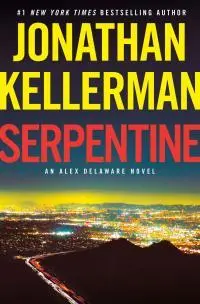
- Название:Serpentine
- Автор:
- Издательство:Random House Publishing Group
- Жанр:
- Год:2021
- ISBN:нет данных
- Рейтинг книги:4 / 5. Голосов: 1
-
Избранное:Добавить в избранное
- Отзывы:
-
Ваша оценка:
Serpentine: краткое содержание, описание и аннотация
Предлагаем к чтению аннотацию, описание, краткое содержание или предисловие (зависит от того, что написал сам автор книги «Serpentine»). Если вы не нашли необходимую информацию о книге — напишите в комментариях, мы постараемся отыскать её.
LAPD homicide lieutenant Milo Sturgis is a master detective. He has a near-perfect solve rate and he's written his own rulebook. Some of those successes—the toughest ones—have involved his best friend, the brilliant psychologist Alex Delaware. But Milo doesn't call Alex in unless cases are "different."
This murder warrants an immediate call: Milo's independence has been compromised as never before, as the department pressures him to cater to the demands of a mogul. A hard-to-fathom, mega-rich young woman obsessed with reopening the coldest of cases: the decades-old death of the mother she never knew.
The facts describe a likely loser: a mysterious woman found with a bullet in her head in a torched Cadillac that has overturned on infamously treacherous Mulholland Drive. No physical evidence, no witnesses, no apparent motive. And a slew of detectives have already worked the case and failed. But as Delaware and Sturgis begin digging, the mist begins to lift. Too many coincidences. Facts turn out to be anything but. And as they soon discover, very real threats lurking in the present.
This is Delaware/Sturgis at their best: traversing the beautiful but forbidding place known as Los Angeles and exhuming the past in order to bring a vicious killer to justice.
Serpentine — читать онлайн бесплатно полную книгу (весь текст) целиком
Ниже представлен текст книги, разбитый по страницам. Система сохранения места последней прочитанной страницы, позволяет с удобством читать онлайн бесплатно книгу «Serpentine», без необходимости каждый раз заново искать на чём Вы остановились. Поставьте закладку, и сможете в любой момент перейти на страницу, на которой закончили чтение.
Интервал:
Закладка:
“The film business.”
“Bingo. Like that movie, the Steve Martin one—guy’s brilliant, plays the banjo. Cute blonde gets off the bus and says, ‘Where do I go to become a star?’ Hilarious but not far from the truth. A girl’s got good looks, not too much in the brainpan, she comes here, ends up broke. Then what? You need me to spell it out.”
“Prostitution.”
“Literally or conceptually,” said Hesse. “The premise is the same: I can sell my looks so why not? During The Azalea’s heyday, it was free love, anyway, so you had social norms on your side. Even with that, females giving it away like crazy, there was a pecking order. You want a hippie chick with unshaved legs studying for a Ph.D., fine but that is not to everyone’s taste. Hairy legs wouldn’t make it through the door of The Azalea.”
Hesse chuckled. “Unless you’re a guy who likes guys and thinks the bear thing is the thing.” Peering at Milo’s trousers and winking. “So, sure, some of the poor dears ended up as call girls. Or just plain hooking on the street if they got addicted to hard drugs. But there were also plenty of ambiguous situations. Cutie goes home with a rich guy, spends a few days, he gives her cash, takes her shopping, she spends a few more nights, even weeks. Some of them even got married. Plenty of women who call themselves socialites started off that way.”
He pointed to Des Barres’s goatee. “He looks like some cartoon devil, no? No Adonis, that’s for sure, but with three cuties hanging on to him, his money made him feel gorgeous. He do something to Corn-Fed?”
“No indication of that.”
“Then what?”
“It’s part of another case, Heck. Complicated. Sorry.”
“Can’t argue with complicated, complicated always wins.” Hesse returned the photo. “That’s all I can tell you, let me get you those phone numbers for T.A.’ing.”
Milo said, “Do you recall if the detective who asked about her was L.A. or Beverly Hills?”
Head shake. “If he said, it didn’t register. All I wanted was to get myself back upstairs. I can tell you what he looked like but all these years, that’s not going to help you.”
“Tell us anyway.”
“The reason,” said Hesse, “that I remember is a thing about me. Faces stay in here forever”—tapping his forehead. “One of my granddaughters is studying psychology, she said I’m a super-recognizer.”
Smiling proudly.
“Also, this face wasn’t an average face. You remember The Munsters ?”
“Sure.”
“The guy who played Herman, Fred Gwynne. Before that, he was in Car 54, you’re probably too young to recall that one. Take away the Frankenstein makeup from Herman Munster, and picture the face.”
I said, “Long, narrow.”
“With big lips, droopy eyes—like a tired horse. Which isn’t to say Gwynne wasn’t a great actor. And smart, a class act. I met him at a Harvard thing, he was Adams House, I was Cabot. He could sing, draw, very talented. Limited by his size and that face, but still, he delivered some great performances—anyway, the cop who showed up looked like Fred. Not as tall, Fred had to be six-five, six, this guy was probably six…two. But he could’ve been Gwynne’s less impressive brother. Once you took away the mustache.”
Ball-bearing-sized lumps rolled up and down Milo’s jaw, tenting and releasing the skin. His hands had tightened.
Heck Hesse said, “Not the classiest thing, the mustache, but guys were doing that back then. Doing all sorts of tonsorial stuff—muttonchops, that never helps anyone aesthetically. I saw this guy and was surprised the cops allowed it.”
He traced a horizontal line over his upper lip, used both hands to drop at right angles down to his chin.
I said, “Fu Manchu.”
“Nah, Fu was wispy—you see the movie? This thing was geometric. Like a croquet wicket. Dark brown wicket. That sums it up perfectly: Freddy Gwynne with a croquet wicket mustache. Only other thing I remember was he wore a cheap suit. Can’t tell you what color ’cause it’s not a face, only faces stay in here.”
Milo said, “When did this happen?”
Hesse gave a start. His eyes fluttered. “Not so good with time…long time ago…thirty-five years? More?” He slumped.
I said, “With your visual recognition skills, you’d know if you saw the missing woman at the club.”
He perked up. “I would indeed and I didn’t. All I saw was a photo the cop showed me. Was she ever at The Azalea? The cop came around so I’m assuming yes. Or maybe he was just fishing around. You guys do that, I know from working with T.A.’s.”
Quick sidelong glance at the disco ball. “You need to bear in mind that back then I was always upstairs, would go straight up like there was a lit fuse in my keister. Which is what I probably did when the cop asked someone else.”
Louder chuckle. “That was me, back then. Hiding from reality. Nowadays, I’m comfortable. Unfortunately, I’m also ancient.”
—
Milo thanked him, declined the offer of more coffee and “a little snack.” But we stuck around for a few more minutes, serving as a patient audience for Heck Hesse’s tour of the library and capsule descriptions of his favorite books. (“Oscar Wilde, and not because of that. Guy was a dynamite writer.”) Then a detour into one of the other ambiguously functioned great rooms where he showed us three Emmys. All for forgettable shows.
When we left, the four maids had split into two pairs flanking the door. They stood by as Hesse took his time working the knob.
“I like to do as much for myself while I can,” he said. “Who knows how long that’ll last.”
I said, “You look in great shape.”
“Appearances are deceiving.”
CHAPTER 27
Hesse stood in the doorway as we walked to the unmarked. Before we reached the car, he shouted, “I bought plenty of those as props. Afterward we gave ’em to the stuntmen, they liked to hot-rod ’em.”
We laughed. Hesse beamed.
Milo said, “Good deed for the day,” as we got in.
The lumps in his jaw had receded but his shoulders were bunched and his hands were restless. He sped south toward Sunset.
I said, “You know the Missing Persons D.”
Pulling over just short of the boulevard, he produced his phone, scrolled for a while, handed it over.
LAPD personnel headshot of a long-faced man with a gray, wicket-shaped mustache. The resemblance to Fred Gwynne more than passing.
Below the image: P. J. Seeger, Detective II.
I said, “Before Homicide, he worked Missing Persons.”
“I’ll take that bet. You thinking what I am?”
“Seeger worked the missing girl and connected her to Des Barres but couldn’t take it further. Years later, he’s in Homicide and gets handed Dorothy’s murder as a low-priority cold case. He began the same way Galoway did, with the Cadillac, and connected it to Des Barres. Now he’s wondering about multiple murders at the mansion but too much time has lapsed to make any progress.”
“Exactly. Dorothy was handed to him as really warm beer, same as with Galoway. In Galoway’s case because he was a rookie and his captain didn’t like him. In Seeger’s case maybe his rep as a drudge was the reason. Whatever the case, without results, the bosses wouldn’t have allowed him much time to poke around.”
I said, “What if both cases stuck with Seeger and after he retired, he began digging around on his own? Asked the wrong questions of the wrong people and ended up run off the road on his Harley. That could explain the time lag between working Dorothy and his death.”
He took his time considering that. “Lemme have the phone back.”
Читать дальшеИнтервал:
Закладка:
Похожие книги на «Serpentine»
Представляем Вашему вниманию похожие книги на «Serpentine» списком для выбора. Мы отобрали схожую по названию и смыслу литературу в надежде предоставить читателям больше вариантов отыскать новые, интересные, ещё непрочитанные произведения.









Обсуждение, отзывы о книге «Serpentine» и просто собственные мнения читателей. Оставьте ваши комментарии, напишите, что Вы думаете о произведении, его смысле или главных героях. Укажите что конкретно понравилось, а что нет, и почему Вы так считаете.